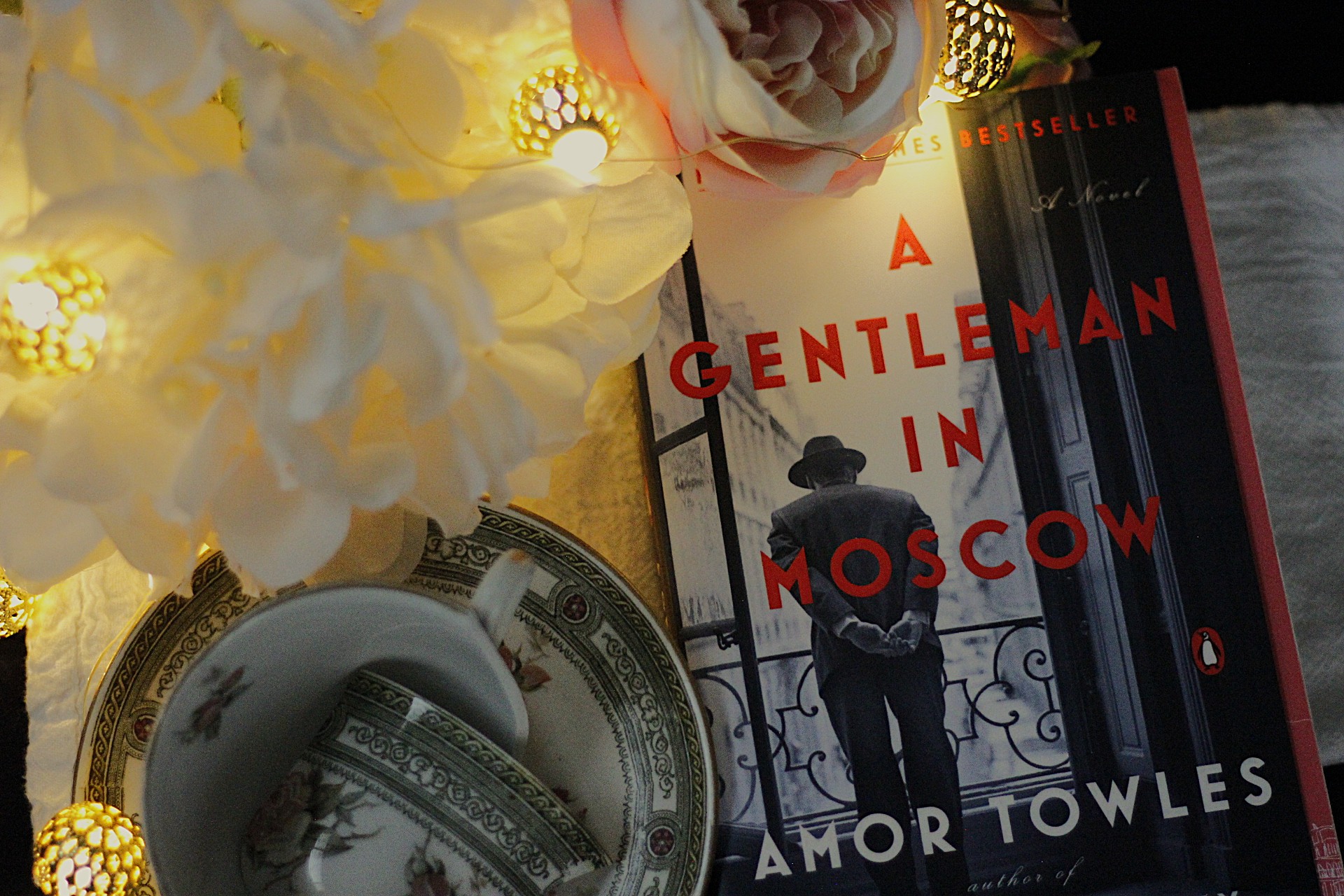
Some of the reviews I read about this book chastised the author for giving the main character a “good life” after the horrors of the Great Wars. Count Alexander Rostov wrote an incendiary poem, and therefore becomes a Former Person in Moscow. He’s placed under house arrest at the Metropol hotel, where if he steps one foot outside, he’s going to be shot. I’m not saying he has it worse than those who suffered the atrocities of occupied territories, or those who went through the horrors of the Holocaust. There are several instances where I find him a bit too aloof for the realities around him, what his fellow Russians are going through in the direct aftermath of the war. I do think, however, that as one who is forced to spend the rest of his life in one place, he is doing his best with what he has available to him.
Alexander strikes up an unlikely friendship with a nine-year-old Nina when he’s in his early thirties. Her family visits Moscow and they explore the hotel, getting in near misses with the staff as they’re sneaking where they shouldn’t be. When it’s announced Nina is going away for good, she bequeaths him her master passkey, a gift of immense responsibility that Alexander takes very seriously.
Over the next decade or so, we get to see how Alexander spends his time, and eventually he begins work as the headwaiter in one of the hotel’s restaurants. This allows him to form friendships with the chef and maitre d’ and bartender of the respective restaurants. He has an affair with an actress, becomes annoyed with the various hotel managers, and life persists.
Count Rostov is not one to give in to the grief of his losses. He seems to find such a thing preposterous and whimsical, and that is not the kind of whimsy he believes in. He receives visitors over the course of his confinement, and forges alliances as one does in hotels when one is a guest for a lengthy period of time. I found myself wondering, though, if he was lying to himself about the weight of this confinement. While it wasn’t solitary, he couldn’t actually cross the square to the theater, or witness the ballet dancers on their stage, only hear about their performances whenever they visited the bar of his prison. A lavish prison, but prison nonetheless.
What I found the most compelling about Rostov is how beautifully he clocked a person when he first met them. One of his acquaintances is a colonel who comes to visit him monthly for a time, and he receives a Western culture education. At their first meeting, Rostov tells him exactly where he is from simply from the wine he chose to start with, and when the colonel asks “because he’s a hayseed?” Rostov responds with “Because he misses home.”
This was the first moment of the book that made me do a little “oh!” and cover my mouth to hold in my despair at how lonely he must have truly been. I wish I could go on forever about the way this book made me feel, but I’ll parse it down to this: we never know the impact we have on anyone, and most of the time we will never find out. The smallest acts of kindness, of restoring order after a crisis, we’ll never fully understand the effect they have on those watching us silently. We don’t know how others see us, and sometimes we don’t know we’ve been seen. That is the core of this book. Alexander spends so much time seeing others, he doesn’t even consider the fact he might be seen just as well, and just as purposefully.
And that is where I will leave this review. Not so much a review as a summary, but I gave this four out of five stars on Goodreads (five out of five on my bingo board because I got a bit carried away filling in the stars, but that’s not for me to discuss past this moment).
Until next time, friends. I hope the sun is shining for you, and you see the way the breeze moves the leaves.