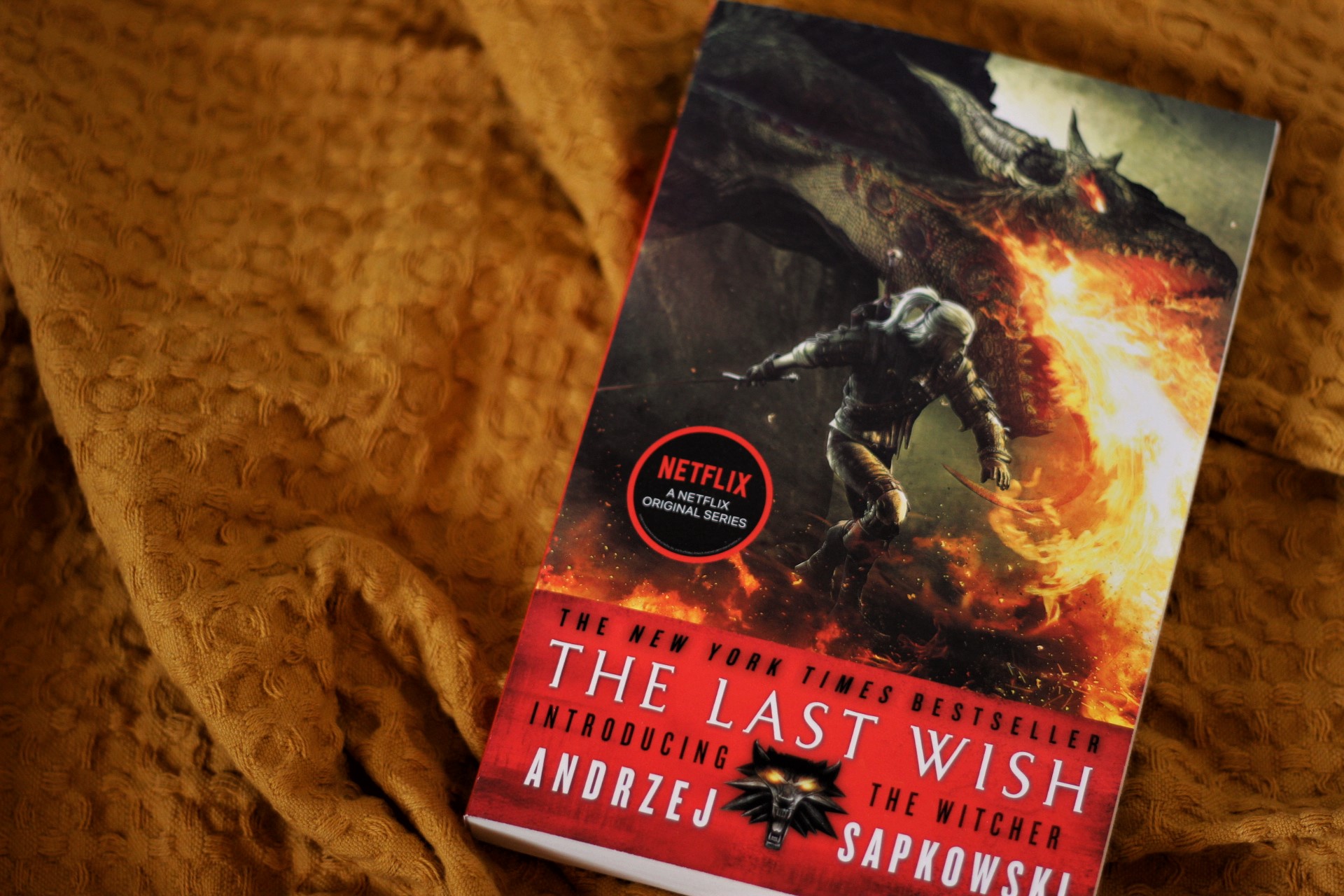
Let me begin this by saying I’m someone who prefers books over visual adaptations of those books. I say this because I think this is one of the rare times I prefer the show over the book. I feel blasphemous saying so, but hear me out. I’ve not played the games or seen a playthrough of those games, so I can only compare the book to the show (I’ve heard it said that the games follow the books more closely). While all of this sounds as though I’m about to take a dump on this book, I’m not. I’m going to try and look at the book as a separate being from the show and discuss my feelings on it.
I don’t think it’s bad. Let’s get that out of the way first, here. It’s not a bad story being told. For me, the disconnect comes from the writing style. It’s not that I think Mr. Sapkowski can’t write, he can, it’s just a different style than I am used to. With that in mind, I read through this book in the space of about two days (because I had to work, yo), and I appreciated the quickness of the read. There were several spots where it fell very flat, however, and it felt, as one of my friends said, like we were waiting with the characters for something to happen. Part of me wonders if that’s because we lost something in the translation (originally written in Polish), but I know nothing about the original language, so I don’t even want to speculate further. I didn’t approach this as something that would blow my book lovin’ mind, but I did expect a little more than what I got.
This is the introduction to Geralt Roger Eric du Haute-Bellegarde, or simply “Geralt of Rivia.” He’s a witcher, a mutated not quite sorcerer, not really human anymore, not really anything but a badass of fighting skill and ability to take down the world’s scary things that go “oof” in the night. Witchers are rare. They’re a dying breed (?) because the lore used to create them has been lost over the centuries. They’re pretty cool characters, and one thing I appreciate in the book is how there are other witchers. Geralt is not the only one. In the show (shhh, I know I said I wouldn’t), Geralt is presented as one of the last of his kind. That’s true still for the books, but there are at least five in the books (that I remember at the moment, but I started reading them out of order, so I got ahead of myself… It’s high school and Harry Potter all over again). So Geralt isn’t the last surviving hope for humanity.
In the first book, it’s mainly set up for the characters who come later. There’s some oddly sprinkled in fairy tale references that kind of made me feel weird after their appearance. I’m not 100% sure on the effectiveness of trying to link those to this world, because it kind of took me out of what I was reading. We meet Dandelion, Geralt’s bard friend, Yennefer, the love interest (or is she?), a priestess named Nenneke, who I was pretty fond of although I’m not sure of how much of her we’ll see later on in the story. Mousesack, the sorcerer to Queen Calanthe (who is absolutely a badass woman and I loved her so much). Pavetta and Duny, the two deeply in love people who first bring up the Law of Surprise (a thing which becomes important later).
The Law of Surprise is something I don’t fully understand. In the show, it’s very briefly touched on in the episode where Geralt defends Duny and Pavetta’s relationship against Calanthe’s sketchy underhandedness. As I understand it, from the book, basically what you don’t know you have waiting at home is now the thing the person who helped you receives as payment for that assistance? It seems to be used mostly when lives are saved. Which is useful. But another way the book and the show deviate is Geralt knows Pavetta’s pregnant in the book. On the show, it’s truly a surprise, which then makes it a bit touchy later on when certain events happen.
I’m a fan of the show because the story is told in a way that moves itself along and is faster paced. Plus, Henry Cavill is Geralt, and I don’t know that I’d want to see anyone else in that role. Not because I have a healthy (shut up it is) appreciation for the man, but Geralt isn’t a flashy character. He’s very reserved, and he’s very observant. He’s doing his best with the job he’s been given, and the world just seems to get in the way because people aren’t very keen on difference. The parts of the book within the show are done very well and stay true to the story Sapkowski is telling. It’s rare to me to see something so close to the source material. Though these days, Netflix starts out strong with their adaptations.
I’ve reached the point where I’m rambling, so I will go ahead and close this out by saying I don’t regret reading this, but I’m not in a hurry to read the second one.
I give this book a 7/10.
*******I read the 2017 First Trade Paperback Edition*******
 salisbury.fake