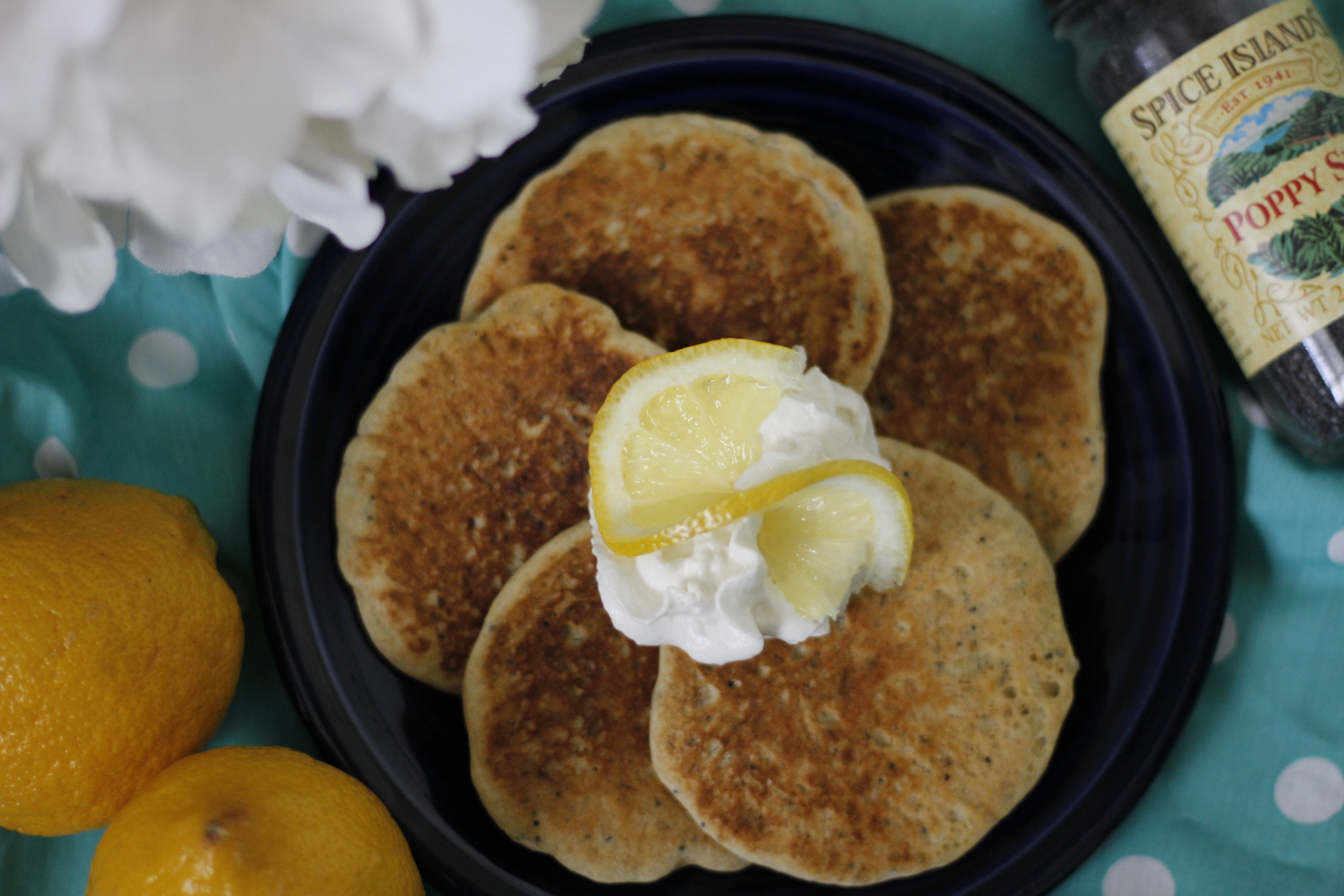
lemon poppy seed pancakes because spring and sunshine and lemons!
You know what’s really wild to me? Ten years ago, I never would have been able to understand my life as it is now. I graduated college (in December, but still). I also hit the lowest point I’d ever been in my life ten years ago, and events unfolded that will impact me forever.
I don’t really have much to say today other than it’s been almost a year since I signed my mortgage papers and I have no idea how to tell you how blown my mind is by that. Moral of the story, I guess, don’t give up on yourself when times are really rough. It’ll come together someday. It might take ten years. It might take twenty or more. But you owe it to yourself to find out.
Until next time, friends: you are everything you need for your own happiness.
I was going to do another How I Write today, but I’m not feeling it. I’m not sure what I’m feeling, to be honest. I wasn’t going to post today, but my goal this year is to post every week, and with the exception of maybe one week, I’ve done that. So today might just be a quick blarp into the universe about how it’s all right to have off days or something.
I try to put positivity into the world because there’s just so much negative nonsense going on, but it’s exhausting at times to be the bubble. I feel like that sounds a bit boo hoo Belinda, but really. I’m not always excited about life. There are more than doldrums that bog my joy down, and while I don’t always feel like talking about it, I think it’s important not to stifle those moments when they come. I tell people to let themselves feel what they feel, and yet when it comes to myself I tend to be really harsh and deny myself the advice I give others. I know this is not new to the world. This behavior is not unique to me.
But there’s a loneliness in it. There’s an emptiness that threatens to turn bitter like the aftertaste of an artificial sweetener. What you think is familiar is actually damaging more than you let yourself think. Wallowing is different than steeping, and I feel as long as I’m wallowing, I’ll be salvageable.
I’m going to go get some work done around the house, and I’m going to remember it’s okay to feel like an oversteamed potato every once in a while. The key to it is to remember to come back. Not to let it take root in your mind and become a gnarled mess you have to untangle later, when it’s worse.
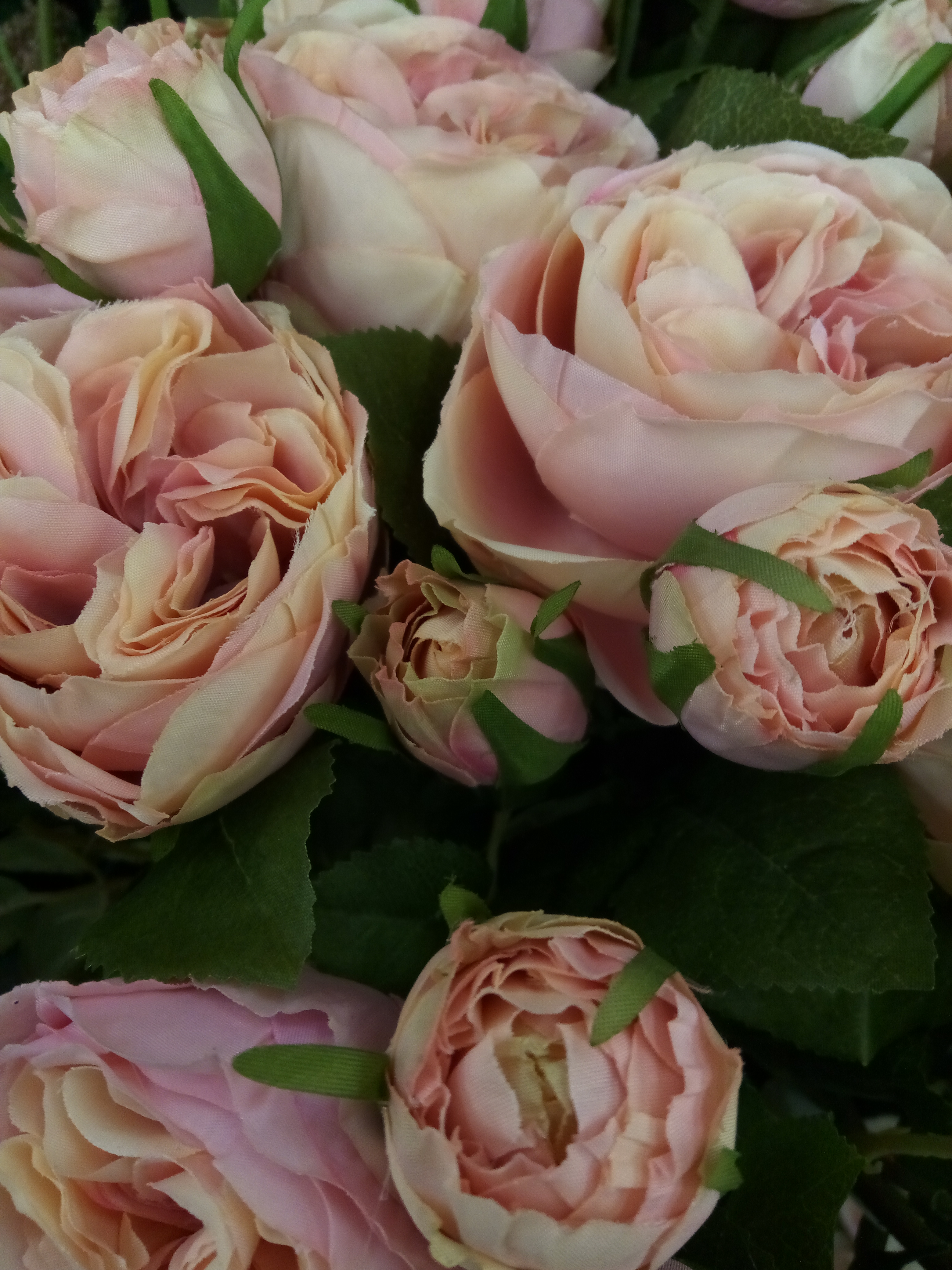
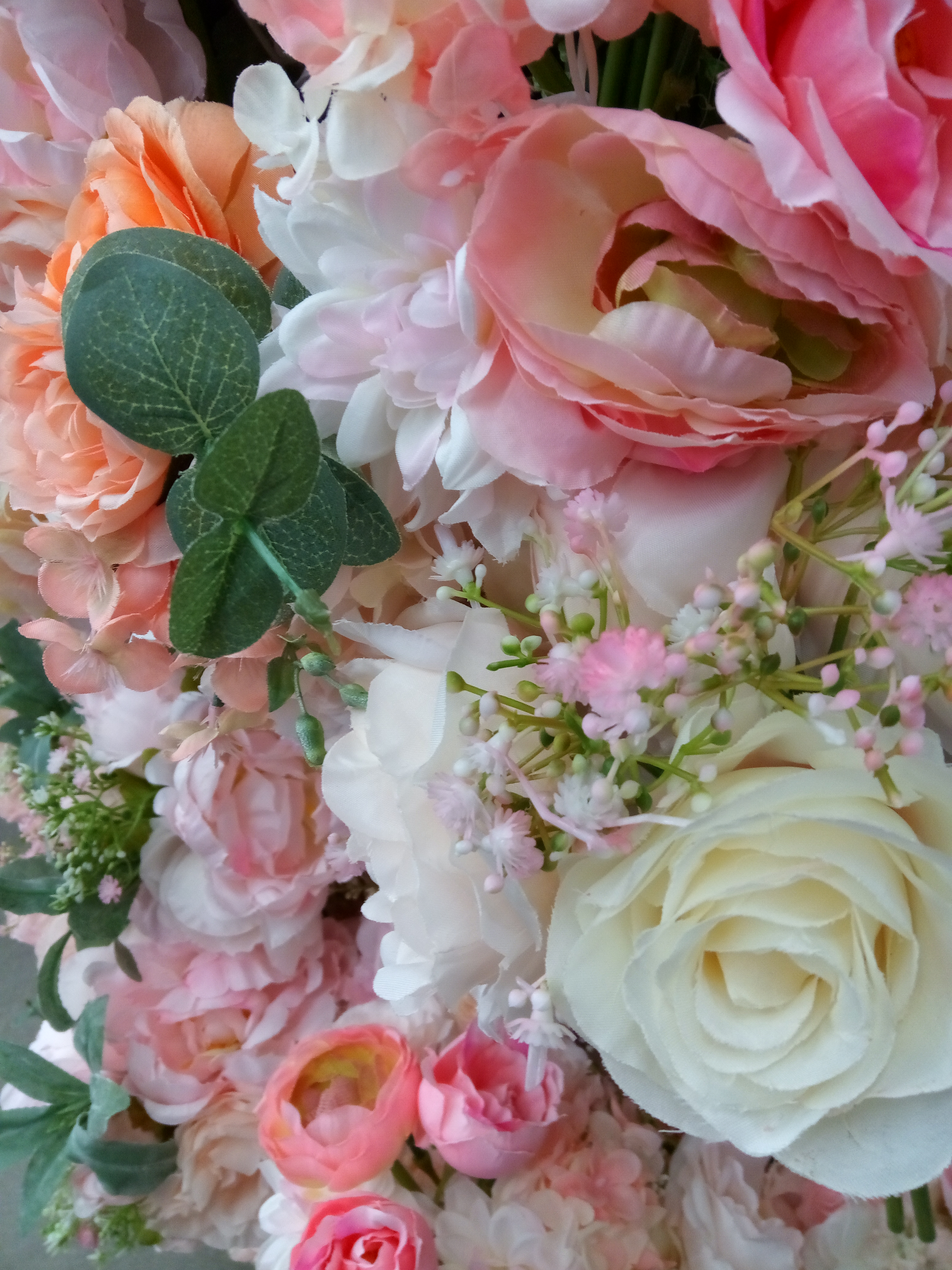
With that said, here’s a photo of some fake flowers I bought myself yesterday because I had rewards points and I wanted to get myself something pretty.
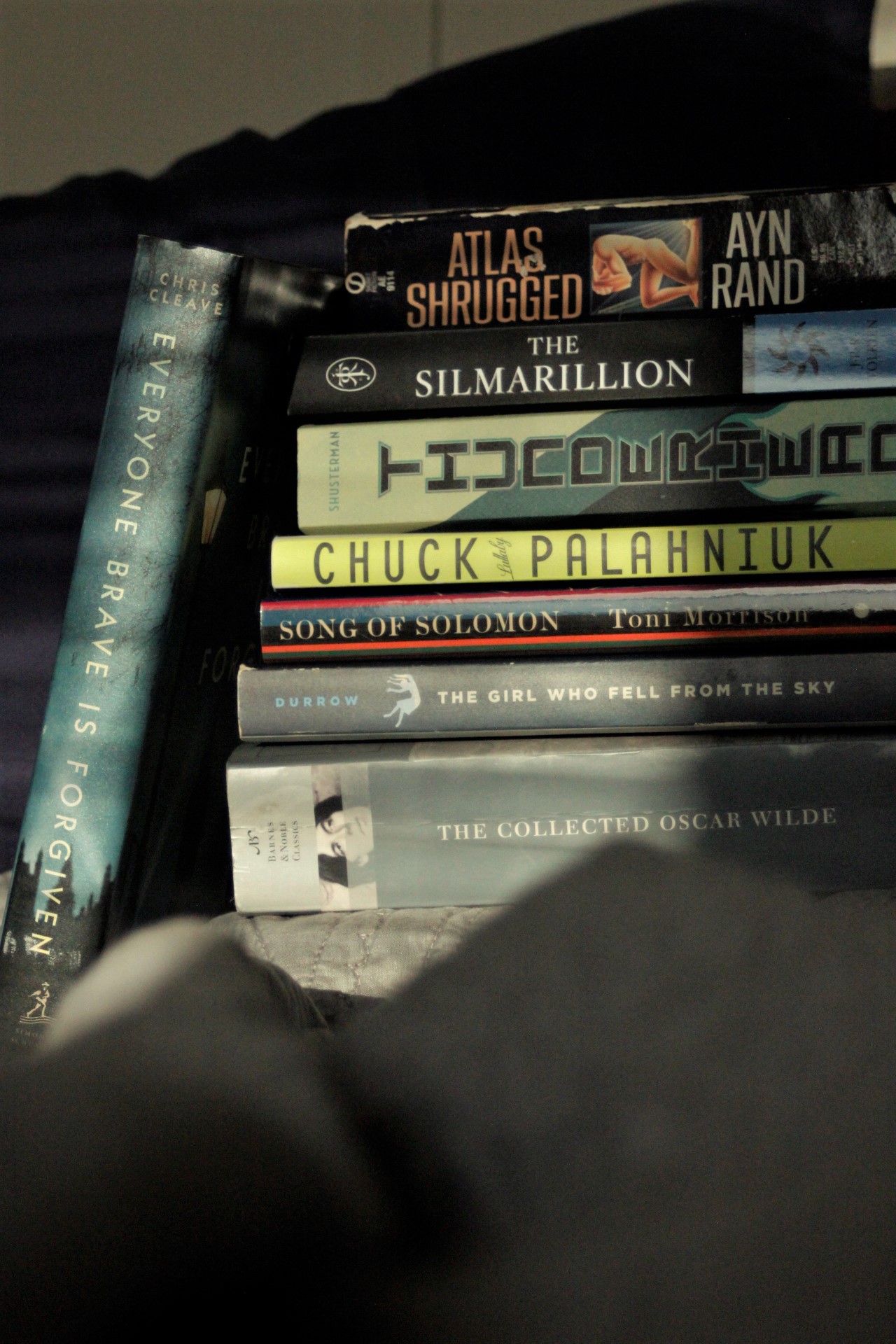
I was the kid who didn’t get TV taken away when I was in trouble, I got my books taken away. I still found ways to read even when I was not supposed to. Telling me I couldn’t go outside wasn’t a problem for me, because I preferred escaping through the world of books. We didn’t live close enough for me to walk to my friends’ houses, so that wasn’t an issue for me either. My parents would have to find more creative ways to punish me for disobedience.
Books have always been my vice. When I lived with my mom for a bit and had my books in storage for over a year, the first thing I grabbed when I moved into my place was my crates of books. I add more and more to my “to read” shelves faster than I’m actually reading. Home is not home without my books.
But today we’re going to do a bit of a discussion about how brains work.
When I’m at the height of a depressive episode, I tend to shut down the parts of my brain that activate on creative stimulus. Easy distraction is how I live my life in those times, and so I watch a lot of Netflix, or I spend hours on YouTube trying to find ways to give my brain an easy way out from thinking so much about the stuff that makes my chest hurt.
The thing about that though is it becomes a habit. I struggle to focus on reading now because I got so in the habit of switching on easy media to keep my brain from spiraling. This isn’t to say I don’t read anymore, because I do, but it’s nowhere near the “read the entire Harry Potter series in five days over Spring Break” level I used to be.
I also have a full time job, and I have a home to own, so there are added responsibilities to my life I didn’t have when I could be so carefree with my time. I miss those days, though, when I could spend entire days reading a series and finishing two books in a day. I’ve considered devoting weekends to that, but then the adult part of my brain reminds me I have dishes to wash and laundry to get done. This reasoning also feels like an excuse sometimes, especially when I don’t get either the dishes or laundry done.
So, today’s post is more of a gentle reminder that it’s okay to let yourself get lost in a book every now and then. It’s okay to find your way back to the part of you that misses that feeling, whether it’s about books or some other hobby you could lose yourself to. I think breaking out of bad habits is excruciating because as we know change is something most people dig their toes into the sand over. For me, my goal is two books a month until I get my mojo back.
Small steps forward seem insignificant until you realize you’ve gone three miles.
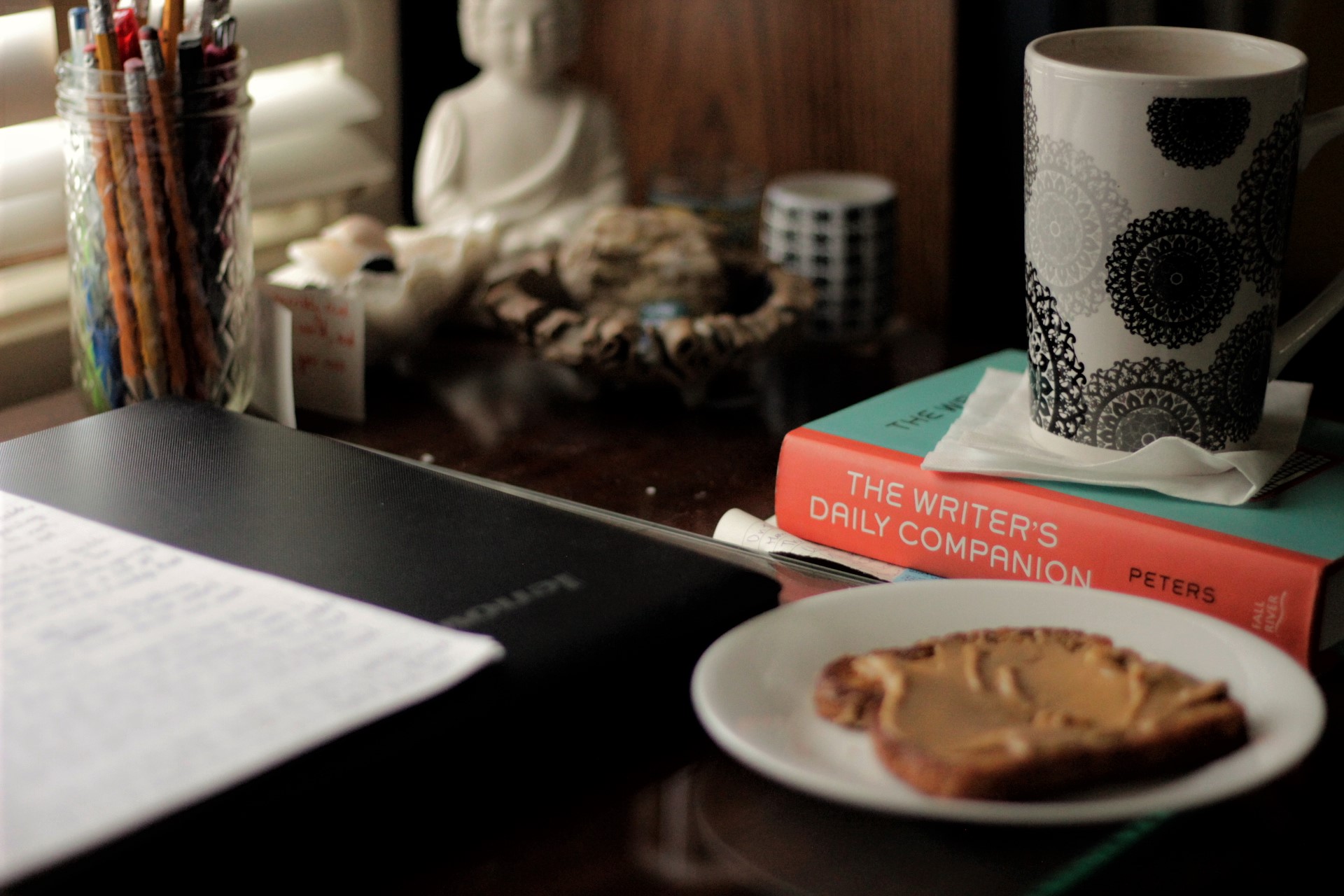
At a desk, the kitchen table, sprawled on the couch, propped up in bed, the dashboard in my car on a lunch break, under a tree at the park, in full view of people so they can see me writing: I’ve done it all. I’m sure you can tell from the title that this post today is all about my creative workspace. I have a couple, and they’re all in the same room, so let me talk to you about them.
When I was house hunting last year, one of the requirements was 3 bedrooms. Not because I have a family or plan to have one, but I wanted a guest room, and an office. Most of my life I’ve never had the space to feel free to make a metaphorical (or literal) “creative” mess. I’ve either confined myself to my bedroom to write, had my desk available, but it functioned as a holder of other things and less like what a desk should be, or I’ve had to use the kitchen table. This isn’t a problem because it’s a lovely thing to have a kitchen table you then have to clear away so you can use it for food. But I still wanted more.
So, when my realtor showed me this house, the master bedroom fit my visions of the perfect space. When I moved in, my sister helped me paint the back wall “Delft pottery” blue, and I’ve been putting up all the things that inspire my creativity. A signed poster from my favorite singer/songwriter, Zac Hanson’s scribble on a piece of notebook paper I had in my bag, Dried flower, my sister’s artwork, a photo of my niece’s foot she took herself, a map of Middle Earth from a very dear friend, and more yet to come. (I’d post a photo of this wall, but I also have photos of my friends and family and I don’t want to expose them to the internet outside of Facebook).
I fully believe in having a dedicated space to be productive. Whether it’s writing or other creative projects, I think it’s important to have a place your brain automatically knows “it’s time to work.” I’ve got two spaces for working, both in the same room, so when I come in here, my mind switches to productive mode. Whether I’m sitting at the art space or at my desk for writing, I am able to focus on the project I want to get done. Today it happens to be a blog post and afterward, I’ll be working on typing up the stuff I’ve written recently (that process is another discussion).
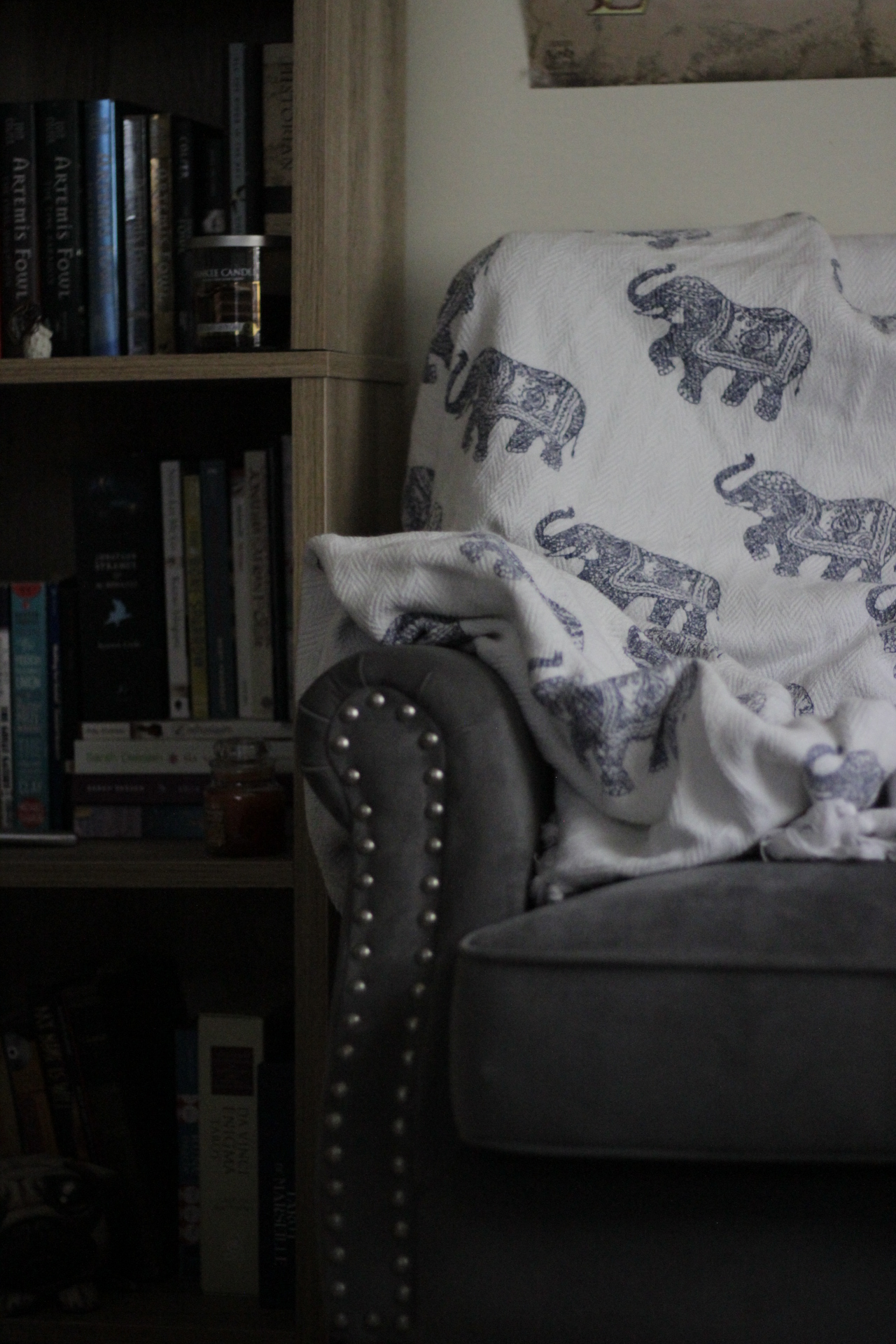
Of course, creativity isn’t limited just to the things I can put on paper. It’s also about growing my mind through reading and visuals. Which brings me to the wall opposite my desk, the one behind me right now. I have my small library set up, and I got an accent chair to curl up in and read.
The last place I have in my office that I was going to try and post a photo of (but WordPress is having a moment, so I won’t this time) is my photo “studio.” It’s really just a half-closet with a card table and some fabric backdrops that I pin to a bulletin board. I mostly use sunlight for now, but one day I’ll have actual lighting for those times I don’t wake up at the sparrow fart of dawn for a good photo.
Sometimes when I think about the life I have now, I wonder if I deserve it, and I think the answer I’d get is a resounding yes from the people who matter to me, and while I appreciate their support and love, one day it’d be nice to believe that for myself. Allowing myself to feel proud of the house I’ve been turning into a home, my home, that’s not narcissism no matter how much my brain tries to tell me it is. It’s important to have places that make you feel like a person, like a worthwhile person. Surrounding yourself with what helps you feel creative, productive, peaceful, that’s important.
I’ve finished my coffee, and I’ve eaten my toast. I’m going to get to work on the day’s projects. Until next time, friends.
I had goals this week of starting another series of posts discussing literary theory, but it’s too early in the day to go full brain on myself. Then I thought I’d do a post about Henry, someone near and dear to my heart, but the post I outlined ended up feeling too personal to put on here (listen, I know I wrote about my biggest fear, but Henry is a different level of personal). So, now I’m eating my breakfast of cold banana pancakes (I don’t have a toaster or a microwave and I’m not feelin’ the need to wash too many dishes today) and enjoying the sunshine coming through my office window.
It’s cold as balls in my house this morning, and the cold pancakes aren’t helping me, but I’m at peace today. I go back to the office tomorrow for work, and while I’m not looking forward to the health hazard, I’m looking forward to seeing the people I’ve missed. We’re already getting emails of “the new normal” and the phrase is exhausting in the sense I don’t want to face yet another new normal. Life is full enough of them. But that’s pessimistic, so I’ll steer myself back to the positive thoughts of seeing some of my favorite people.
I’m looking forward to springtime. The weather app says it’s supposed to be in the 60s this week, and I’m ready to ride with my window down. Feel the bypass wind in my hair as I drive too fast because I forgot I’m at the office now and left my house late. I’m looking forward to starting a garden this spring, and getting my backyard set up for friend times in the summer. I’m going to get my firepit settled, and I’m going to build a second patio (sort of) reusing some stones from the yard. It’s going to be a good season for me and hopefully for you.
I’m going to walk more with one of my best friends after work in the outlet mall parking lot. I’m going to keep eating better and keep losing weight (I’ve lost twenty pounds since I gave up Taco Bell back in December). I’m going to maintain as positive a vibe as I can because the world is full of people having tragedy after tragedy and if I can be a bit of brightness for someone, I’d love to do that.
If you are struggling to feel something other than useless, I want to remind you that you are quite useful, in fact. You have a wealth of knowledge, and you have a lot to offer the world, and plot twist: it has a lot to offer you. It might seem bleak, but the sun’s coming up earlier now, which means you have plenty of time to work for yourself. Hang in there, if it’s getting a bit tough. The good times are coming. I believe it. If you are feeling less than lovely to yourself, that’s okay. Sometimes the clouds get in the way, but the sun is always waiting for you on the other side.
And on that note, I’m going to make some tea and get to work on some writing before I have lunch with my mom. Until next time, friends, remember: you are and always will be enough.
As I was deciding the topic for this week’s blog post, I realized I haven’t really shared much about what I’m working on in my own writing life. I’m not overly secretive about it, but I do tend to shy away from sharing because I struggle with showing people “unfinished” work. There is truth to the saying, “it’s never going to be truly finished,” but I take that a little too seriously sometimes. Here’s a very brief summary of the main plotline of my series, as well as a small peek into how I keep it all organized.
I’ve mentioned maybe once or twice that I’m working on a trilogy. It’s lumped under the main title of The Maker Series, with really pretentious titles for each book. The first book, Fulcrum, is the introduction to the story. We meet most of the main cast, leaving a few surprises for the second book. We meet the main character, Brangienne Frankovitch. She goes by Frankie. I get a lot of grossed out looks when I say her name, but I chose it a long time ago, and calling her something else would be a lie. She’s from a small made up town in Kentucky, and she’s revealed to be the chosen one. Yes, it’s a cliche story, but she’s not a teenager! She’s actually 25 years old, working a really chill job as a grocer’s assistant (she stocks, she runs the registers, she unloads deliveries, she’s everything except a manager). She lives with her best friend, Sam Wiseman, in a house she purchased two years out of high school after choosing not to go to college. Sam is a returned veteran of the armed forces (or so he says), and when they run into each other at the store while he’s buying food, he tells her he doesn’t have much going for him. She invites him to come live with her.
It turns out, Sam is not Wiseman, but Bayn, and he is a soldier, but not for the world Frankie knows. He’s from a place called Amaranth, and he’s a member of a private security firm sent to be her protector. Protect her from what, I hear no one ask? The Moarteans. See, when the world began, time had already been happening for a while. We were more of an experiment devised by those who created time. The Thrice Unbound created the First Four, who in turn had Milton Fogg and Tobias (no last name, he’s got the Beyonce vibe going on). Through some shenanigans, the two boys cause an all out war between themselves, and in order to settle things down, the Thrice Unbound allow them to each create a world. The one Milton Fogg creates is our world, our time as we know it. The one Tobias creates is called Telaroth (renamed Lazarus after some stuff goes down there). Tobias devises a way to rewrite the DNA of all his male citizens to turn them into sort of super soldiers (called? Moarteans). He’s doing this because he wants to destroy Milton. In the course of things and a lot of bad stuff happening in Telaroth, later Lazarus, it becomes apparent that his way of life is actually decreasing his chances of survival, and thus: Lazarus is born.
Frankie learns all of this, and is then taught how to fight (because it’s one of those stories, you know? She has to learn to fight). She loses family. She loses friends. She loses parts of herself, literally, because the Makers (the people of Amaranth) also have a way to change DNA. Never one to be emotional, Frankie has intense feelings rear up in a way she’s not had to deal with before, and with that comes anger, defeat, and hopelessness. The friendships she does make along the way keep her grounded, but she will, of course, never be the grocery girl from Lowell ever again.
The second book is called The Keeper of Time and in it Frankie learns the truth about all things, about how she’s been bamboozled. She’s been coerced into a fight that shouldn’t even be happening, but here she is. She goes on a sort of spirit quest to find herself (and a character vital to the end game–it’s a road trip book, I know, cliche, but hey! quests are important to life. Whether it’s to the gas station for drinks with your best friend at 2:30 in the morning, or to find a broken priestess wandering the metaphorical desert, a journey is a journey is a journey). She also finds herself in the hands of someone she wasn’t prepared to see ever again, someone she thought was a distant memory (not a romance, lawls). By the end of the second book, with further trauma to add to what happened in the first, Frankie returns to Amaranth to find it in an uproar. A militia has been formed and people are ready to storm the castle gates, in a manner of speaking. Frankie can’t convince anyone of the reality of the situation, so she escapes into Lazarus.
Which brings us nicely to the third and final book, Lazarus Rising. I’m aware of the biblical implications here, but the larger metaphor is the only association to the Bible story of Lazarus. I don’t want to go into too much summary here because I want to hold this one as close to my heart as I can. It’s the end of the ride. The last bus stop. The culmination of nearing decades of work. Frankie faces incredible challenges, often left with more questions and more bruises both physical and mental. But she is resilient. She prevails in the face of her torture. For a time. Maybe. Am I being mysterious enough?
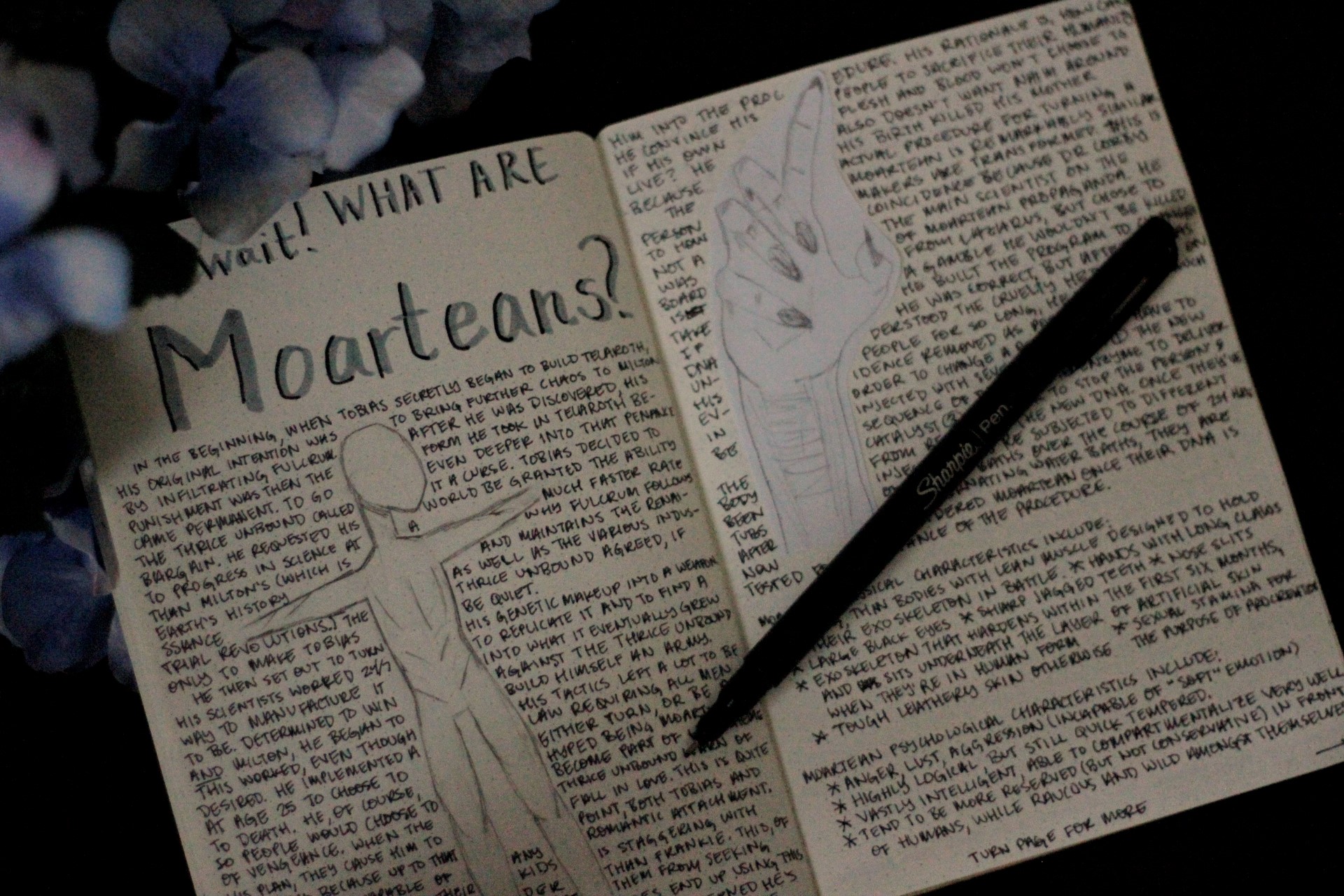
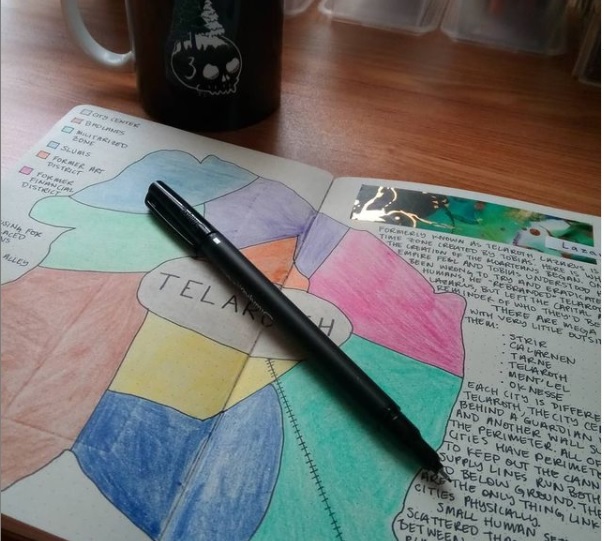
The world of the Maker series is a complex one because technically there are three separate places: Fulcrum (our world), Amaranth (also known as The World Between Worlds), and the “alternate reality” of Lazarus (formerly known as Telaroth). The easiest way to keep track of all my thoughts on this came about in the form of a journal. I’ve been compiling notes on characters, settings, and all kinds of other things, and eventually the language of the Moarteans will be housed in the journal (yes, I’m going the extra Tolkien mile by creating a language). A snippet or two of the journal is included in this post, but it is by no means complete. So far, I’ve gotten spreads done for all the characters (from all books), and now I’m working on getting the settings down.
Setting is more than a place, which is obvious, but bear with me. When I started working on the pages for Lazarus, it struck me I’d never committed anything to paper about who the Moarteans are. I’ve done rough notes for previous drafts, but the race was never really part of the story except for a few instances. This became an issue fairly quickly because the third book takes place almost entirely in Lazarus. I’ve never gone into who these people are, and now I’m planning an entire book with them? Part of why I began the worldbuilding journal was so I could have a designated place of reference. I know there are apps and programs that help writers sort things into their proper places, but I’m a far more visual person, so I needed to feel the place as I wrote it down. I needed to be the ball so to speak.
By giving myself the opportunity to physically create the Moarteans (on paper, anyway), I’ve allowed myself to fully immerse in the world I’m hoping readers will enjoy. This is not by any means the way I’d recommend people work out their worldbuilding. What I’ve chosen to do suits how my brain functions. I think I mainly wanted to showcase, finally, what I’ve been spending so much of my free time on the last little while. It’s a handy reference tool. It will house everything there is to know about my books in one place. As I’m getting ready to end this blog post, I’m already planning on spending some more time working on my journal tonight.
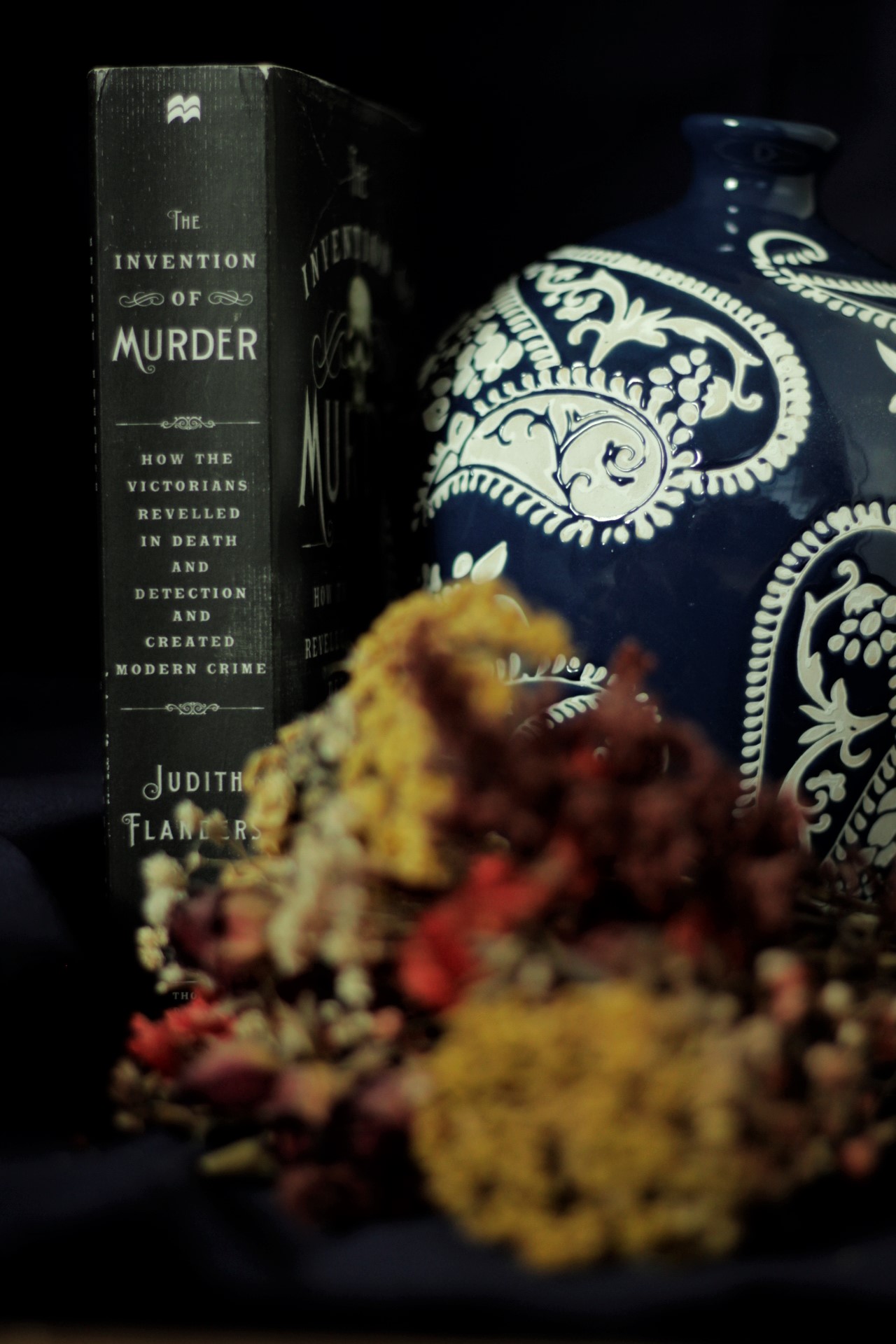
Anyone who knows me will be able to attest to my somewhat morbid fascination with true crime stories. I used to fall asleep to Forensic Files before Netflix did something weird with their auto play function. So, when I first came across this book, The Invention of Murder, I was pretty stoked. I’ve been interested in how modern detecting came to be, and so I hoped this book would go into that as well as go through how murder became more mainstream.
I wish I could explain how disappointing this book was to me. There’s murder, yes. But it’s sprinkled between a discussion about newspaper articles, broadsides, penny dreadfuls, melodramas/theatrical performances, and every now and then novels. I understand what Ms. Flanders was attempting to do. By showing such a vast range of media produced for the public, it showed how the Victorians became enraptured with death and crime. But all it really did was bore me.
What time was spent on discussing the actual cases was well written, and I enjoyed those parts entirely, which is why I’m even putting this book up here for review at all. It’s clear the research that went into this book was insurmountable, and I don’t envy the author such a task. I think it could have been presented differently. Especially in today’s world where everyone and their Netflix budget is producing a crime documentary. I think the book is not as timeless as it could have been because it was published in 2011, a bit before the explosion of in-depth documentary series about modern day crime. There’s a show (Murder Maps) that mentions several of the cases brought up in The Invention of Murder, something I only drew connections to because I’d just read about the case.
It is certainly an interesting look at how mass produced media and “up to the moment” reporting on trials brought murder into the forefront of crime. With the advent of detective units within police departments (something that was created later than I thought), the public could see firsthand how the investigations were going. The newspapers also presented problems if the cases weren’t progressing to the satisfaction of the editors. In that respect, I appreciate the book for thoroughly showing evidence to support the notion the Victorians were the ones who elevated crime and detection.
I think in terms of enjoyment, I hyped it up too much for myself. I started reading it in August 2020, and I finished it this last week, with reading other books between. Usually when I take so long to read a book, it’s because I want to savor it, to follow it at a leisurely pace. The same could not be said for The Invention of Murder. I think it was about 100 pages too long, and the amount of references could have been lessened and the impact would not have suffered. The back of the book blurb hints at what’s inside, but gives it more of a narrative, something that disappears in the pages of examples of articles, stories, and so on.
I feel like this sounds unduly harsh, and if it does, that’s not my intention. I think it’s important to be honest in reviews especially when a lot of the “influencer” world is based solely on promotion. (I’m not saying I’m an influencer, hah, not by any stretch of any imagination) I know I didn’t like it, but it may not be the same for other readers. In fact, by the quotes in the “praise” sections, several people did enjoy it.
All in all, I appreciate the work Judith Flanders put into this, and I appreciate the approach she took to present a timeline of how sensationalized murder came to be.
I give this book a 4/10
*******I read the 2011 Thomas Dunne Books paperback edition*******
I don’t know how to begin this. I did have an opening that was pretty funny and clever, but honestly, I don’t feel like being funny right now. I feel like being real. Something that is lacking in today’s world a lot. With all the pressure to be on trend, be good at TikTok or whatever social media is poppin’ at the moment, and be more than what we are, I would like to be who I am and say I don’t know how to say what I want to. So, I’m going to type and see if something good comes of it.
For a while I was avoiding the Netflix show Bridgerton, because while I do find myself enjoying those types of period dramas, it looked like it was too bubblegum for me. Too pastel. I base my standard of enjoyment on the 2005 Pride and Prejudice with Kiera Knightley, if that tells you anything about me. I judged myself hardcore for watching all of the first season in a night (I had insomnia, might as well, right?). But then I watched it again because I was captivated by Rege-Jean Page’s performance as the Duke of Hastings. Not because he’s visually stunning (well, yes, that) but because his acting was remarkable. The way he conveyed subtlety is something I don’t think can ever be taught in an acting class, and each time it took my breath away. I truly believed he loved Daphne.
I did not have the same childhood Simon did, but I do know the weight of pressure, and the weight of personal promises. I won’t go into it too far because I don’t want to spoil anything, but there’s a scene that kind of stuck me right in the middle of my biggest insecurity. I didn’t even know it existed until I saw it so plainly on his face. After a confusing moment with Daphne where she says some pretty intense and rather hurtful things, Simon reaches out to her and says:
“You said I was enough!”
The desperation and pleading in his face, the absolute betrayal of what he thought was love was like a lightning bolt from my head to my toes. I wanted to throw up when I realized. I actually had a small breakdown because it hit me so hard, and I was so embarrassed that it was such a “bubblegum” show that caused me to have this incredibly powerful realization about myself.
I’ve always said my biggest fear is losing my family. And it’s still pretty high up there on the list, along with snakes and spiders, but in terms of metaphysical fear, I am afraid of not being good enough at love to keep it if I have it. When I have feelings for someone, and I mean real feelings with intent (not my ridiculous attraction to Henry Cavill), I tend to become obsessive about it. I throw myself into being the best me I can be and watch the other person to make sure I’m doing what they like and I either tone it down or raise the level depending. It’s not the same as changing myself, because I’m still me, just reducing or elevating the qualities the person of my affection seems to approve of, or disapprove. I never realized it was a fear of losing them.
But there seems to be a bit in all of us, a bit that hides behind the curtains of jokes and trending videos. The part we reach for when we’re drunk with self-pity–for good reason because here we are on a Saturday night talking to the internet. Life is so full, and yet so empty all the same.
I don’t define myself by a relationship. But should the day come, I want to be exactly what someone needs. As Simon puts it, “From the mornings you ease, to the evenings you quiet, to the dreams you inhabit, my thoughts of you never end.” I’m not interested in being someone’s everything, which might seem like a contradiction to what I’ve said above, but hear me out. I’ve been very good at being alone for a very long time, and I’d need time to be away, but I want to be home for someone. I want to be the smile that catches someone off guard. The reason for inappropriate laughter. The distraction in a work meeting because of an intense conversation the night before about something in a book we’ve both read.
I can be the most compassionate, the brightest, creative, kind, generous, whatever positive label you want to put on me, but if I do not feel it in my bones, I will never agree that I am worth it. I never want to see doubt in another person’s face, a person I’ve trusted to love me. I think that would shatter me. It’s a lot to take in, and this has been very personal. Some might wonder why I’m being so open and personal on the internet where everything is forever, but it’s because feeling like this is not new. And it is not limited to me. We should be able to talk about our deepest insecurities and not feel judged for them.
So, where does that leave us for today? I don’t know. I don’t know why I chose the title of this piece to be what it is, but the phrase stuck with me, so I’m keeping it. I guess my final thought would be don’t get so caught up in thinking you’re the worst when really you could be the best to someone. Hiding behind our self-doubt and loathing only sharpens that knife of self-betrayal, and one day will leave us bitter and empty. The emptiness I feel now is nothing to the emptiness I know exists within bitterness, and I do my best to stay above that.
This isn’t a happy blog post, and I won’t apologize for it. If you do have someone you love, I wish you joy and contentment in your love. I wish for you to soar with each other and be the brightness the other needs in the weird, wild world we have these days.
Keep smiling. Keep loving. You are, as always, enough.
Well, I guess this is going to be one of “those” blog posts. You know the ones. Where the writer waxes poetic about the year gone by, and talks about hopes for the next year. It is going to be one of those, yes, but I’ll try not to bog you down with a lot of “2020 was the worst” stuff. Because even though the pandemic is still ongoing (wear your damn masks and stay home unless you absolutely have to be out), and so many people have had tragedy after tragedy this year, I think this is one of the first years I’ve grown the most into the person I’d like to be.
I had a goal this year of finishing three books I’ve been writing for a little over ten years. I separated out the year into four-month quarters, allowing myself time to get done with each one and have it beta read while I worked on the next one. I didn’t accomplish that goal, but I don’t hate that I didn’t. The person I started out as at the beginning of this year is not who I am now. And that shows in the quality of my writing. I stopped using first person perspective, switched to mostly third limited, and the story just fell out of me.
As I consumed media, I paid attention to the stories being told. Most notably, I watched/listened to a playthrough of Death Stranding, a video game produced by Kojima. I was not prepared for how deeply that story would end up impacting me. But then I decided to look at what made the biggest impression on me, and it was the emotional growth the main character goes through by the time we get to the end. It twists and turns itself around its own story, told in memories mostly, told with tragedy and loss. But at the end, hope remains. I’ve made it sound so cliche, but the relief I felt at the end of the game was profound.
I want to tell a story like that. I want to infuse emotion into my writing so that by the time we reach the end of the story, the audience is relieved and filled with feelings they then get to internalize and see themselves through. I know that’s a lot to task myself with, but I feel fairly confident I can do it. Emotive writing is important, especially in this day and age where emotions are often suppressed for being too intense.
Along with my writing growing, I feel like this year I’ve changed so much about my mindset about myself. I know I’ve talked about my mental health issues, and I will continue to do so because it is an ongoing, lifelong process. The small moments of joy, the reminders it’s okay to be here, the tethers we create to make sure we don’t leave behind what we will miss. Holding on with a white knuckle grip because there has to be something worth it at the end of this, I believe in it. I believe in it with a fierceness I’ve never believed with before.
The power behind that hope, the force of that desire to make it mean something, I wish I could give it to those who struggle. I still have my shitty days. I have them more than I talk about because that’s not what I want to focus on. They’re becoming less frequent, which is fantastic, but I want to hold on to the memory of them so I know how to fight them.
This year was hell for a lot of people. It was horrible and garbage and there’s no amount of gargling that will get the taste of it from the back of our throats, but you are still here. You are still here and you are incredible. You are stunning. I believe in you with the same fierceness I believe there will be good somewhere along the way, and we can pick it up to sling it on our backs to carry us through whatever the world tosses our way. Because we are strong enough to do so. We are capable of battling and making it through, even if that’s all we do is make it through.
I hope this year taught you more about yourself. I hope this year gave you the confidence to accept who you are, and if not, I hope it gave you the boost you needed to make the changes you’ve been wanting to make for yourself.
Next year, there will be book reviews, writing about writing, life talks, recipes. It’s going to be a better year because we will know how to approach it properly with cautious optimism. It’s not over yet, but it will be and we will march forward with a brightness of hope, a determination to conquer anything and everything.
Thank you for going on this ride with me. Thank you for your readership, and for you. I’ll see you next year.
Salisbury.Fake will be updated again after December 31st, 2020.
This one’s going to be a ramble, probably. I know, so surprising.
We’re going to talk about loneliness. Sort of. We’re going to talk about how it’s okay to take time to get to know ourselves and forget about being with other people because we deserve to like who we are.
I seriously hate how self-help-y that sounds. But hear me out. I spent the last two decades learning how to hate myself. Acted on it in various ways I won’t talk about in this post (I’ve discussed it before elsewhere), but it all boiled down to the thought that I’m just average/mediocre/run of the mill not worth anyone’s time. Kept me going for a long time. Or so I thought. What it really did was give me a chronic back ache because I hold my tension in my shoulders and my lower back. Makes aerobics fun.
But what’s the point of this? Let’s focus, Carla. I’ve seen some posts recently from some of my favorite content creators who talked about how they were using this quarantine time to get to know themselves a little better, and I suppose I have, too, and I need to tell you it is
u n c o m f y
Seeing how I’ve spoken to myself for the last half of my life really kind of broke my heart. Surprised me. Kind of like looking in the mirror and noticing you had peanut butter on your face all day. “I really let myself do that?”
But it hasn’t been peanut butter. It’s been self-dragging, self-loathing on a level that is kind of destructive, and just ignoring all the people telling me I’m not trash. “Thank you, but I am. It’s fine. I’ve always been this way.”
I haven’t.
We can try and pinpoint where it all started to go in a direction we didn’t think it should, but that is like trying to pick a watermelon seed out of a pile of watermelon seeds. I’d say a needle in a needlestack, but that’s not accurate enough. You can eventually find the needle you want if you search hard enough for the specific characteristics (size of the eye, length, sharp or not, blah blah blah), but watermelon seeds all look like watermelon seeds. They slip away every time you try to take one off the plate, and then you’re left with chasing it around.
The point of all of this rambling is it’s time we started being okay with being alone. I’m not talking about introverted alone, where one recharges after having social time with people. That’s a different kind of being alone. I’m talking about getting to know ourselves and seeing we’re not actually gum on the bottom of a shoe in summer. We are the kid who has the pool so all the parties are at our house. We have what everyone wants. We are admirable. We are strong, capable, and worthy of taking the time to learn how to believe that.
I say all of this knowing I’m going to ignore it like I always have, but the difference is I’ll know I’m ignoring it. Before, I would be all self-help-y and it would be for others. This one is for me. This time I know I’m ignoring good advice from myself, so it’s easier to hold myself accountable. And that is the key. Holding ourselves accountable for the goals we want to achieve and learning the difference between discouragement and destruction. Change is excruciating. It really is. I fucking hate change. I don’t really like swearing on these things, but this requires one. It’s that awful for me. So telling myself to stop calling myself garbage is like when your teacher tells the class, “no notes on this quiz, folks,” and turns around to do work on the computer so everyone uses notes anyway.
What a crock, huh? It feels like that, here at the bottom of this. But it isn’t a crock. It’s a truth I’ve been trying to learn, that I am worth my own time, and I want the people I care about to know it for themselves, too. I don’t know that many will read this, but I hope it helps someone. Maybe someone looking for a sign to start working on themselves.
Be safe as you can be in these weird, awful times. And remember: you are worth your own time. I promise.



 salisbury.fake