Here I Am by Jonathan Safran Foer

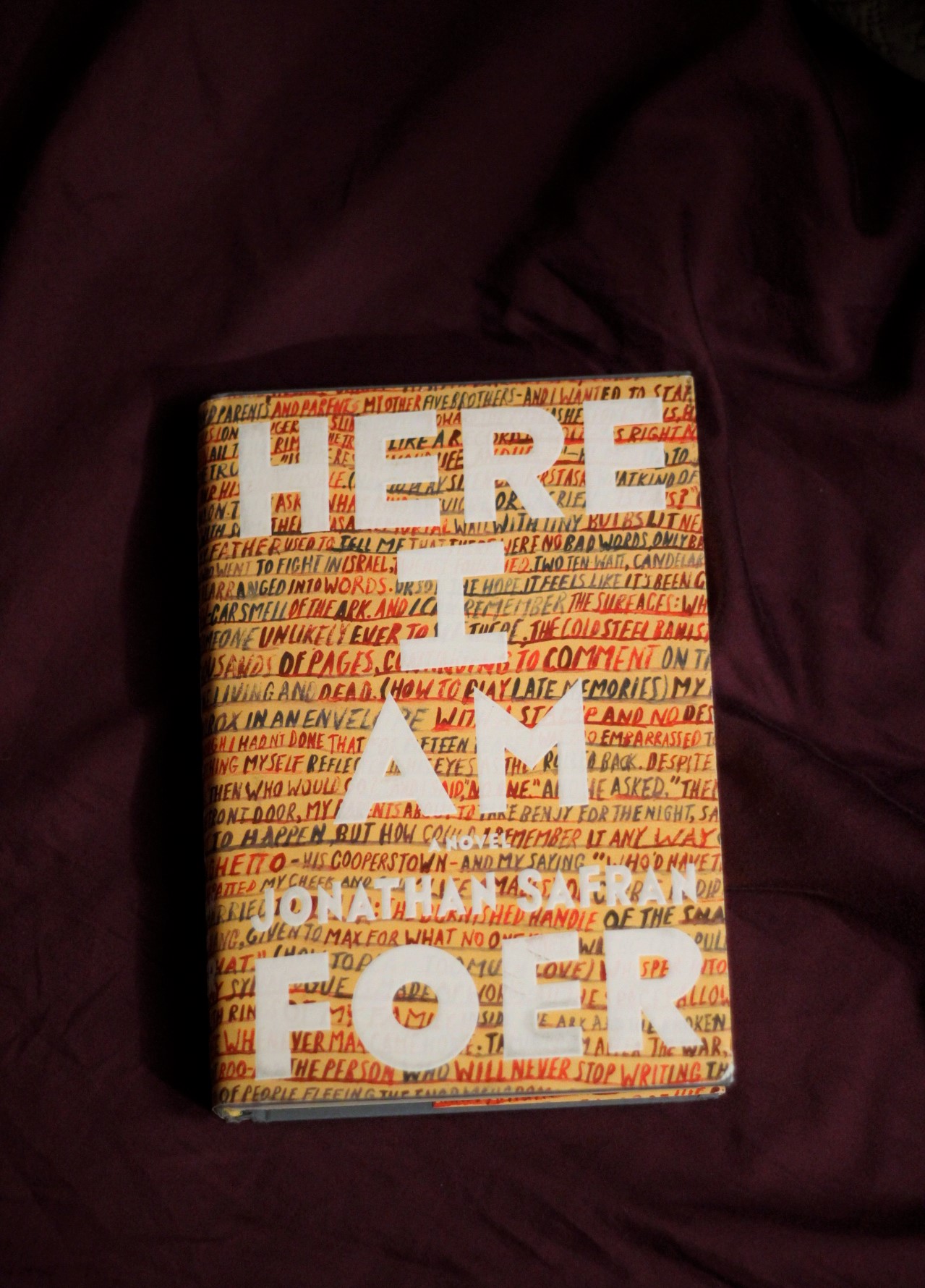
Who am I? I asked myself this question immediately following the finishing of this book and I feel like if Foer knew that, he’d either be pleased or he’d find me pretentious. But I didn’t ask it out of anything other than a gut reaction to the book ending. Foer is able to wield emotion like a sword, but with enough subtlety that it hits you after you’ve gone by a few pages, and you have to pause and sit in the feeling for a moment before you can go forward. It took me a bit to get into this book. I honestly didn’t remember why I picked it up (it’s got a sticker from the bargain bin on the back, so that’s the most likely reason, and I know I like his writing style, so I solved my own mystery), and as I read about the marriage of Jacob and Julia, I questioned even more why I grabbed it. It was about a loveless marriage, but also a marriage full of too much love. The kind of love you think is stagnant, but is actually hiding behind hurt. Unspeakable only because to voice the hurt would make it known to those who haven’t hurt you, but those you love and you don’t want to show them your vulnerability.

That kind of love is my favorite. And as I was slowly absorbed into the unfolding of this marriage, the explosion of a worldwide crisis of possible war, the outlook on Jewish people by the rest of the world, it all settles together in such a way you forget you’re reading about something heartbreaking. I think love is the entire theme of the whole book. There’s familial, romantic, platonic–it’s all in there. It’s the love that hurts, but the impermanence of pain is what draws me to it. It’s the understanding that while what I feel might be in the realm of anguish, it is not forever and I will be okay.

I told a friend of mine about some of this, my reaction to the book. But it was 3 a.m. and I’d had to read a brain numbing romance novel to get my head to calm down (seriously, all those people need to do is talk to each other. The lack of common sense and communication in those books is astonishing, but then I realize it’s real life in a way we aren’t ready to admit to, which I also know sounds like the opposite of calming my brain down). A sense of yearning took over, and I was filled with wanting. To be enough, to be wanted. And the part that makes my heart break is I don’t know if I’ll ever be able to accept that I am already good enough. I am wanted. Just as I am. It causes an ache in my ribs. When I breathe. I inhale, almost like when I run, and the life that fills me also takes my breath away.

The last time I wrote in my physical journal, I started a list of resolutions and I will expand on it offline. I know you might be wondering why this has anything to do with the book of this post, but I’ll get there. A person I follow on YouTube was talking in a recent video about how she calls resolutions her “intentions.” What does she intend for herself? The start of a new year, the reset, the fresh feeling. Some part of me that lingers in my self-hate is disgusted by the positivity of it.

But I think about a sunrise. A sunrise after walking all night, being so stuck in my head, unable to fully see even though all I’ve been doing is looking.

The sky lightens, letting the earth know what’s coming, but it’s that first burst of bright. That explosion of color that scars the sky and yet whispers hello.

My hope lives there. In that moment, that crack of a new day. Flash in the pan, almost. It holds me, though. Gives me enough courage to approach life one day at a time until a year passes and I am no longer witnessing the sunrise, I am the sunrise.

That’s who I am. I am hope, burning across the morning dimness with a gasp of colors. I am not ending. I am beginning and I am afraid. Afraid of understanding. Afraid of seeing. Not of failure, because I’m not failing.

I am becoming.

And that’s what this book did for me. I don’t know that I would say Foer is my favorite author, but he writes in a way that helps the world make sense as I see it. While I’m not a middle-aged Jewish man, or his wife, or their three sons, I have felt at times what they have, and seeing emotions I know so well, written in a way that feels like I’ve been flayed while saying thank you is something I don’t know I’d get from anyone else.

I give this book an 8.5/10

*******I read the 2016 Farrar, Straus and Giroux hardback edition*******

Small Update

Hey!

I published my first book. It’s out there in the world now, and that’s why I’ve been gone for so long. It went live on Amazon back on May 31st, and I kind of forgot this blog existed until a few days ago.

I probably should share a link to it, so I’ll do that at the bottom of this post. It’s available in paperback or on Kindle. There are some minor errors in the printing, but you know what? I care, but not that much. The story doesn’t suffer from those small errors, and there aren’t any glaring spelling issues so I’m leaving it as it is. I’m not intending to make it big, just wanted to tell a story I love.

So, that’s what I’ve been up to. I’m currently working on the second book, The Keeper of Time and that has been smooth sailing (which is difficult for me to accept sometimes because it technically took me about fifteen years to write Fulcrum).

I hope you are well! Thank you for sticking with me. I think I’ll attempt to make more of an effort at updating this blog from now on, but please do forgive me if I go on a hiatus for no reason other than I forget.

If you’d like to read the prologue of Fulcrum and the first bit of the first chapter, it’s available as a “look inside” feature on Amazon. You can find all of that here:https://www.amazon.com/Fulcrum-C-D-Kleeberg/dp/B0B2TBJC56/ref=sr_1_1?crid=2DO6GGUROXZFD&keywords=fulcrum+cd+kleeberg&qid=1658454699&sprefix=fulcrum+cd+kleeberg%2Caps%2C324&sr=8-1

One day I’ll figure out how to make those links look like nice text instead of gibberish, but it is not this day.

January Book Dump

Okay, listen, I know I’m behind. I know, I know. I’ve decided to do a quick “hey, here’s what I read, maybe you’ll like it, too” post because while I could go through and review each of these individually, some of them are too short for a full post, and the others I don’t want to ramble as I’m wont to do.

Kicking things off here we have two books I received in a book subscription box probably almost five years ago and I started them but never finished them. So, I told myself not to let them sit unread on the shelf any longer, and wouldn’t you know it? In one, I only had ten pages left of it to read. Good job, past me. Fantastic work. Livin’ that dream.

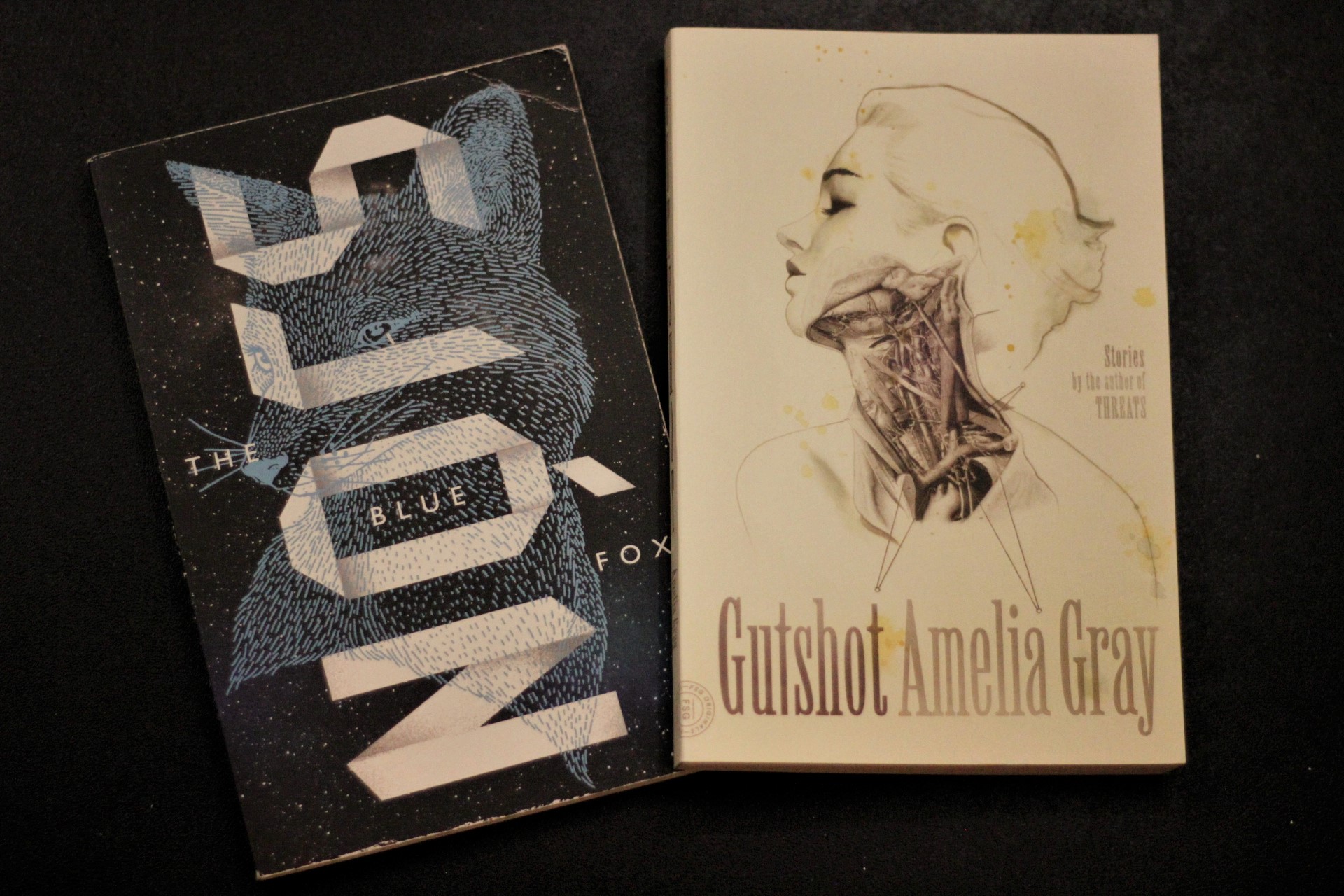
Blue Fox by Sjon

This book follows a hunter on his trek to take down an elusive fox. The air is absolutely frigid, and the sun is harsh. It’s a stark, desolate sounding landscape, and yet there is life within. Sjon creates an atmosphere so well, one can almost see their breath while reading this book. It may sound trite and pretentious, but I thoroughly enjoyed the hubris of it all. A quick read if you don’t take five years to finish it.
******I read the 2008 Farrar, Straus, and Giroux paperback edition******

Gutshot by Amelia Gray

Another quick read, this is full of short stories, almost flash pieces (some are definitely not flash). When I first started reading it, I was enthralled by it. When I finished it, I was disturbed. This is not to say the writing is bad. It’s very unique and has a way of sticking into your brain after finishing one of the pieces. I felt like I’d witnessed something I probably shouldn’t have, and kept walking, left to ponder the choices I’ve made in my life to this point.
*******I read the 2015 Farrar, Straus, and Giroux paperback edition*******

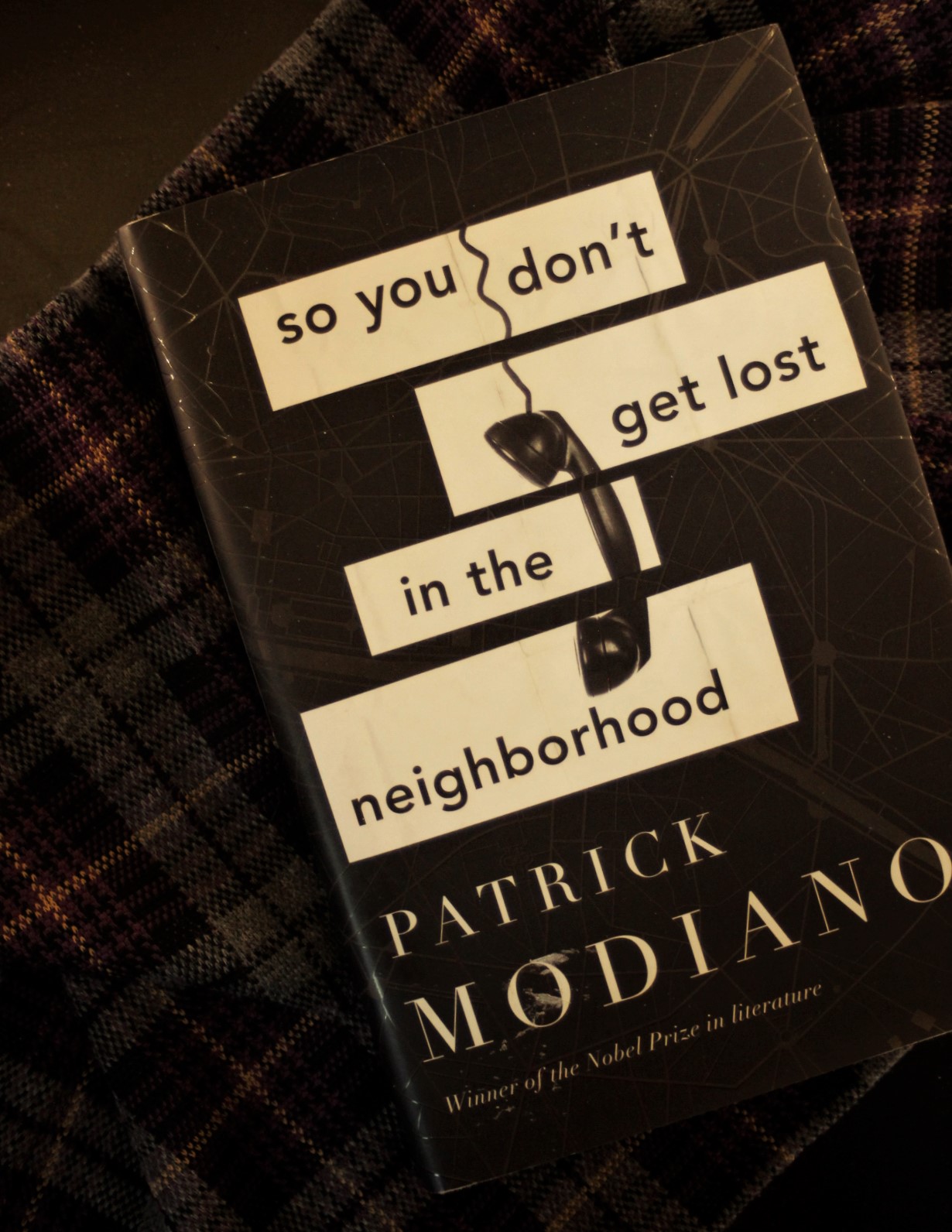
So You Don’t Get Lost in the Neighborhood by Patrick Modiano

I found this book on a trip I took with my stepmom and I picked it up because the title was so intriguing. It’s translated from French, and sometimes I worry that the translations can miss the nuances of the original language (I’m lookin’ at you, Witcher books). What can be lyrical and absolutely beautiful in one language can sometimes be stilted and jarring in another. That is not the case for this book. I’m going to say it’s very French, something I have only my preconceived notions about what is “French” to back me up on, but it’s charming, somewhat dark, and left me wondering if I solved the mystery or if I just needed to enjoy the ride. It follows the story of a man trying to figure out a distant memory from his childhood, brought about by a mysterious man who shows up with a folder and a name. The name brings him back to memories he’d tucked away for later, maybe never again. It sets him on a small trail of wonder and intrigue. It’s a lovely told story. The ending is kind of unclear, but I also finished it when I was really tired, so that is probably on me.
*******I read the 2015 Houghton Mifflin Harcourt hardback edition*******

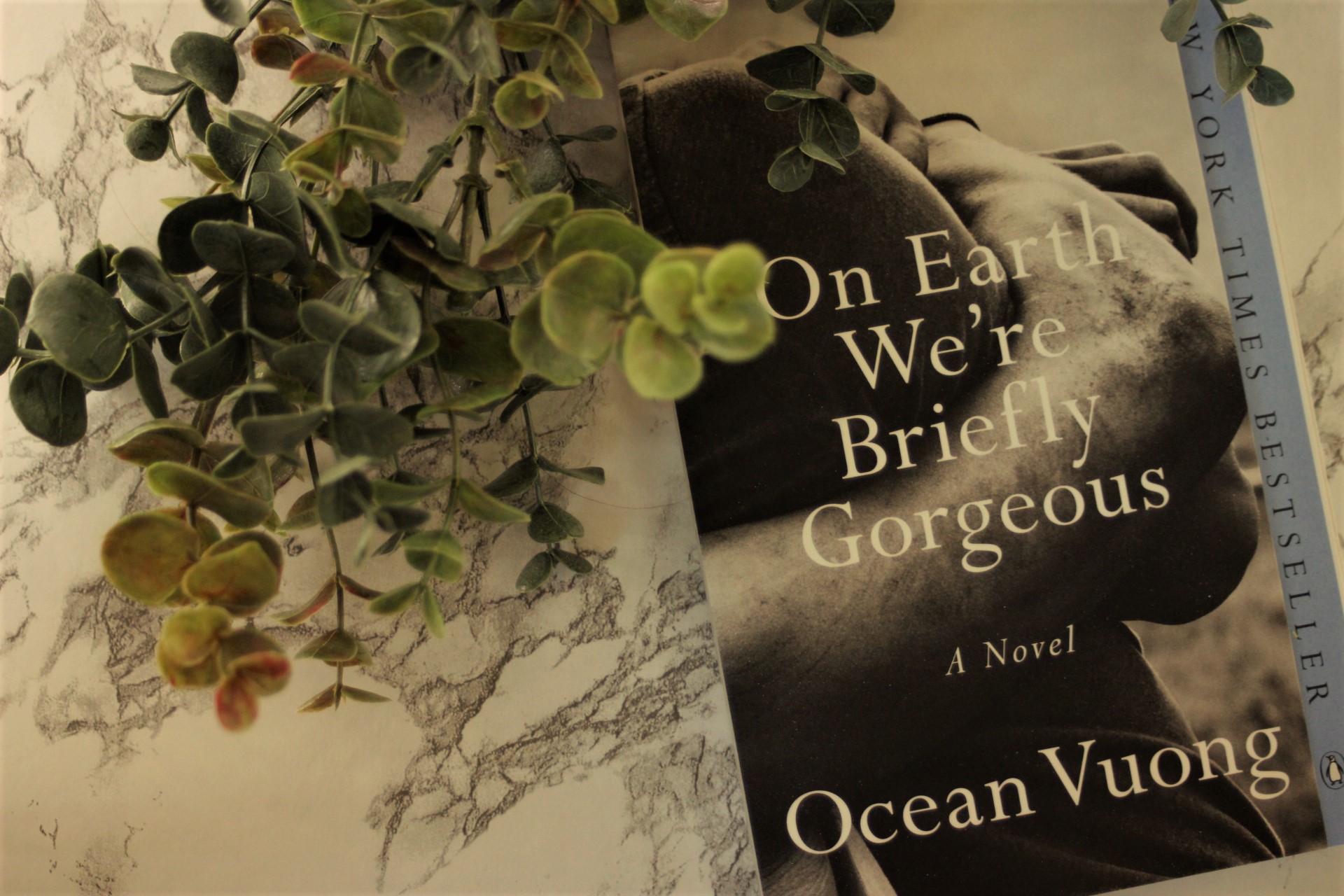
On Earth We’re Briefly Gorgeous by Ocean Vuong

This book left me for dead. I know that sounds really dramatic and kind of problematic, but the amount of weeping I did after reading this is almost embarrassing. It is beautiful. It isn’t for everyone, but if you are ready for a look at sexuality, race, immigration, prejudice, a whole slew of things, please read this. So many moments in this are heart wrenching, but there is always this underlying hope. A potential for it to end well. It is stunning.

Written as a letter to the speaker’s mother, the young man tells the story of love and loss in such a way that leaves you breathless. It asks why, hypothesizes the answers, but then never fully commits to one, letting you work on it for yourself.
*******I read the 2021 Penguin paperback edition*******

If the Trees

Note: This is a short piece I wrote for a contest last month. It does contain strong language and drug references (marijuana).

Malcolm saw the caravan first. I know he debated even radioing the rest of us, but he probably figured I’d make his life more miserable if he didn’t. The caravan was parked where Solomon said he’d leave it when he told us last night. I rode up on my motorbike and sat staring at it for a few minutes. Waiting for the others. Wondering why I didn’t just go in and get it over with.

I heard Malcolm’s ugly voice calling out from behind the silver bullet of a trailer. He hollered about how the door was locked. His irritated banging had me off my bike and running across the abandoned lot before I knew what I was doing. His gray caterpillars for eyebrows shot to what was left of his hairline as I skidded around the bumper.

“Oh, didn’t know you heard the call out, Sida.” He bowed and backed away. “Ladies first.”

I shoved him away, my blood boiling. “Hoping I didn’t want to see?”

“Can you even get in?” He hitched his sweatpants higher and retied the drawstring. “Bastard locked it before he went all vagabond-y.”

“Will you shut up?” I rubbed my forehead, my eyes squeezed tight. Headache percolating behind them. “Go wait for the others.”

Malcolm scrubbed his hand over his two week stubbly beard. “You aren’t the only one who’ll miss him.”

I gave him a small grimace meant to be a smile as I dug into the pocket of my jeans. “You just hope he left behind his weed. Please, Mal? Let me have a moment.”

He waved and grunted as he returned to where he’d parked his truck. I pressed my palm to the door, the metal cool even though the sun had been out that day. The first time I went into the caravan was the day Solomon joined the crew. He met us at a rest stop out in Ohio and had no kind words when Malcolm assigned me to be his navigator. He’d tolerated me and let me know it. Guys like Solomon didn’t need to be told where to go. They went and the world followed.

I unclenched my fist and slid the key into the lock. He gave it to me three years ago. We’d stopped at one of the campgrounds for a week, watching everyone else at another crew’s fire. Solomon hated the noise, and I did too, but never said so.

He had a softer voice than people expected. His gruff exterior always scared kids and made their parents raise their eyebrows. Old enough to be my father, and I still looked about forty years younger than him. We sat at our caravan—his caravan—listening to the laughter take over our friends. My friends.

“Two years, yeah? That’s how long you been my navigator?”

I dragged my eyes away from Malcolm flirting with the matriarch of the other group. “Yeah, two years.”

He rubbed his chin and nodded, not looking at me. “You like it, Sida?”

Something about how he said my name made the rest of the world go quiet. I nodded, unable to take my eyes off of him. “I love it.”

That was the end of the conversation, but before I headed to my tent, he pressed a key to my palm and told me to hold on to it. The same key I now had waiting to turn. I didn’t want to see inside. Not without him. It wouldn’t be right.

Gritting my teeth, I swung open the door and let it close quietly behind me. I hated it immediately. The caravan smelled like his cigarillos. I laughed and sank against the counter of the kitchenette.

“Damn it, Solomon,” I said, lightly tapping my forehead on the cabinet above the practically useless sink. I’d broken the faucet once trying to make him dinner. He fixed it, but it never worked right in the winter.

“Focus.” I didn’t have long before Malcolm would figure out I had the key.

I knew where to find what I needed to. Solomon told me two nights ago. He’d asked me to stay the night. I should have known. He never let me stay. Said it would ruin my reputation, even though they already thought we were together. Said he didn’t want the others to talk about me like they knew me. They did know me, I protested, and he told me the only knew a speck of who I was. It made me laugh and I lit one of his cigarillos for him.

“And you know me so much better, is that it?” I propped my feet on the dashboard. “My own momma ain’t know me, man. What makes you think you do?”

He didn’t answer, just took a long drag. “I got money. Not much, but enough. The others don’t know about it. In case something happens, I want you to have it.”

“You planning on me needing it?”

“It’s just in case,” he said, snapping a little. He rubbed his bald head and sighed. “I want you to stay tonight, Sida.”

The sound of tires on gravel ripped me back. I cleared my throat and went to the front. The passenger seat. Where I usually planted myself for hours at a time. We didn’t talk much at all those first few months. He’d mostly argue with me on directions and be mad when I was right.

I swiped at my eyes and opened the glove box. “You absolute bastard,” I muttered as I pulled out a small box.

It wasn’t very wide, but it was long and deep. Everyone else knew this box as his stash. His weed sat in neat bags balled up in the far corner. There were food vouchers in a bundle held together by a rubber band.

A folded piece of notebook paper waited on top of it all. I sighed, more of a groan, and opened it. “Fucking asshole.”

Sida, this won’t be long. I said what I needed to already. I hope you’ll indulge in the weed at least once, but if not I’m sure Malcolm will take care of it. You know how to find the rest. Take any books you want. Burn the rest of it down. –Solomon

I laughed and got up, still holding the box. Standing took too much effort and I sank down against the cupboards and hugged my knees as sobs took over. As quietly as I could, I cried for Solomon. Something he’d have hated.

Two nights ago he asked me to stay. Every other night, we’d separate to sleep. I’d head to my tent, wishing I could slip under his sheets and lay beside him. Just be next to him. He brought me into the caravan long after everyone else had gone to sleep. I didn’t know what to expect, really. But he held me. That was it. He held me as we talked even more. It was all I’d ever wanted, and being close to him, pressing my face into his shirt, feeling his chest rumble as he spoke in the too early hours of the morning—I’d never known anything like it.

He’d despised me for so long, hating that I was beside him everywhere. It was the rule of the crew, though, that everyone went in pairs and there was a navigator. Eventually after several long months, he didn’t tell me to shut up and we talked. About books. Stories he wanted to tell but never had the right person around to hear them. He’d been divorced since the nineties. After his only novel sold, he quit the life he knew and began his roadtrip, a circuit around the country, weaving through the states on his way from coast to coast. He found us through a bulletin board posting at a rest stop near Chesapeake. Met us in Ohio. He liked Malcolm. At first.

I pushed myself up and began to dump out the box. On the bottom was a tiny button. Pressing it opened the lower half. Ten thousand dollars. I stuffed the cash into my jacket pockets and laid everything else on the counter.

Two nights ago. Solomon took me to his bed and ruined anyone else’s chances of me falling in love with them. He stroked my hair, listening to the night sounds around us, the dimness giving him eerie shadows on his face.

“I’m leaving the group,” he said into my hair.

“Why?” I tried to sit, but he held me still. “Solomon, I don’t–”

He rolled onto his back and put his hands behind his head. “It’s time. I’m going to hike for a while. Live off the land. Become the land.”

“But won’t you—won’t you be lonely?”

His smile surprised me. He reached over and trailed his fingertips along my arm. “I don’t think so.”

A lump almost choked me and I faced away from him. The bliss turned to ash in my gut and I wanted to leave. He rose to his elbow and pulled me back. Cupped my face so he could study me. Learn every bit of my face and burn it into his brain forever.

“I love you, unearthly thing. That’s why I won’t be lonely.” The kiss he gave me felt like goodbye.

Malcolm slammed open the door as I was putting the books I wanted into a small box. “You’ve had quite a few moments. Where is it?”

I passed him the weed and food vouchers. “Here, you prick.”

“Did he off himself?”

I went to the door and took a last deep inhale, patting the pocket I’d tucked one of his cigarillos into. “You should get what you want. I’m burning it.”

“But we can use it, Sida.” He gestured to the rest of the caravan. “Cleaned up a bit, we could do so much with–”

“Five minutes and it’s on fire.”

Leaving him to paw through the contents, I took my box to my bike. The others had arrived. Malcolm’s wife patted my arm as I passed her. She winked and fixed her face into a serious mask, calling the others over.

No one wanted to go in. The crew just stood around waiting for her say-so. Eventually, they’d have to go in. Such was the nature of nomads. Take what’s useful, leave the rest. Magda gave a nod and they descended on the caravan. I turned away, unwilling to watch the desecration. My gaze landed on the box of books. Sniffling a little, I picked up the top one. Solomon insisted it was the best book of all time. I told him it wasn’t as good as some of the others he had in his collection. He didn’t talk to me the rest of that day.

I flipped open the cover and watched a photograph fall out. Crouching, I picked it up, not ready to see what I already knew was there. The moment I’d taken it lived forever in the back of my mind.

A year ago. Even though I never said so, Solomon knew I loved him. I think that’s why he never let me stay with him whenever we stopped. He thought he wasn’t enough for me. I didn’t know how to say he was, so I slept by myself in my tent, popped up next to his caravan.

I’d found an old Polaroid camera at a thrift store. It was only a few bucks, and I traded some of my food vouchers to Magda for use of her debit card to order film. I wasted most of the film. Taking photos of everyone. Solomon refused to be photographed. But as we entered our campground that night, I told him it wasn’t for anyone else, just for me. He’d given me some serious side eye as he stubbed out his cigarillo.

“Fine, but you have to be in it, too.”

I agreed and situated us so we’d both be in frame. Began the countdown.

“Look at me, Sida.”

It was the best picture I’ve ever taken. Both of us were lit by the last golden rays of the setting sun. He had a ghost of a smile while I beamed at him. He’d taken the photo from me and shook it before sticking it to the dashboard. Said it was for the both of us.

As I straightened, I saw he’d written on the back of it.

I hoped you’d take this one. I know I’ve made you mad. Probably think I’m an ass. But the beautiful thing about all of this, the whole last six years of my life, I wasn’t even looking when I found you.

I tucked the photo back into the book and turned to see Magda watching. She tilted her head and came to stand beside me. Passed me her pack of cigarettes and cleared her throat.

“I’ll give them five more minutes, and then I’ll let you light it up.” Her cheek twitched as she saw Malcolm wave from the driver’s seat. “I’m sorry, Sida. You can meet us in Topeka if you want to take some time to find him.”

“It’s fine,” I said as I lit a cigarette. I held the smoke too long, but forced myself to push it out in a long, slow breath. “If the trees are his home, the road is mine.”

Poem I Wrote for a Boy, But Now Give to a Man

I never told you,
but when the sky is blue–
the kind you find on marshmallows
in Lucky Charms–
I have to take a picture with my eyes
and imagine you can see me.

You know,
I never said this when you were here,
but you made life breathable again.
It’s gotten hard to breathe
and I don’t know what to do.


I read recently that nostalgia lies to us about the people who’ve died. How we spend so much time remembering the good about them, and not really thinking about all the ways they’re awful. And it made me wonder, well what’s wrong with that? Why do I need to remember the ways a person hurt me when I want to be happy with the memories of them that bring me joy? I’m not offering them sainthoods in their next life, I’m offering myself respite from the grief of loss.

I’m fine, really. This week’s post is a poem I wrote back in 2013 and it was originally for my friend Robbie, but as I read it, I thought of Henry. It’s almost unfair how much of my creative processes get devoted to him, but if he’s been the reason I still write, or paint, or give light to the world, I don’t think that’s wrong.

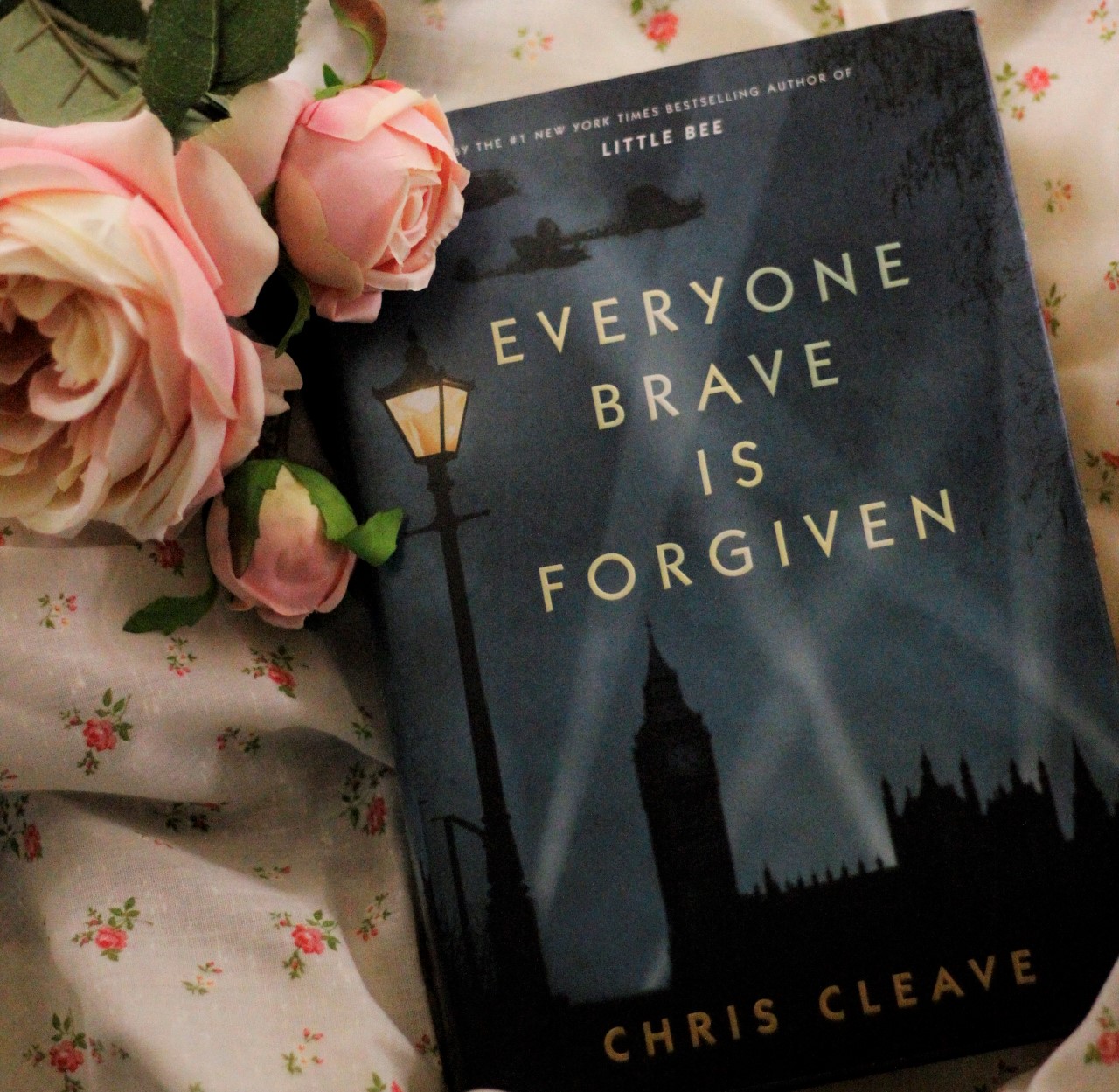
Everyone Brave is Forgiven by Chris Cleave

Everyone Brave is Forgiven grabbed me by the title and I pulled it from the shelf without much other thought. From the cover, it looked like it was going to be about London during WWII, and I was correct, but I still put it on my to-read shelf and forgot about it. I don’t know if I’ve ever said so on here, but WWII is one of my favorite times to read about, fiction or not, and so I tend to gravitate toward those stories. So many of them are similar, and yet all of them are different. I find sometimes they can be a bit predictable, and while at times this book was to me, I still enjoyed what I read.

What I liked about this book the most was the main female character, Mary. She comes from an upper middle class family (fairly more well-to-do than a lot of people), and when mobilization begins, she decides to join up in the form of becoming a spy. Well, they don’t need her to be a spy, but they do send her to a school to be a teacher. She has no experience in this field, but she takes to it easily, loving the children instantly. She becomes a teacher right before the evacuations took place and children were sent to the countryside of England.

Mary befriends a black boy, Zachary, and she promises to write to him while he’s away. Racism is a theme in this book, and while Mary sees nothing wrong with being friends with Zachary (he’s a small child), her family and friends tell her she’s being impertinent and socially incorrect. There’s quite a bit of language used that made me uncomfortable, and I know it’s “how they talked at the time,” but it still gave me some pause as I read it.

Zachary is abused by the people in the country, and eventually he’s brought back to London where he goes back to school with Mary as his teacher. Mary has a unique talent for getting what she wants, and when her class is evacuated, the first thing she does is go to the man in charge of her district and asks for another class. He tells her there isn’t anyone to teach, but she points out those who were left behind for “difficult circumstances.” Sometimes Mary’s privilege shows when she can’t understand why certain things are done the way they are, but by the end of the story, she’s learned. Mary is vibrant, sarcastic, and determined. Her enthusiasm for doing what she believes to be right is never quite squashed by the bombs dropped on her city.

There is heartbreak and absolute tragedy throughout the story. Depictions of violence and some graphic details of war wounds and building devastation. It all adds up to a well told story that by the end of we are possibly just as tired as the characters. The few moments where I was dragged out of the story because of my stretch for belief were few, and hardly significant past the moments they were.

I give this book an 8/10.

*******I read the 2016 Simon and Schuster hardback edition*******

The Power of Habit by Charles Duhigg

Technically I haven’t finished reading this, but I reached the appendix and the notes, so I’m going to discuss my thoughts on this book today. When I picked this up, it was kind of on a whim. The title caught my eye at the store, and the yellow grabbed me, too. I’ve been struggling with personal habits lately, so I thought this would be an interesting perspective to read through. I was right. This book is incredibly readable. Typically when I grab non-fiction, I struggle to read it because it’s very factual and very thoroughly researched (hopefully, anyway). That’s not to say this isn’t well researched or full of facts, because it is that, but Duhigg approaches it from a reader perspective. Something I feel non-fiction writers tend to forget is how to appeal to readers of all genres and types. They get caught up in the truth they’re telling and the presentation is much like a lecture hall PowerPoint by someone at the end of their career and they’re waiting for retirement.

This is not the case for Duhigg. He starts with a story of a man with short term memory loss who can’t tell you where he lives, but he can go on a walk at 2 pm every day and still end up at home without knowing why. There are several intriguing studies presented throughout the book that made me realize I know very little about my own brain. He goes through how Febreeze became a household name, and how stores can predict your buying habits by going through your purchases when you scan your rewards cards. Something stores may not want put in the public eye, but while that’s creepy, it’s also incredibly fascinating.

The first part of the book focuses on individual habits, why we do what we do (which is the sub-title of the book). We create what’s called a “habit loop,” which consists of three parts: a cue, a routine, and a reward. As we receive the same cue, then follow the same routine, and expect the same reward, a habit is formed. This is true for negative habits, too, which makes sense because even though we don’t typically think of the negative outcomes as rewards, they become ingrained as part of the routine, so we follow them. Sometimes unwittingly.

I’m not saying this book has changed my life completely, because I still have habits I consider unhelpful to the person I want to be, but it’s certainly opened my mind to a new realm of understanding. One of the key factors in habit change is belief. Duhigg uses the coaching style of Tony Dungy to approach the topic of belief and he talks about how no matter what Dungy did, the teams would revert back to their old habits in times of stress simply because their belief in the new ways faltered. This is honestly the stage of change I struggle with the most.

This last year I’ve been trying to revamp my thought processes–before I read this book, even more so now–and the process has been almost excruciating. I’ve spent almost 2 decades hating myself, and trying to switch gears and think differently feels like an impossible thing. But that’s the thing about it all. It isn’t impossible because I’m doing it in small ways here and there. I’ve talked about how my depression manifests itself as dishes to wash and laundry I move from hamper to mattress back to hamper. Well it still does, but not as badly. My dishes are never more than a few days left unwashed, and I fold my laundry within a day of doing it. I don’t know specifically what changed my brain to do this, but somehow I’ve convinced my depressive side that this is unacceptable and there needs to be something different we do when I get caught up in my head for too long.

I think this book is worth a read if you’re interested in habits, but I don’t think it’s a book everyone should read. Some people are living their best lives and have no need to go this far into their own heads. I give this book an 8/10.

********I read the 2014 Randomhouse Trade Paperback edition*******

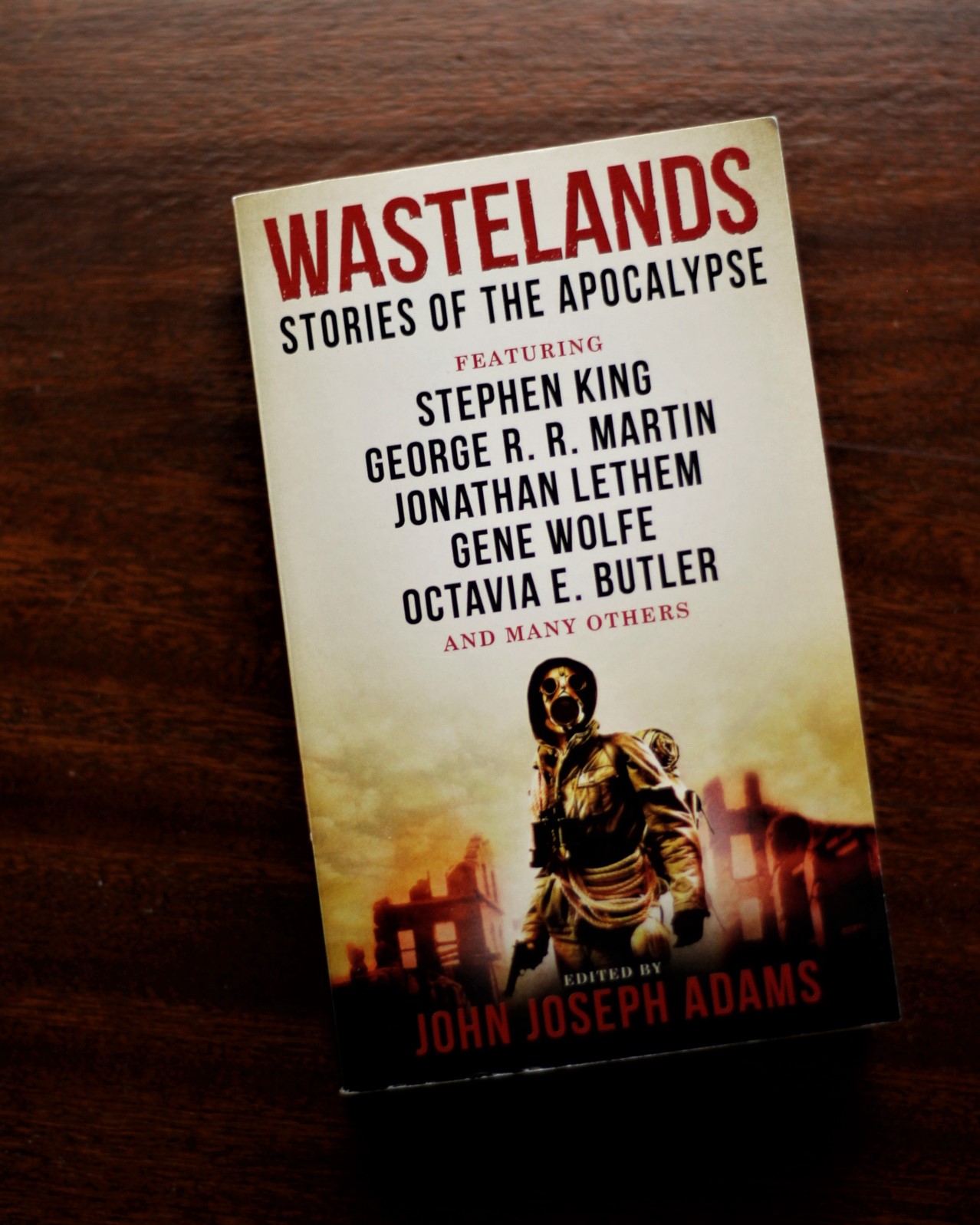
Wastelands: Stories of the Apocalypse, edited by John Joseph Adams

Hey. How’s it going? Doin’ all right? Weather’s getting nicer. Finally. Today we’re talking about a collection of stories I picked up as research for some of my own work, and eventually just read it for enjoyment. Everyone has an apocalypse theory. A reason for why the world will end. Plague, natural disaster, humanity eating itself. Endless possibilities. It’s difficult to write a review for a collection of stories as a whole book, so I’m going to give my thoughts on the ones that stood out to me. The big draws for this book are obviously Stephen King and George R. R. Martin, but only one of those big names had a story that stood out to me. So, let’s get in to it.

There are 22 stories in this collection, and I’m going to touch briefly on eight of them. These are the ones that I’d consider the better of the tales being told, but that’s not to say the others don’t have their merit. My preferences tend to be on the more emotional side, the more “hit in the feels” kind of storytelling. That said, the opener for this was Stephen King’s, and I felt nothing for it. He’s not someone I actively seek out to read, and that’s not me trying to say he’s a bad author. He has a massive fanbase, and my opinion is more like a bloop in the ocean. My first choice of story that stood out, hah, is:

Dark, Dark Were the Tunnels by George R. R. Martin
This story centers on Greel. Greel is a man. He’s what’s left of humanity on Earth after the apocalypse forced most others off the planet. But the others have come back. What happens is a misunderstanding of the new life on a radiation ravaged planet, where life began anew underground. It feels almost like a commentary on the differences between cultures being mistaken for aggression, and instead of waiting to figure out a compromise or a way to communicate, it escalates to fatal proportions. It does have an expected feel to it, where as reading it becomes fairly obvious what’s going to happen, but I still found myself thinking about it after I’d finished. One of the things I like about Martin’s style is his descriptions. He’s very good at showing exactly what he wants you to see. I give this story an 8/10.

Waiting for the Zephyr by Tobias S Buckell
Mara is the girl who knows there’s more to life than her small town offers, and this story is all about that hope. One of the shorter stories in the collection, that doesn’t take away from the power of that hope. This story deals with expectations of small town life (I say small town, but really it’s more like a spot of life in a desert), and the ambitions of someone not willing to be tied to that life. It’s written well, and Mara is memorable. I give this story a 9/10.

Never Despair by Jack McDevitt
Another short piece of the collection, this is almost on the same level of optimism as “Waiting for the Zephyr.” It follows Chaka as she goes in search of answers. The world’s ended, obviously, and she wants to find out more, to understand what happened to those who’d gone before. Chaka talks to a projection of Winston Churchill, and they have such a charming conversation. That may sound sarcastic, but I don’t mean it to be. It’s really almost like a granddaughter telling her grandfather about her day at school. It’s in this story that my favorite quote of the book can be found: “The turnings of history are never directed by crowds,” he said. “Nor by the cautious. Always, it is the lone captain who sets the course.” I give this story an 8/10.

Artie’s Angels by Catherine Wells
This is the first one that kind of made me sit back and contemplate life for a while. It’s about a rough neighborhood and turf wars (that’s my very basic level description, it’s more than that), and a hero trying to live out a dream. It’s got the desperation for something more than what the world is offering, the frustration at never being enough for that success, and just so much more to it. By the end, I wanted to spend time with the people who matter to me. To ease the loss of something that wasn’t real in the first place. I give this story a 9/10.

Inertia by Nancy Kress
Holy balls, this one knocked me backward. It was a bit predictable in some places, but by the end of it, I was ready to go to war and fight battles for people that didn’t exist. It’s the story of an old woman in a neighborhood cordoned off for being a colony of diseased people at the end of the world. There’s lots of talk of “before,” and there’s lots of talk of how to make life better for everyone inside the colony. The best line from this story is, “She cannot change the world. It’s too old, too entrenched, too vicious, too there. She will fail. There is no force stronger than destructive inertia.” I give this one an 8/10.

Speech Sounds by Octavia E Butler
I feel like when Adams was putting this collection together, he saved the best stories for last, because this one is almost perfect. It takes a look at the scenario almost like the Tower of Babel from the Bible, where language fails at the end of the world, so no one knows how to speak properly or really communicate well. Grunts and hand gestures mean different things to different people. There’s no real way to say what is meant. Except for the main character, Rye. She can speak, which is a rare thing and seen as dangerous. It’s something she keeps to herself. The story would be perfect if there weren’t a lag in the later quarter of it. I give this story a 9/10.

The End of the World As We Know It by Dale Bailey
This story is almost meta in the way it calls itself out for being a story about the end of the world. It approaches the topic from the point of view of a lone survivor of some mysterious thing that’s caused everyone to die. He roams the leftover world to find something of a purpose, and it’s just pure desolation. I like this one because it gives a bit of a different perspective on apocalypse stories while still being cliche at places. I give this one a 7/10.

A Song Before Sunset by David Grigg
In the whole collection, no story ever made me close the book and set it aside because of the despair the apocalypse usually brings. Until this one. I would have cried if I’d let myself think about it too much. It follows Parnell, a man who lives by himself in a rundown city. It’s rough, as these stories are, but for Parnell, he tries to hold onto the beautiful things. The books, the art, the music–all past things now essentially obsolete because no one has a need for beauty in a broken, dead world. Parnell finds a way to get into a concert hall where a grand piano is waiting on the stage for him. He used to be a pianist. He trades with a kind of “general store” merchant, the Tumbledown Woman, for tools to repair this piano. And he plays it. There is a huge undercurrent of “what do we do with the beautiful things when the world ends?” running through this, and it is an excellent question. Because there will always be reason to hold on to the beauty, the bits of the past that aren’t useless, not entirely. But there will also be a need for necessity. It becomes a delicate balance of what is needed for survival and what is not. Practicality over frivolity. This story felt the most apocalyptic to me. I give this one a 10/10.

Episode Seven: The Last Stand Against the Pack in the Kingdom of the Purple Flowers by John Langan
The last story in this collection was one of the more interesting stylistically. I’ve never read work by most of the people in this, but I was not prepared for this one. Written entirely in one sentence over the course of forty pages, I was ready to hate this. Episode Seven is about a woman and her best friend running away from a pack of hyenas (maybe hyenas? I don’t think it was fully said they were hyenas, but they were animals like hyenas). These animals are smart and tracking them through all kinds of terrain, and all kinds of metropolitan destruction. There’s an added level of fear for her because she’s also pregnant and nearing the end of her pregnancy. Her best friend, Wayne, somehow knows all the things he has to do in order to help them survive in the busted up world. But there’s something not quite right about him. Something has been off the entire time, but she’s been unable to figure it out. I loved the ending of this story, and by the time I’d reached it, I hadn’t paid too much attention to the punctuation situation. This was a fun thrill ride of a final story, and I think it gets an 8/10.

*******I read the 2015 Titan Books paperback edition*******

Arc of a Scythe by Neal Shusterman

Y’all. When I sat myself down to write a blog post for this week, I was not expecting to do another book review so soon, but I need to be an absolute mess about this series. I love Neal Shusterman. 10000000% his storytelling is one of my favorites out there, and this series, hoo buddy. I haven’t enjoyed a series so much since Lord of the Rings (to be fair to the other series out there, I only read it in its entirety probably three or four years ago, so in reality, I’ve read quite a few other series before Lord of the Rings). Anyone who knows me knows that is a ridiculous amount of love, and I to this day annoy my brother with Boromir dying memes. Never forget the ones you love.

Anyway. Yes. The Arc of a Scythe Series. I was recommended this by someone who’s reading opinions I trust, and she did not let me down in the slightest. I want to go on such a ramble about this set of books, but I won’t because I don’t want to spoil it for those who want to read it. As far as modern fiction goes, I am not well informed. I have my collection of books to read and I don’t really deviate much from them. I’ll add classics and sometimes WWII non-fiction and fiction to my shelves, but very rarely do I branch out and get taken in by more recent leaps into the world of reading. I see all kinds of fervor over the Court of Rose and Something Something series on Instagram, but that’s not my cup of coffeecake. I like action driven, over the top dramatic sometimes, and at the end a very emotionally draining book.

This series has everything in it I love about reading. I read the first one, Scythe, back in January and I had to wait until I had my tax refund to get the second and third one. I read them both over the last three days. They’re not small books. They’re hefty enough that they’d hurt if you had one thrown at you. I regret nothing because I haven’t been so happy with a book in so long and I tell you what I need to ramble.

I went into this thinking I knew what was coming and I am very, very happy to say I was incorrect. What I expected happened in maybe two places, but everywhere else, I was not prepared. The level of intrigue, the level of depravity, it is so far beyond a standard YA fiction to me. And maybe I’m not as up on YA fiction as I could be, but one of the things I was concerned about (and my brother said this, too) was how young the protagonists are. The first book centers around Citra and Roman, two teenagers plucked from their lives to begin training with the ever mysterious group of people called Scythes. See, in this future world, no one dies. The omnipresent being called the Thunderhead has eradicated disease and misery in most forms. People are ageless, and so in order to maintain some semblance of balance (or population control as it’s referred to a few times), the Scythes were created. They are the ones who choose who dies, and they’re beholden to their own set of laws or commandments. The Thunderhead controls the general population, but it cannot have any bearing whatsoever on the world of Scythes. They govern themselves. People are either fearful or indifferent to the Scythes. Most go about their lives not really caring about death until they see a Scythe, and then it all gets real. To be selected for an apprenticeship is no light thing. Once one is chosen to become a harbinger of death, normal life is upended. Family no longer knows how to treat you. People bend over backwards to accommodate a Scythe, often giving them free access to things since they don’t make any money doing what they do. And while people die frequently (there are people who die for fun just to be revived at a revival center. The morbidity of this whole idea of death is so deep it’s mind blowing), no one stays dead. Unless a Scythe gleans a person selected for death, that person is dead. They can’t be taken to a revival center and be brought back from “deadish.” I’d go into more detail, but I really want people to read these books, so I’m going to leave it there.

The first book sets the scene so dang perfectly for the following books. While the two main protagonists are indeed teenagers, they are not left to fend for themselves, and often are in the presence of their mentors, or other fully instated Scythes. Of course, there are a few “save the world” challenges they face, but in the end, the teens work with the adults to accomplish what they must. They’re less burdened with the pressure and it’s kind of spread across the few good people remaining. There’s the standard bad guy who corrupts the meaning of good to fit his narrative, there are religious zealots who cause unmentionable suffering. There’s moments of levity and love. It’s intense in its drive to find the truth in all things, and when the secrets are finally revealed, I admit I held the book high as I screamed in delight.

I will probably read this again at some point, because it’s that good to me, but I will lament I can’t read it for the first time again. It’s a series I will recommend highly to anyone who enjoys reading.

I give all three of these books, individually and together, a 10/10. I’d go higher if I could.

*******I read the 2017, 2019, and 2020 Simon and Schuster Paperback editions*******

The Last Wish by Andrzej Sapkowski

Let me begin this by saying I’m someone who prefers books over visual adaptations of those books. I say this because I think this is one of the rare times I prefer the show over the book. I feel blasphemous saying so, but hear me out. I’ve not played the games or seen a playthrough of those games, so I can only compare the book to the show (I’ve heard it said that the games follow the books more closely). While all of this sounds as though I’m about to take a dump on this book, I’m not. I’m going to try and look at the book as a separate being from the show and discuss my feelings on it.

I don’t think it’s bad. Let’s get that out of the way first, here. It’s not a bad story being told. For me, the disconnect comes from the writing style. It’s not that I think Mr. Sapkowski can’t write, he can, it’s just a different style than I am used to. With that in mind, I read through this book in the space of about two days (because I had to work, yo), and I appreciated the quickness of the read. There were several spots where it fell very flat, however, and it felt, as one of my friends said, like we were waiting with the characters for something to happen. Part of me wonders if that’s because we lost something in the translation (originally written in Polish), but I know nothing about the original language, so I don’t even want to speculate further. I didn’t approach this as something that would blow my book lovin’ mind, but I did expect a little more than what I got.

This is the introduction to Geralt Roger Eric du Haute-Bellegarde, or simply “Geralt of Rivia.” He’s a witcher, a mutated not quite sorcerer, not really human anymore, not really anything but a badass of fighting skill and ability to take down the world’s scary things that go “oof” in the night. Witchers are rare. They’re a dying breed (?) because the lore used to create them has been lost over the centuries. They’re pretty cool characters, and one thing I appreciate in the book is how there are other witchers. Geralt is not the only one. In the show (shhh, I know I said I wouldn’t), Geralt is presented as one of the last of his kind. That’s true still for the books, but there are at least five in the books (that I remember at the moment, but I started reading them out of order, so I got ahead of myself… It’s high school and Harry Potter all over again). So Geralt isn’t the last surviving hope for humanity.

In the first book, it’s mainly set up for the characters who come later. There’s some oddly sprinkled in fairy tale references that kind of made me feel weird after their appearance. I’m not 100% sure on the effectiveness of trying to link those to this world, because it kind of took me out of what I was reading. We meet Dandelion, Geralt’s bard friend, Yennefer, the love interest (or is she?), a priestess named Nenneke, who I was pretty fond of although I’m not sure of how much of her we’ll see later on in the story. Mousesack, the sorcerer to Queen Calanthe (who is absolutely a badass woman and I loved her so much). Pavetta and Duny, the two deeply in love people who first bring up the Law of Surprise (a thing which becomes important later).

The Law of Surprise is something I don’t fully understand. In the show, it’s very briefly touched on in the episode where Geralt defends Duny and Pavetta’s relationship against Calanthe’s sketchy underhandedness. As I understand it, from the book, basically what you don’t know you have waiting at home is now the thing the person who helped you receives as payment for that assistance? It seems to be used mostly when lives are saved. Which is useful. But another way the book and the show deviate is Geralt knows Pavetta’s pregnant in the book. On the show, it’s truly a surprise, which then makes it a bit touchy later on when certain events happen.

I’m a fan of the show because the story is told in a way that moves itself along and is faster paced. Plus, Henry Cavill is Geralt, and I don’t know that I’d want to see anyone else in that role. Not because I have a healthy (shut up it is) appreciation for the man, but Geralt isn’t a flashy character. He’s very reserved, and he’s very observant. He’s doing his best with the job he’s been given, and the world just seems to get in the way because people aren’t very keen on difference. The parts of the book within the show are done very well and stay true to the story Sapkowski is telling. It’s rare to me to see something so close to the source material. Though these days, Netflix starts out strong with their adaptations.

I’ve reached the point where I’m rambling, so I will go ahead and close this out by saying I don’t regret reading this, but I’m not in a hurry to read the second one.

I give this book a 7/10.

*******I read the 2017 First Trade Paperback Edition*******