Indivisible

When I was in elementary school, every morning Mr. H would come over the PA system, blasting “My Girl” before delivering the morning announcements. After the announcements were done, a student would lead the school in the Pledge of Allegiance. This practice happened every morning of my school life from elementary until my senior year when we were given the option of not rising or reciting. As a tired senior, I was grateful for the option of staying seated, and I never really considered the significance of what we spoke each morning for so many years. The practice continued, of course, and as I sat there, I started to think about the words. The original words are as follows:

I pledge allegiance to my flag and the Republic for which it stands, one nation, indivisible, with liberty and justice for all.”

The addition of the phrases “of the United States of America,” and “under God,” weren’t added until much later. I’m not debating the addition of these words today, but what I am drawn to is the significance of the word “indivisible.” It’s not even a joke anymore how clearly split down the center my country is. The memes hide the excruciating sadness at such a fragile thread of balance left. There are two major camps, something that always amazes me how people can be lumped into one specific group when the issues are so diverse. To me, this is not what the founders of our country had in mind when they began the bells of revolution just 245 years ago. In my short span of life, that feels like an age has passed. And with the rush of technology and information, it certainly can be described as such.

In one of my favorite underrated musicals, 1776, there’s a powerful scene where they’re preparing to vote on the resolution for revolution (essentially). The vote has been stalled because the south wants the clause about slavery being abolished removed, and the north doesn’t want to take it out. Here’s a quote from that scene:

Benjamin Franklin: “John, I beg you consider what you’re doing.”
John Adams: “Mark me, Franklin, we give in on this issue, posterity will never forgive us.”
Benjamin Franklin: “That’s probably true, but we won’t hear a thing, we’ll be long gone. Besides, what will posterity think we were, demi-gods? We’re men, no more, no less, trying to get a nation started against greater odds than a more generous god would have allowed. First things first, John. Independence. America. If we don’t secure that, what difference will the rest make?”

I bring this scene up not because I want to prove that slavery was kept to appease the south, but more because I reached an understanding high school me didn’t see. The founders weren’t more than men brought together to build something new, something completely unheard of, and we’ve raised them to the level Franklin mentions. I’m not naive enough to believe that those men were infallible, that they were the brilliant beings we tout them to be, but I respect what they were trying to do. Franklin’s comment about how if they didn’t secure independence, there’d be nothing to fight for, that fits the part of me that wants to fight for the world.

I don’t have a very loud voice on the internet, but I am doing my research to see what I can to help end the division. In my immediate surroundings, anyway. History cleaned the books up too well, and the issues plaguing us now are because we are too fragile to see what was done to build the country we currently call home. Land was stolen, backs were broken, blood was spilt, lives were lost to provide what we have today. Trying to shove that under the proverbial carpet is irresponsible and incorrect. Lying to ourselves about our past is only hurting us and our future. We cannot grow if we refuse to accept what we’ve done.

There’s one more quote I have from 1776 that remains to this day what I try to live my life by. Abigail Adams, in the musical, is trying to remind her husband of why he’s fighting for this whole thing, and she quotes something he said to her once, and that is:

There are two creatures of value on the face of this earth: those with a commitment and those who require the commitment of others.”

This quote stokes the fire I have for lifting others up, for trying to help the world be a better place for everyone. Again, I’m not so foolish to believe it can be done quickly, but I’m firmly rooted in my belief that it can be done. I take those words to mean I require commitment of others–to do the best they can. To learn, to grow, to work toward being better. To treating others better. But not to do more than they are able. Minds can be changed. It takes monumental effort, but it can be done. We don’t yell or shout down violence on those who yell back at us. No, we take this to the quieter ones. The ones who see both sides. We talk, and we listen, and we then take what we learn back to whatever side we’re on, and we educate. We share what we learn, and we then build each other up.

It’s my fervent hope. I want accountability from those who need to own up to the reality of what our history was, and I want to see us grow together.

Sunday Chat #2

I was going to do another How I Write today, but I’m not feeling it. I’m not sure what I’m feeling, to be honest. I wasn’t going to post today, but my goal this year is to post every week, and with the exception of maybe one week, I’ve done that. So today might just be a quick blarp into the universe about how it’s all right to have off days or something.

I try to put positivity into the world because there’s just so much negative nonsense going on, but it’s exhausting at times to be the bubble. I feel like that sounds a bit boo hoo Belinda, but really. I’m not always excited about life. There are more than doldrums that bog my joy down, and while I don’t always feel like talking about it, I think it’s important not to stifle those moments when they come. I tell people to let themselves feel what they feel, and yet when it comes to myself I tend to be really harsh and deny myself the advice I give others. I know this is not new to the world. This behavior is not unique to me.

But there’s a loneliness in it. There’s an emptiness that threatens to turn bitter like the aftertaste of an artificial sweetener. What you think is familiar is actually damaging more than you let yourself think. Wallowing is different than steeping, and I feel as long as I’m wallowing, I’ll be salvageable.

I’m going to go get some work done around the house, and I’m going to remember it’s okay to feel like an oversteamed potato every once in a while. The key to it is to remember to come back. Not to let it take root in your mind and become a gnarled mess you have to untangle later, when it’s worse.

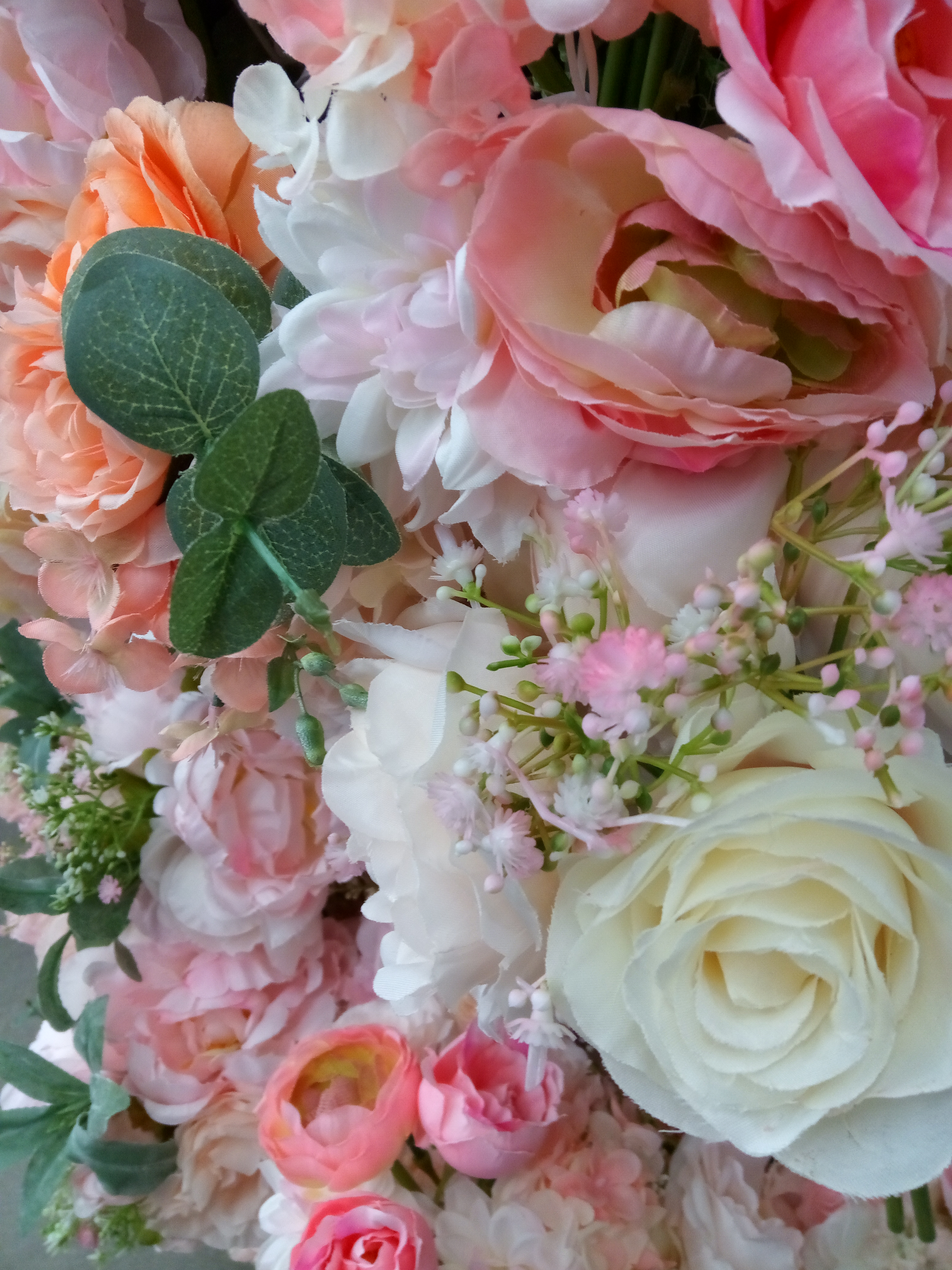
With that said, here’s a photo of some fake flowers I bought myself yesterday because I had rewards points and I wanted to get myself something pretty.

Until next time, friends

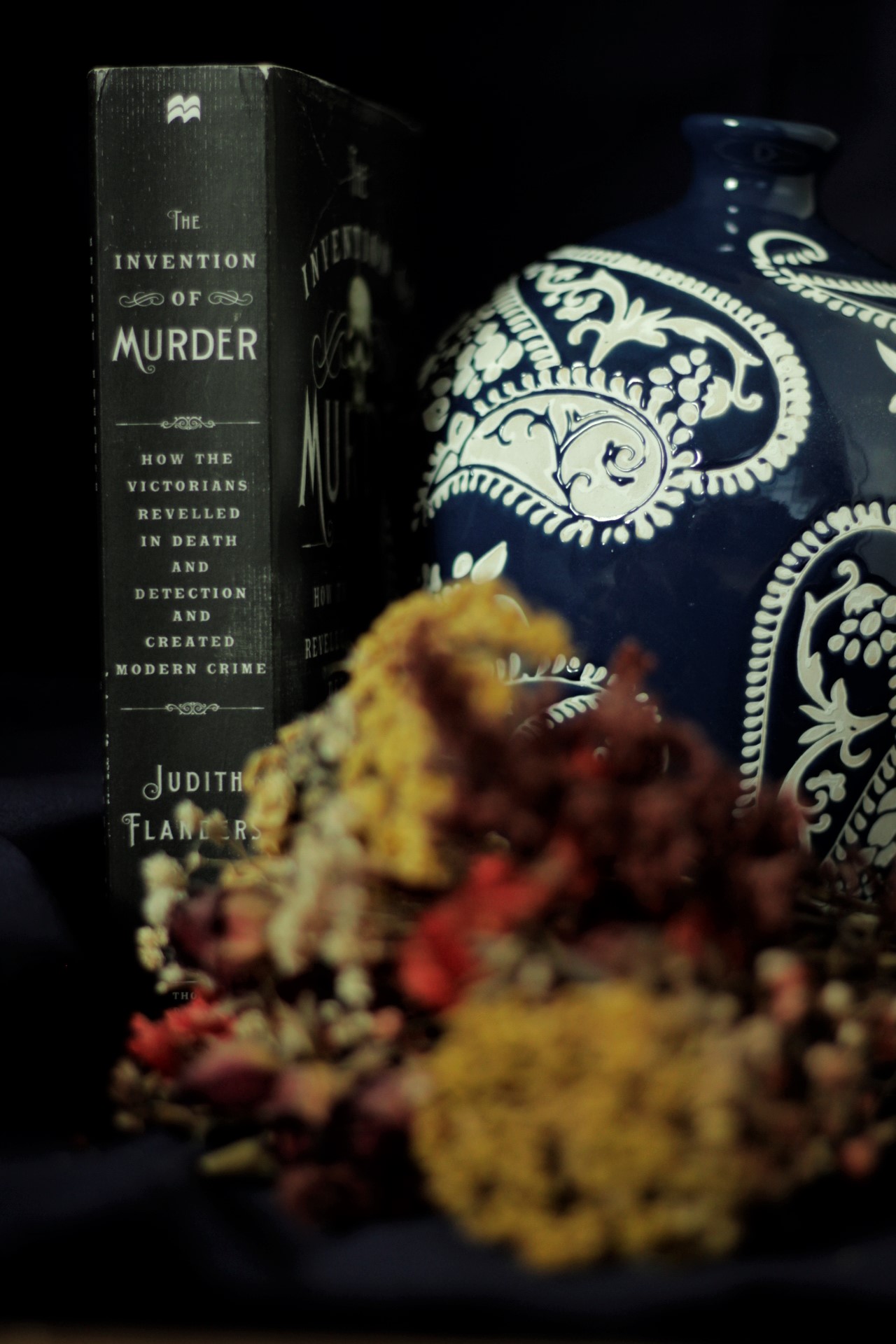
The Invention of Murder by Judith Flanders

Anyone who knows me will be able to attest to my somewhat morbid fascination with true crime stories. I used to fall asleep to Forensic Files before Netflix did something weird with their auto play function. So, when I first came across this book, The Invention of Murder, I was pretty stoked. I’ve been interested in how modern detecting came to be, and so I hoped this book would go into that as well as go through how murder became more mainstream.

I wish I could explain how disappointing this book was to me. There’s murder, yes. But it’s sprinkled between a discussion about newspaper articles, broadsides, penny dreadfuls, melodramas/theatrical performances, and every now and then novels. I understand what Ms. Flanders was attempting to do. By showing such a vast range of media produced for the public, it showed how the Victorians became enraptured with death and crime. But all it really did was bore me.

What time was spent on discussing the actual cases was well written, and I enjoyed those parts entirely, which is why I’m even putting this book up here for review at all. It’s clear the research that went into this book was insurmountable, and I don’t envy the author such a task. I think it could have been presented differently. Especially in today’s world where everyone and their Netflix budget is producing a crime documentary. I think the book is not as timeless as it could have been because it was published in 2011, a bit before the explosion of in-depth documentary series about modern day crime. There’s a show (Murder Maps) that mentions several of the cases brought up in The Invention of Murder, something I only drew connections to because I’d just read about the case.

It is certainly an interesting look at how mass produced media and “up to the moment” reporting on trials brought murder into the forefront of crime. With the advent of detective units within police departments (something that was created later than I thought), the public could see firsthand how the investigations were going. The newspapers also presented problems if the cases weren’t progressing to the satisfaction of the editors. In that respect, I appreciate the book for thoroughly showing evidence to support the notion the Victorians were the ones who elevated crime and detection.

I think in terms of enjoyment, I hyped it up too much for myself. I started reading it in August 2020, and I finished it this last week, with reading other books between. Usually when I take so long to read a book, it’s because I want to savor it, to follow it at a leisurely pace. The same could not be said for The Invention of Murder. I think it was about 100 pages too long, and the amount of references could have been lessened and the impact would not have suffered. The back of the book blurb hints at what’s inside, but gives it more of a narrative, something that disappears in the pages of examples of articles, stories, and so on.

I feel like this sounds unduly harsh, and if it does, that’s not my intention. I think it’s important to be honest in reviews especially when a lot of the “influencer” world is based solely on promotion. (I’m not saying I’m an influencer, hah, not by any stretch of any imagination) I know I didn’t like it, but it may not be the same for other readers. In fact, by the quotes in the “praise” sections, several people did enjoy it.

All in all, I appreciate the work Judith Flanders put into this, and I appreciate the approach she took to present a timeline of how sensationalized murder came to be.

I give this book a 4/10

*******I read the 2011 Thomas Dunne Books paperback edition*******

Be Not Insignificant

I don’t know how to begin this. I did have an opening that was pretty funny and clever, but honestly, I don’t feel like being funny right now. I feel like being real. Something that is lacking in today’s world a lot. With all the pressure to be on trend, be good at TikTok or whatever social media is poppin’ at the moment, and be more than what we are, I would like to be who I am and say I don’t know how to say what I want to. So, I’m going to type and see if something good comes of it.

For a while I was avoiding the Netflix show Bridgerton, because while I do find myself enjoying those types of period dramas, it looked like it was too bubblegum for me. Too pastel. I base my standard of enjoyment on the 2005 Pride and Prejudice with Kiera Knightley, if that tells you anything about me. I judged myself hardcore for watching all of the first season in a night (I had insomnia, might as well, right?). But then I watched it again because I was captivated by Rege-Jean Page’s performance as the Duke of Hastings. Not because he’s visually stunning (well, yes, that) but because his acting was remarkable. The way he conveyed subtlety is something I don’t think can ever be taught in an acting class, and each time it took my breath away. I truly believed he loved Daphne.

I did not have the same childhood Simon did, but I do know the weight of pressure, and the weight of personal promises. I won’t go into it too far because I don’t want to spoil anything, but there’s a scene that kind of stuck me right in the middle of my biggest insecurity. I didn’t even know it existed until I saw it so plainly on his face. After a confusing moment with Daphne where she says some pretty intense and rather hurtful things, Simon reaches out to her and says:

“You said I was enough!”

The desperation and pleading in his face, the absolute betrayal of what he thought was love was like a lightning bolt from my head to my toes. I wanted to throw up when I realized. I actually had a small breakdown because it hit me so hard, and I was so embarrassed that it was such a “bubblegum” show that caused me to have this incredibly powerful realization about myself.

I’ve always said my biggest fear is losing my family. And it’s still pretty high up there on the list, along with snakes and spiders, but in terms of metaphysical fear, I am afraid of not being good enough at love to keep it if I have it. When I have feelings for someone, and I mean real feelings with intent (not my ridiculous attraction to Henry Cavill), I tend to become obsessive about it. I throw myself into being the best me I can be and watch the other person to make sure I’m doing what they like and I either tone it down or raise the level depending. It’s not the same as changing myself, because I’m still me, just reducing or elevating the qualities the person of my affection seems to approve of, or disapprove. I never realized it was a fear of losing them.

But there seems to be a bit in all of us, a bit that hides behind the curtains of jokes and trending videos. The part we reach for when we’re drunk with self-pity–for good reason because here we are on a Saturday night talking to the internet. Life is so full, and yet so empty all the same.

I don’t define myself by a relationship. But should the day come, I want to be exactly what someone needs. As Simon puts it, “From the mornings you ease, to the evenings you quiet, to the dreams you inhabit, my thoughts of you never end.” I’m not interested in being someone’s everything, which might seem like a contradiction to what I’ve said above, but hear me out. I’ve been very good at being alone for a very long time, and I’d need time to be away, but I want to be home for someone. I want to be the smile that catches someone off guard. The reason for inappropriate laughter. The distraction in a work meeting because of an intense conversation the night before about something in a book we’ve both read.

I can be the most compassionate, the brightest, creative, kind, generous, whatever positive label you want to put on me, but if I do not feel it in my bones, I will never agree that I am worth it. I never want to see doubt in another person’s face, a person I’ve trusted to love me. I think that would shatter me. It’s a lot to take in, and this has been very personal. Some might wonder why I’m being so open and personal on the internet where everything is forever, but it’s because feeling like this is not new. And it is not limited to me. We should be able to talk about our deepest insecurities and not feel judged for them.

So, where does that leave us for today? I don’t know. I don’t know why I chose the title of this piece to be what it is, but the phrase stuck with me, so I’m keeping it. I guess my final thought would be don’t get so caught up in thinking you’re the worst when really you could be the best to someone. Hiding behind our self-doubt and loathing only sharpens that knife of self-betrayal, and one day will leave us bitter and empty. The emptiness I feel now is nothing to the emptiness I know exists within bitterness, and I do my best to stay above that.

This isn’t a happy blog post, and I won’t apologize for it. If you do have someone you love, I wish you joy and contentment in your love. I wish for you to soar with each other and be the brightness the other needs in the weird, wild world we have these days.

Keep smiling. Keep loving. You are, as always, enough.

Until next time, friends.

You Don’t Have To Be Alone To Be Lonely

This one’s going to be a ramble, probably. I know, so surprising.

We’re going to talk about loneliness. Sort of. We’re going to talk about how it’s okay to take time to get to know ourselves and forget about being with other people because we deserve to like who we are.

I seriously hate how self-help-y that sounds. But hear me out. I spent the last two decades learning how to hate myself. Acted on it in various ways I won’t talk about in this post (I’ve discussed it before elsewhere), but it all boiled down to the thought that I’m just average/mediocre/run of the mill not worth anyone’s time. Kept me going for a long time. Or so I thought. What it really did was give me a chronic back ache because I hold my tension in my shoulders and my lower back. Makes aerobics fun.

But what’s the point of this? Let’s focus, Carla. I’ve seen some posts recently from some of my favorite content creators who talked about how they were using this quarantine time to get to know themselves a little better, and I suppose I have, too, and I need to tell you it is

u n c o m f y

Seeing how I’ve spoken to myself for the last half of my life really kind of broke my heart. Surprised me. Kind of like looking in the mirror and noticing you had peanut butter on your face all day. “I really let myself do that?”

But it hasn’t been peanut butter. It’s been self-dragging, self-loathing on a level that is kind of destructive, and just ignoring all the people telling me I’m not trash. “Thank you, but I am. It’s fine. I’ve always been this way.”

I haven’t.

We can try and pinpoint where it all started to go in a direction we didn’t think it should, but that is like trying to pick a watermelon seed out of a pile of watermelon seeds. I’d say a needle in a needlestack, but that’s not accurate enough. You can eventually find the needle you want if you search hard enough for the specific characteristics (size of the eye, length, sharp or not, blah blah blah), but watermelon seeds all look like watermelon seeds. They slip away every time you try to take one off the plate, and then you’re left with chasing it around.

The point of all of this rambling is it’s time we started being okay with being alone. I’m not talking about introverted alone, where one recharges after having social time with people. That’s a different kind of being alone. I’m talking about getting to know ourselves and seeing we’re not actually gum on the bottom of a shoe in summer. We are the kid who has the pool so all the parties are at our house. We have what everyone wants. We are admirable. We are strong, capable, and worthy of taking the time to learn how to believe that.

I say all of this knowing I’m going to ignore it like I always have, but the difference is I’ll know I’m ignoring it. Before, I would be all self-help-y and it would be for others. This one is for me. This time I know I’m ignoring good advice from myself, so it’s easier to hold myself accountable. And that is the key. Holding ourselves accountable for the goals we want to achieve and learning the difference between discouragement and destruction. Change is excruciating. It really is. I fucking hate change. I don’t really like swearing on these things, but this requires one. It’s that awful for me. So telling myself to stop calling myself garbage is like when your teacher tells the class, “no notes on this quiz, folks,” and turns around to do work on the computer so everyone uses notes anyway.

What a crock, huh? It feels like that, here at the bottom of this. But it isn’t a crock. It’s a truth I’ve been trying to learn, that I am worth my own time, and I want the people I care about to know it for themselves, too. I don’t know that many will read this, but I hope it helps someone. Maybe someone looking for a sign to start working on themselves.

Be safe as you can be in these weird, awful times. And remember: you are worth your own time. I promise.

I Feel That: a small opinion piece on Emotive Writing

I was going to do a book review today and while I do intend to post book reviews on here eventually, I had a discussion with myself the other day while I was watching some stuff. First, I’m not an expert, so please don’t take my words as true advice. Second, it’s important to develop your own thoughts on how you approach writing. I see on writing forums the endless thread creations of “should I be a writer?” “How do I start writing?” “What makes a good writer?” And the eons of variations. Writing is so subjective. There’s no right or wrong way to do it. Not everyone is going to want to read your work, and that’s actually preferable. Then you can get a perspective from outside those who appreciate your style. It can help you grow as a writer and a person to hear from people who don’t necessarily jive with your jimmies. There are limits, of course. People end up being rude just because they can, and those people don’t matter to your growth. You are worth exploring your interests and you are capable of separating the shit from the shine.

So, that disclaimer/weird pep talk out of the way, let’s get going. I think a lot of people are faking emotion, or presenting something in a way that’s emotional without having the reality of the feeling behind it. Hold on, we’ll get to why, but let’s be real here. With the amount of distractions and the way the world is these days especially, not many people are able to tell the difference between what they’re feeling and what they think they’re feeling. If we’re not paying attention to ourselves, we can start to associate certain things with feelings instead of actually just feeling the feeling.

This might sound confusing, so let me try and go a bit further into it. Two things I came across recently for this: a video about how a singer wasn’t able to actually emote the feeling behind the lyrics of the song, and an episode of Criminal Minds from the earlier seasons. In the video with the singer, the commentator said it sounded like he was trying to make it sound emotional. “There’s something that comes across as very thought through. . .it’s about the dynamics of the singing. It just seems like he’s trying to make you feel something instead of feeling it and getting it out there with his vocals.” (Semi-quoted from this video here: https://youtu.be/ddUBW9Ms0mA link opens in a new tab) While he’s talking about a song I secretly like (don’t come at me, Justin Bieber can really sing when he puts his mind to it), he’s 100% accurate. Maybe there are some preconceived expectations of Mr. Bieber because of his history as a person, and perhaps we’re not really sold on how true this song is to him because of that. That idea is a completely different post, however, so let’s move on.

I’m not putting a spoiler warning here because Criminal Minds has been out for over 15 years and so if you haven’t seen it, that’s on you, not me. In one of the seasons, a character, Elle Greenaway, gets shot by an unsub (unknown subject–cute, yeah?) and while she’s in surgery, she sees the light at the end of the tunnel and her deceased father is waiting on the private jet to take her to heaven. It sounds like it would be an intense, emotional moment, right? But it wasn’t. Maybe it’s how the actress did her job, or maybe it was the writing of the scene, but it fell flat and pissed me off because it was forcing me into an emotional moment I didn’t believe in. This is also a pretty common trope in television series, but within the same series a few seasons later, Aaron Hotchner is in the hospital fighting a wound/scar tissue issue, and he sees his murdered wife and the guy who killed her. This was a far better use of the trope because we’d had time to learn about Hotchner and we’d had time to appreciate him.

All of this leads me to the topic today, emotive writing. I’m not talking about books that make you ugly cry, not completely, but I’m talking about writing that makes your readers feel something other than “I am here reading this book.” When I think about my favorite books, they’re designated as such because I usually had an emotional response to them. Again, not the kind that made me cry. Tana French’s In the Woods is a mystery and the entire time my anxiety built and by the end, I was ready to never set foot in woods again because of how intense the emotion was. The Green Rider series by Kristen Britain is one of my favorites because I have an emotional connection to the main character as she does her best to help keep her home safe. Through her challenges and failures, I am invested in what she does. I feel like I’m right there with her as she fights off the bad guys. Neil Gaiman plays into the part of me that still tries to be a kid full of wonder because of how imaginative his writing is. He grabs onto that and runs with it so by the end of the book, I’m ready for another adventure.

I think it’s impossible to list all the ways writers can work emotion into their stories, but the idea is it has to be genuine. It has to be real and honest. If we’re writing a death scene for a beloved character, have we really given the audience time to invest in them enough for this death to matter? Or are we playing on what we hope they’re bringing with them to the reading? This is getting a bit into some literary theory, which one day I might do a series of commentary on that, but for now, I think trying to reconnect to the characters we’re writing, the stories we’re telling, that’s what we should focus on. Yes, writing for a market is always the driving force, but even while doing that we can write for ourselves, too.

When I get too bogged down by “this plot doesn’t even exist” or “how many times has this person looked at someone with a glare” or “I’ve used these words too much in the last twelve pages,” I remind myself of this: remember why you started.

But Carla, that’s such a silly thing to think when you’re telling me to be more emotive in my writing. Is it? Why are you writing the story you’re working on, then? Is it because you got excited to tell it? You … felt … excited? Hmm? That’s a stretch, and I know it is, but there’s a level of truth to it. We write for ourselves first, and then the audience later. We’re telling stories we want to share, and if we don’t believe in them, you can sure as the wind blows bet your readers won’t either.

If you made it this far, thank you. I hope it wasn’t too disorganized and wordy. Stay safe and good luck to you and yours during the upcoming holiday season.