How Do People Do This?

I received the author copies of Daisy I ordered, and I opened the box a little too enthusiastically. Holding copies of my books in my hands is such a strange feeling. Strange because I think it might be pride, and I’ve never really allowed myself to feel that before. I did just find a typo in it, but ya know what? I don’t give a fuck. This book I put together entirely by myself, and I’m not perfect.

When I was first working on Fulcrum, I didn’t have a printer that functioned, so I asked my mother if I could use hers. She agreed, and I printed out around 70 pages of the first “real” draft of Fulcrum I felt was actually going somewhere. I was holding it in my hands, staring down at the words, and I kind of said to myself, “I wrote this.” Then, I smiled and I looked up at her and I said a little louder, “I wrote this!”

“And I printed it!”

Instant deflation. I couldn’t have one thing for myself. One of the few times I allowed myself to feel pride, and she ripped it away from me.

Not anymore, though. I’m trying to give myself the gift of being proud of myself for the things I accomplish, and typos or not, I am proud of Daisy. I know I wrote about how it was a struggle to get this one done, and I’m not trying to say it wasn’t, that the end product is overwriting (hah, get it?) the struggle to get here. But I think I figured out why it was such a challenge for me to finish this one.

Ellie’s story is deeply personal to me. Author inserts and all, setting that aside, I understood her character in a way I don’t understand the others I love dearly. I’ll never be a chosen one, bound by destiny to save the world like Frankie, but I have been an abused child. I still have this lingering feeling of “don’t tell people, they don’t need to know. Don’t tell them so they know what she’s really like. Let them love her as she wants to be seen.”

I still love my mom. I love her painfully. It’s painful because I see mothers behaving and being the way I wish mine had. I accept her as she is, I accept that we will never have what I need from her. But no one can ever say I don’t love her.

Maybe it’s because this is exactly a year after the last big holiday I saw her that I’m feeling really sentimental, and seeing a finished book about a character I actually was is unleashing grief I refuse to feel. Or maybe it’s the insomnia that’s got me by the balls, leaving me overly sensitive to big feelings because of sleep deprivation. I don’t know.

But what I do know is how very proud of myself I am for telling Ellie’s story, and giving her a place to exist in the world. I don’t ever promote my shit, much to the befuddlement of others, but I’m of the mind that my words will find those they’re meant to. Ellie is probably the truest character to my heart, and I feel kind of like a parent watching her kid go to school on the first day of kindergarten. Out into the world to become herself. Be what she wants to be.

I’m rambling. I’m tired. It’s a holiday, and I am grateful for you. Thank you for reading my wombles. Thank you for being part of the world at the same time as me, because you make it just as neato as I do.

Until next time, friends.
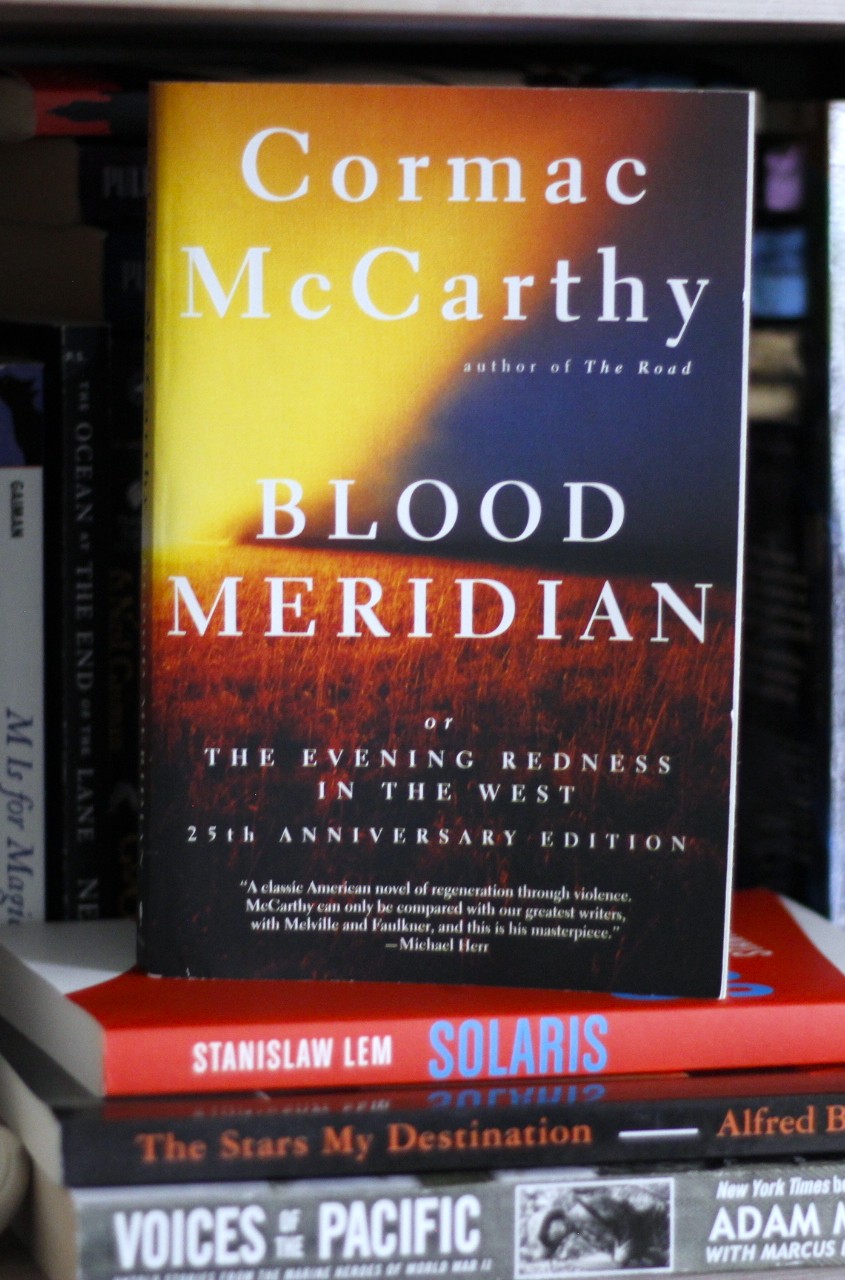
Blood Meridian by Cormac McCarthy

“If God meant to interfere in the degeneracy of mankind would he not have done so by now? Wolves cull themselves, man. What other creature could? And is the race of man not more predacious yet?”

I was 102 pages in when the violence finally made me pause. It was a long pause. I don’t usually annotate books I read, but this one I started underlining and writing in margins (in pencil, as I’m not an entire heathen). My note on page 102-103 is, “this is the first instance where the violence struck me. Up until now, it’s almost been a desensitization, but the nonchalance of Glanton and the visceral description of the woman’s death is such a stark interjection within the sleepy atmosphere.”

Glanton, the person I’d consider the main antagonist of this book (although others would call the Judge the antagonist, but we’ll get to him), kills this old woman by pointing one direction, and once her head’s turned, he shoots her point blank. Before this moment there are dozens of descriptions of violence, but it is the taciturn way in which Glanton takes this life that caught me so abruptly I had to step out of the story for a few days.

I read this whole thing slowly.

I needed to take my time with it because of a few things, but the biggest reason is how comfortable with the violence I got while reading. It’s a morbid lullaby, the way it weaves in and out of the ride through the untamed West. It seeps into your bones as you read, reminding you that you are part of it.

It brought me back to how I felt about Tender is the Flesh last year, where I felt like I’d been the one to do the killing.

Page 142: “The leaves shifted in a million spangles down the pale corridors and Glanton took one and turned it like a tiny fan by its stem and held it and let it fall and its perfection was not lost on him.”

My note: “Glanton noting the perfection of a leaf is such a stark contrast to him killing the old woman a few chapters ago.”

That is where I decided Glanton was the villain of this book. A man without true empathy wouldn’t be able to recognize the absurdity of pondering the machinations of a leaf while having spilling innocent blood.

Page 184: “They passed through small villages doffing their hats to folk whom they would murder before the month was out.”

My note: “How many people were killed during this time? How many forgotten because no one was left to remember them?”

McCarthy is an acquired taste. He’s known for his rambling passages and infatuation with leaving punctuation out of his life. He has wisdom in his words, but sometimes it’s so buried within the mire of his writing style that one has to attempt multiple readings.

This is not a book to read twice. It left me feeling heavy and empty at the end of it. All the violence, for what? To prove he could get away with it under the guise of literature? It’s very much a book that people say they love because it makes them sound and feel edgy. Like they’ve seen some things, man.

Not everything needs to be a contest of sufferings.

There’s such an absence of emotion from most of the characters as they go around killing for their government. Getting rid of the people there before them. It leaves a sour taste all through my digestive system as I try to empathize with any of the riders in Glanton’s crew. The one I could not find any sort of understanding for was the Judge.

He and Glanton are made for each other in their insensate glorification of the blood they spatter. The Judge is the metaphor for the Devil, I assume, although I would say he’s the one who acts on behalf of the Devil, who as I said before is Glanton. But the darkness inside the Judge is a level that had me react physically to several of the lines he said.

Page 207: “Whatever exists, he said. Whatever in creation exists without my knowledge exists without my consent.”

And shortly after on page 208: “The freedom of birds is an insult to me. I’d have them all in zoos.”

In all the books I’ve read in my life, there are two villains I’ve come across: the broken and the batshit. The broken ones, I’d toss Glanton in that category. He’s got a smidgeon of humanity in him because even though he doesn’t care what happens to the men on his crew, they are his crew and he treats them with a modicum of respect.

The judge is the one I’d put in the batshit category. He says some of the most unhinged garbage I’ve ever read, and he says it with such an authority behind it. Like he knows that someday someone will find what he’s spoken and will choose to live by it. He believes himself invincible. One has to be crazy to truly believe that, right?

There is a plot to this book, somewhere. What it is, I don’t know that I could say it’s linear. It’s more of a character study, where the Kid is placed in unbearable circumstances right from the beginning. It’s a test of who we really are at the end of whatever day. Do we stand by and allow ourselves to be swept into the current of hell racing toward us? Or do we fight that flushing of refuse and black bile back? Do we dig our feet into the earth and demand that darkness do its worst?

We do not have to be heroes, but we have to be able to look at ourselves at the end of this romp through the meadows of life and say we were our truest selves. That no one ever made us compromise on who we are for safety. For the luxury of silence.

7.5/10

*******I read the 1992 First Vintage International edition*******

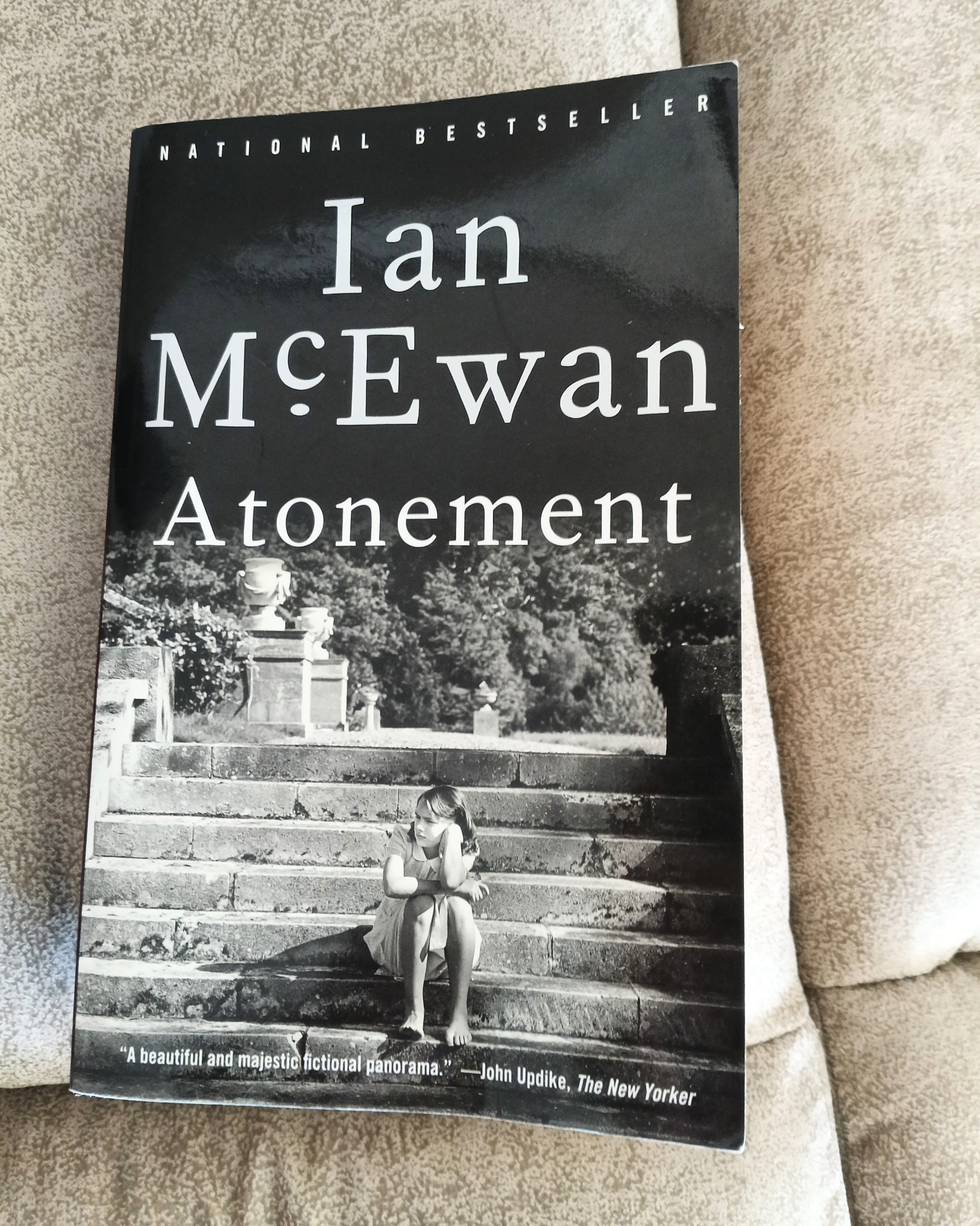
Atonement by Ian McEwan

“It wasn’t only wickedness and scheming that made people unhappy, it was confusion and misunderstanding; above all, it was the failure to grasp the simple truth that other people are as real as you.”

I had this book sitting on my “I’ve read this” shelf and recently went looking for something else when I spotted it. It sat on my “I haven’t read this” shelf for a while because I knew the story already. I’m a big, big fan of the film adaptation of this book, and from the synopsis, it followed the story pretty accurately.

I was not prepared for how deeply beautiful this book is. In the beginning, it’s told from the perspective of a thirteen-year-old girl who misunderstands something she sees out a window. A few more things happen within the space of an afternoon and evening, and as a result of her incorrect assumptions, lives are shifted into irreversible directions.

The film follows the book nearly scene for scene, which I felt incredibly kind of Hollywood. The story is rather important in all its moving parts, as most are, but with something so delicately perched on the bevel of catastrophe, anything left out would render the whole thing meaningless.

In reading some of the reviews, there were several people bothered by the fact the main character, Briony, doesn’t seem to “grow up” over the course of the book. This mainly stems from how she interrupts the rape of her cousin, and because of her false accusations sends an innocent family friend to prison.

The book stays mainly in Briony’s perspective, so we see her grow into a young adult at the precipice of a country at war. She doesn’t take her place at Cambridge, and goes into nursing–like the sister who fled the family on the arrest of the family friend. Briony comments on knowing she was wrong in her youth, and several of the reviewers were upset the rape isn’t discussed past a certain point.

My response to that is why would Briony talk about something that didn’t happen to her? I don’t mean that to sound callous, but as someone who’s experienced sexual violence, I don’t really find it pleasant to discuss. I don’t think the few people who know the situation sit around and talk about it amongst themselves either, so placing a responsibility on the main character to go into such an experience feels a little beside the point. She does eventually attend her cousin’s wedding, and it’s revealed her cousin marries the man who raped her (very much not the family friend). That and a few things Briony says at the end of the book are the only time it’s really mentioned again.

I don’t find it her responsibility to process such an event. McEwan could have written Lola’s perspective into the book, but she wasn’t a main character, and so having her show up to think/talk about her experience would have disjointed the story entirely.

The other thing people commented on was how the whole situation wasn’t important enough for a book. To that, I say, they missed the point. No one wants to read about a wealthy family crumbling because of misplaced accusations and a war. Not truly. But the depth of perspective we get from Briony shows us how penance cannot be achieved perfectly. By the end of the book, she is an old woman and discussing her regrets, so to speak, and what I love so much about it is the vast scope of her understanding, and the pain she has at not having her sister in her life.

I know my opinions are not the right ones. But they are mine, and I see Briony as faulted, someone who caused tragedy and bore the weight of that tragedy the rest of her life. Some would say rightfully so, but I feel like those people forget what it was to be thirteen and not understand the world the way we see it as an adult. We know right from wrong, but if we don’t know the reason or the why for something, it’s hard to articulate the responsibility.

9/10 stars

*******I read the First Anchor Books 2003 paperback edition*******

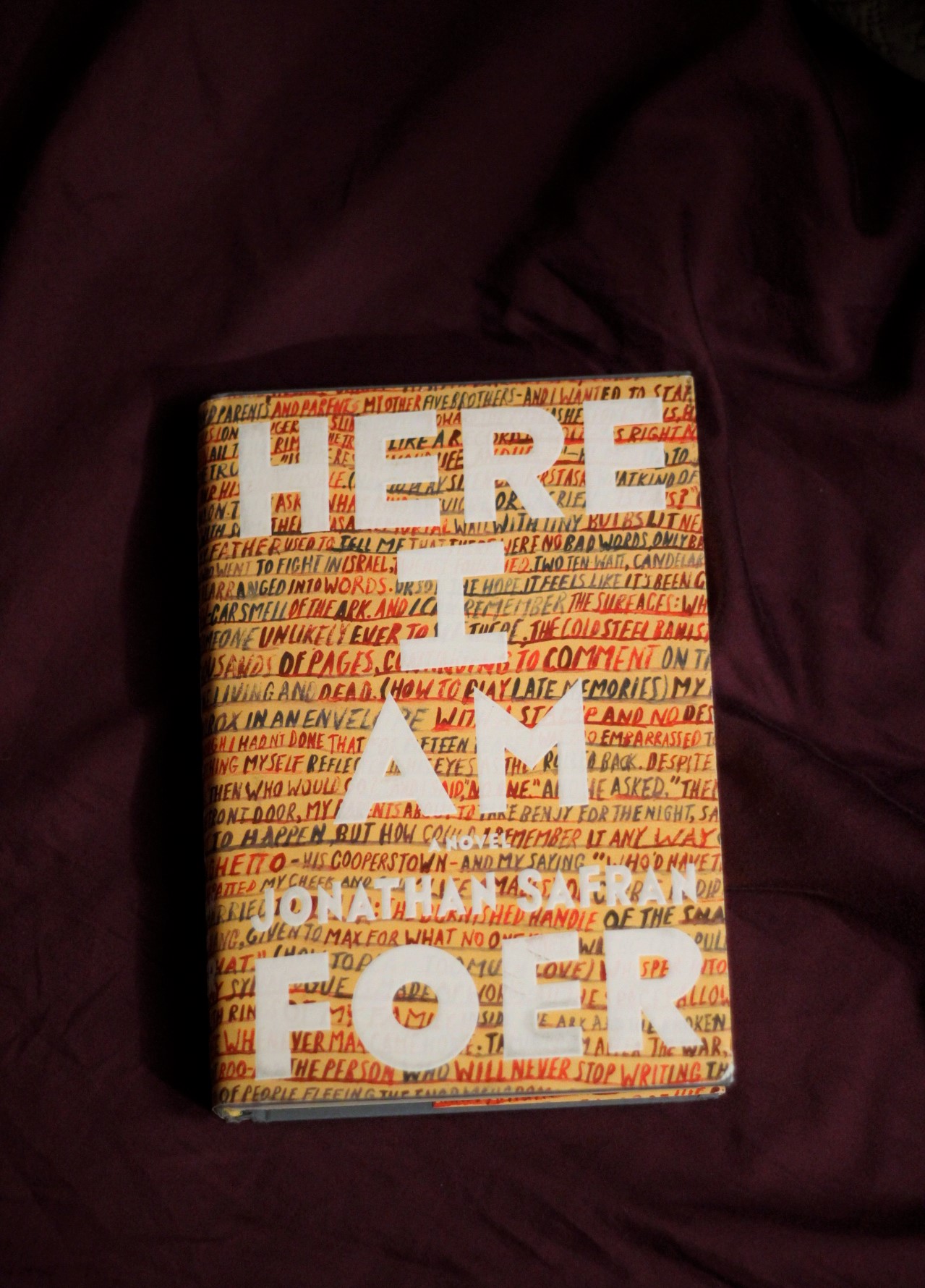
Here I Am by Jonathan Safran Foer

Who am I? I asked myself this question immediately following the finishing of this book and I feel like if Foer knew that, he’d either be pleased or he’d find me pretentious. But I didn’t ask it out of anything other than a gut reaction to the book ending. Foer is able to wield emotion like a sword, but with enough subtlety that it hits you after you’ve gone by a few pages, and you have to pause and sit in the feeling for a moment before you can go forward. It took me a bit to get into this book. I honestly didn’t remember why I picked it up (it’s got a sticker from the bargain bin on the back, so that’s the most likely reason, and I know I like his writing style, so I solved my own mystery), and as I read about the marriage of Jacob and Julia, I questioned even more why I grabbed it. It was about a loveless marriage, but also a marriage full of too much love. The kind of love you think is stagnant, but is actually hiding behind hurt. Unspeakable only because to voice the hurt would make it known to those who haven’t hurt you, but those you love and you don’t want to show them your vulnerability.

That kind of love is my favorite. And as I was slowly absorbed into the unfolding of this marriage, the explosion of a worldwide crisis of possible war, the outlook on Jewish people by the rest of the world, it all settles together in such a way you forget you’re reading about something heartbreaking. I think love is the entire theme of the whole book. There’s familial, romantic, platonic–it’s all in there. It’s the love that hurts, but the impermanence of pain is what draws me to it. It’s the understanding that while what I feel might be in the realm of anguish, it is not forever and I will be okay.

I told a friend of mine about some of this, my reaction to the book. But it was 3 a.m. and I’d had to read a brain numbing romance novel to get my head to calm down (seriously, all those people need to do is talk to each other. The lack of common sense and communication in those books is astonishing, but then I realize it’s real life in a way we aren’t ready to admit to, which I also know sounds like the opposite of calming my brain down). A sense of yearning took over, and I was filled with wanting. To be enough, to be wanted. And the part that makes my heart break is I don’t know if I’ll ever be able to accept that I am already good enough. I am wanted. Just as I am. It causes an ache in my ribs. When I breathe. I inhale, almost like when I run, and the life that fills me also takes my breath away.

The last time I wrote in my physical journal, I started a list of resolutions and I will expand on it offline. I know you might be wondering why this has anything to do with the book of this post, but I’ll get there. A person I follow on YouTube was talking in a recent video about how she calls resolutions her “intentions.” What does she intend for herself? The start of a new year, the reset, the fresh feeling. Some part of me that lingers in my self-hate is disgusted by the positivity of it.

But I think about a sunrise. A sunrise after walking all night, being so stuck in my head, unable to fully see even though all I’ve been doing is looking.

The sky lightens, letting the earth know what’s coming, but it’s that first burst of bright. That explosion of color that scars the sky and yet whispers hello.

My hope lives there. In that moment, that crack of a new day. Flash in the pan, almost. It holds me, though. Gives me enough courage to approach life one day at a time until a year passes and I am no longer witnessing the sunrise, I am the sunrise.

That’s who I am. I am hope, burning across the morning dimness with a gasp of colors. I am not ending. I am beginning and I am afraid. Afraid of understanding. Afraid of seeing. Not of failure, because I’m not failing.

I am becoming.

And that’s what this book did for me. I don’t know that I would say Foer is my favorite author, but he writes in a way that helps the world make sense as I see it. While I’m not a middle-aged Jewish man, or his wife, or their three sons, I have felt at times what they have, and seeing emotions I know so well, written in a way that feels like I’ve been flayed while saying thank you is something I don’t know I’d get from anyone else.

I give this book an 8.5/10

*******I read the 2016 Farrar, Straus and Giroux hardback edition*******