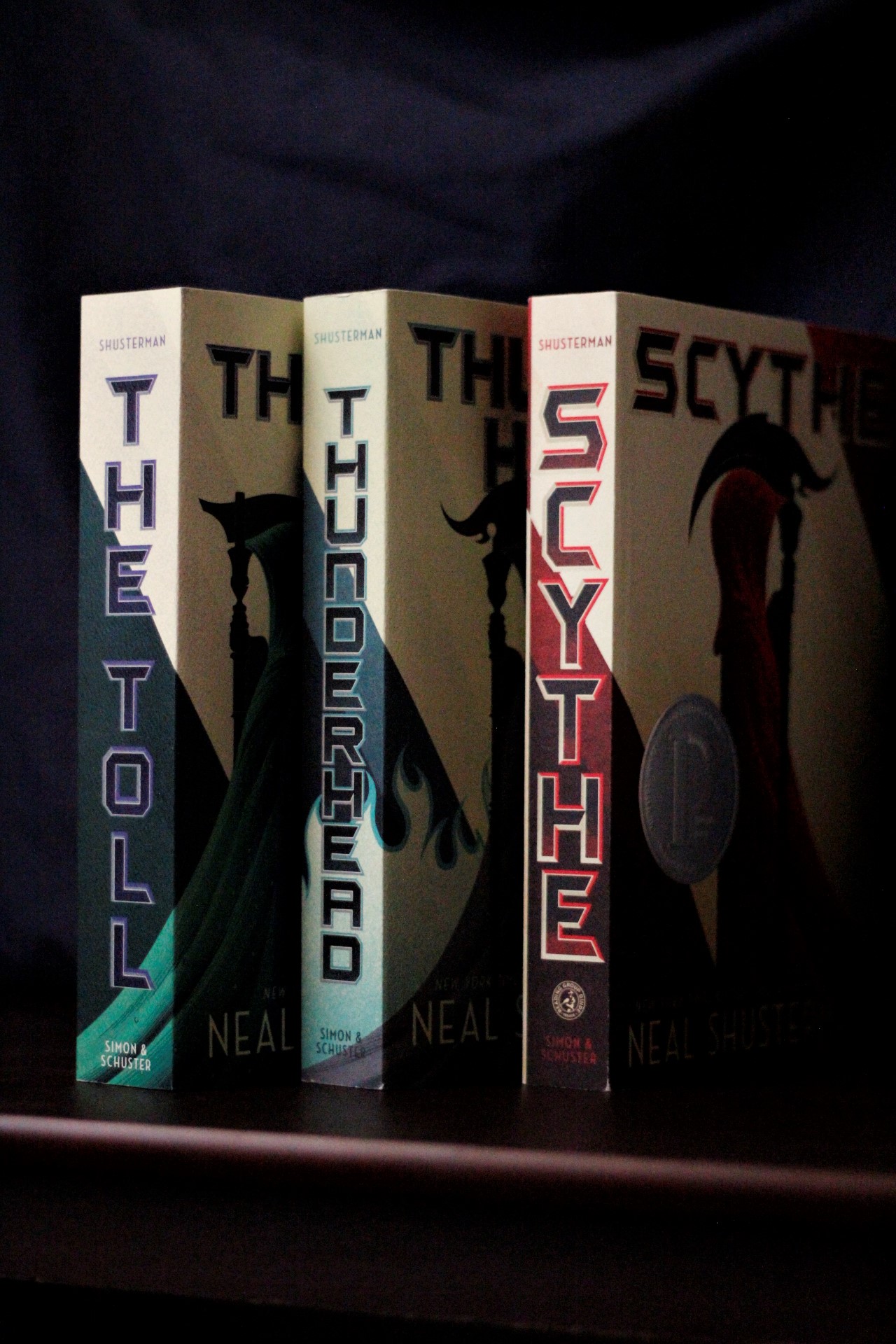
Arc of a Scythe by Neal Shusterman

Y’all. When I sat myself down to write a blog post for this week, I was not expecting to do another book review so soon, but I need to be an absolute mess about this series. I love Neal Shusterman. 10000000% his storytelling is one of my favorites out there, and this series, hoo buddy. I haven’t enjoyed a series so much since Lord of the Rings (to be fair to the other series out there, I only read it in its entirety probably three or four years ago, so in reality, I’ve read quite a few other series before Lord of the Rings). Anyone who knows me knows that is a ridiculous amount of love, and I to this day annoy my brother with Boromir dying memes. Never forget the ones you love.

Anyway. Yes. The Arc of a Scythe Series. I was recommended this by someone who’s reading opinions I trust, and she did not let me down in the slightest. I want to go on such a ramble about this set of books, but I won’t because I don’t want to spoil it for those who want to read it. As far as modern fiction goes, I am not well informed. I have my collection of books to read and I don’t really deviate much from them. I’ll add classics and sometimes WWII non-fiction and fiction to my shelves, but very rarely do I branch out and get taken in by more recent leaps into the world of reading. I see all kinds of fervor over the Court of Rose and Something Something series on Instagram, but that’s not my cup of coffeecake. I like action driven, over the top dramatic sometimes, and at the end a very emotionally draining book.

This series has everything in it I love about reading. I read the first one, Scythe, back in January and I had to wait until I had my tax refund to get the second and third one. I read them both over the last three days. They’re not small books. They’re hefty enough that they’d hurt if you had one thrown at you. I regret nothing because I haven’t been so happy with a book in so long and I tell you what I need to ramble.

I went into this thinking I knew what was coming and I am very, very happy to say I was incorrect. What I expected happened in maybe two places, but everywhere else, I was not prepared. The level of intrigue, the level of depravity, it is so far beyond a standard YA fiction to me. And maybe I’m not as up on YA fiction as I could be, but one of the things I was concerned about (and my brother said this, too) was how young the protagonists are. The first book centers around Citra and Roman, two teenagers plucked from their lives to begin training with the ever mysterious group of people called Scythes. See, in this future world, no one dies. The omnipresent being called the Thunderhead has eradicated disease and misery in most forms. People are ageless, and so in order to maintain some semblance of balance (or population control as it’s referred to a few times), the Scythes were created. They are the ones who choose who dies, and they’re beholden to their own set of laws or commandments. The Thunderhead controls the general population, but it cannot have any bearing whatsoever on the world of Scythes. They govern themselves. People are either fearful or indifferent to the Scythes. Most go about their lives not really caring about death until they see a Scythe, and then it all gets real. To be selected for an apprenticeship is no light thing. Once one is chosen to become a harbinger of death, normal life is upended. Family no longer knows how to treat you. People bend over backwards to accommodate a Scythe, often giving them free access to things since they don’t make any money doing what they do. And while people die frequently (there are people who die for fun just to be revived at a revival center. The morbidity of this whole idea of death is so deep it’s mind blowing), no one stays dead. Unless a Scythe gleans a person selected for death, that person is dead. They can’t be taken to a revival center and be brought back from “deadish.” I’d go into more detail, but I really want people to read these books, so I’m going to leave it there.

The first book sets the scene so dang perfectly for the following books. While the two main protagonists are indeed teenagers, they are not left to fend for themselves, and often are in the presence of their mentors, or other fully instated Scythes. Of course, there are a few “save the world” challenges they face, but in the end, the teens work with the adults to accomplish what they must. They’re less burdened with the pressure and it’s kind of spread across the few good people remaining. There’s the standard bad guy who corrupts the meaning of good to fit his narrative, there are religious zealots who cause unmentionable suffering. There’s moments of levity and love. It’s intense in its drive to find the truth in all things, and when the secrets are finally revealed, I admit I held the book high as I screamed in delight.

I will probably read this again at some point, because it’s that good to me, but I will lament I can’t read it for the first time again. It’s a series I will recommend highly to anyone who enjoys reading.

I give all three of these books, individually and together, a 10/10. I’d go higher if I could.

*******I read the 2017, 2019, and 2020 Simon and Schuster Paperback editions*******

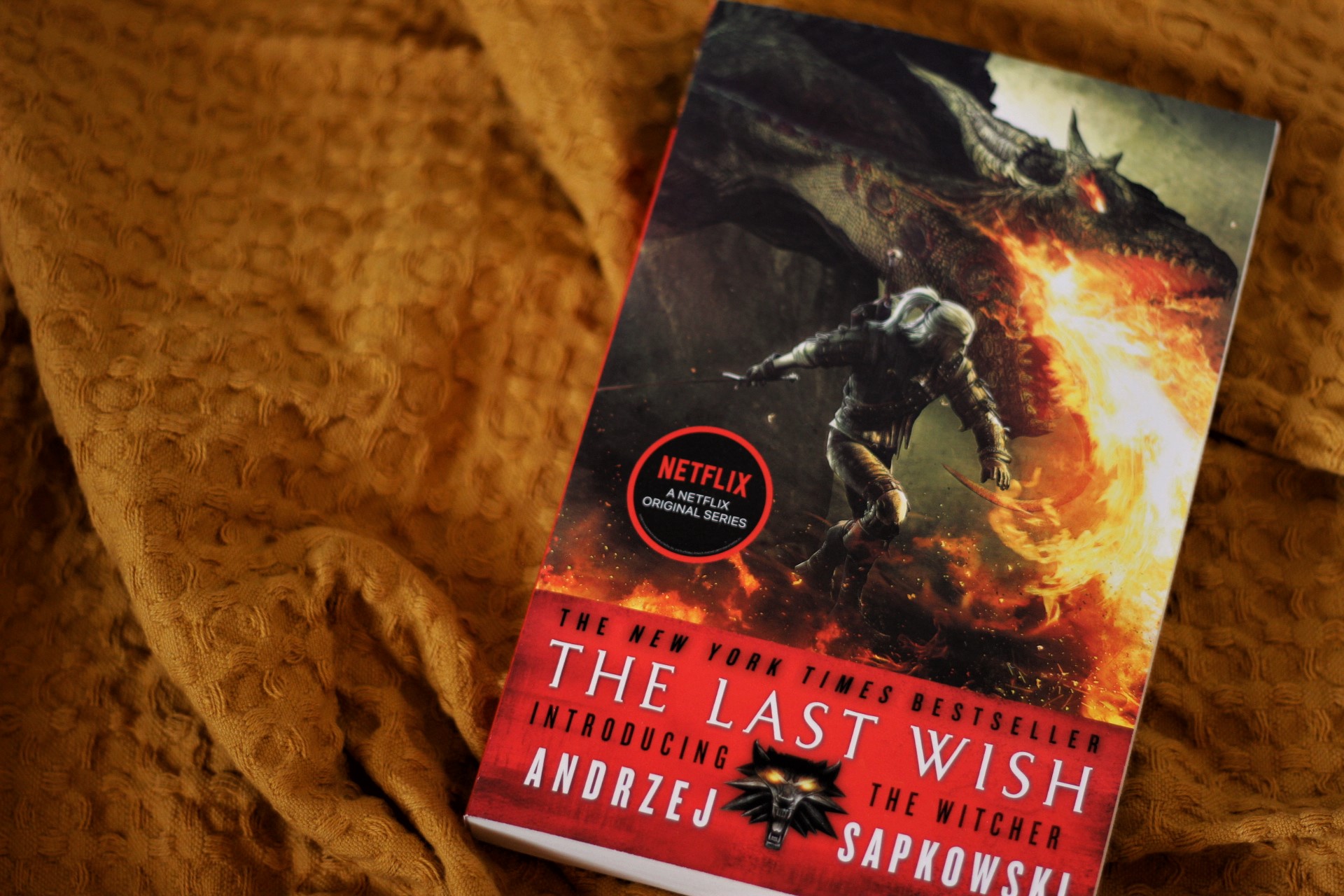
The Last Wish by Andrzej Sapkowski

Let me begin this by saying I’m someone who prefers books over visual adaptations of those books. I say this because I think this is one of the rare times I prefer the show over the book. I feel blasphemous saying so, but hear me out. I’ve not played the games or seen a playthrough of those games, so I can only compare the book to the show (I’ve heard it said that the games follow the books more closely). While all of this sounds as though I’m about to take a dump on this book, I’m not. I’m going to try and look at the book as a separate being from the show and discuss my feelings on it.

I don’t think it’s bad. Let’s get that out of the way first, here. It’s not a bad story being told. For me, the disconnect comes from the writing style. It’s not that I think Mr. Sapkowski can’t write, he can, it’s just a different style than I am used to. With that in mind, I read through this book in the space of about two days (because I had to work, yo), and I appreciated the quickness of the read. There were several spots where it fell very flat, however, and it felt, as one of my friends said, like we were waiting with the characters for something to happen. Part of me wonders if that’s because we lost something in the translation (originally written in Polish), but I know nothing about the original language, so I don’t even want to speculate further. I didn’t approach this as something that would blow my book lovin’ mind, but I did expect a little more than what I got.

This is the introduction to Geralt Roger Eric du Haute-Bellegarde, or simply “Geralt of Rivia.” He’s a witcher, a mutated not quite sorcerer, not really human anymore, not really anything but a badass of fighting skill and ability to take down the world’s scary things that go “oof” in the night. Witchers are rare. They’re a dying breed (?) because the lore used to create them has been lost over the centuries. They’re pretty cool characters, and one thing I appreciate in the book is how there are other witchers. Geralt is not the only one. In the show (shhh, I know I said I wouldn’t), Geralt is presented as one of the last of his kind. That’s true still for the books, but there are at least five in the books (that I remember at the moment, but I started reading them out of order, so I got ahead of myself… It’s high school and Harry Potter all over again). So Geralt isn’t the last surviving hope for humanity.

In the first book, it’s mainly set up for the characters who come later. There’s some oddly sprinkled in fairy tale references that kind of made me feel weird after their appearance. I’m not 100% sure on the effectiveness of trying to link those to this world, because it kind of took me out of what I was reading. We meet Dandelion, Geralt’s bard friend, Yennefer, the love interest (or is she?), a priestess named Nenneke, who I was pretty fond of although I’m not sure of how much of her we’ll see later on in the story. Mousesack, the sorcerer to Queen Calanthe (who is absolutely a badass woman and I loved her so much). Pavetta and Duny, the two deeply in love people who first bring up the Law of Surprise (a thing which becomes important later).

The Law of Surprise is something I don’t fully understand. In the show, it’s very briefly touched on in the episode where Geralt defends Duny and Pavetta’s relationship against Calanthe’s sketchy underhandedness. As I understand it, from the book, basically what you don’t know you have waiting at home is now the thing the person who helped you receives as payment for that assistance? It seems to be used mostly when lives are saved. Which is useful. But another way the book and the show deviate is Geralt knows Pavetta’s pregnant in the book. On the show, it’s truly a surprise, which then makes it a bit touchy later on when certain events happen.

I’m a fan of the show because the story is told in a way that moves itself along and is faster paced. Plus, Henry Cavill is Geralt, and I don’t know that I’d want to see anyone else in that role. Not because I have a healthy (shut up it is) appreciation for the man, but Geralt isn’t a flashy character. He’s very reserved, and he’s very observant. He’s doing his best with the job he’s been given, and the world just seems to get in the way because people aren’t very keen on difference. The parts of the book within the show are done very well and stay true to the story Sapkowski is telling. It’s rare to me to see something so close to the source material. Though these days, Netflix starts out strong with their adaptations.

I’ve reached the point where I’m rambling, so I will go ahead and close this out by saying I don’t regret reading this, but I’m not in a hurry to read the second one.

I give this book a 7/10.

*******I read the 2017 First Trade Paperback Edition*******

Let’s Talk About Books

I was the kid who didn’t get TV taken away when I was in trouble, I got my books taken away. I still found ways to read even when I was not supposed to. Telling me I couldn’t go outside wasn’t a problem for me, because I preferred escaping through the world of books. We didn’t live close enough for me to walk to my friends’ houses, so that wasn’t an issue for me either. My parents would have to find more creative ways to punish me for disobedience.

Books have always been my vice. When I lived with my mom for a bit and had my books in storage for over a year, the first thing I grabbed when I moved into my place was my crates of books. I add more and more to my “to read” shelves faster than I’m actually reading. Home is not home without my books.

But today we’re going to do a bit of a discussion about how brains work.

When I’m at the height of a depressive episode, I tend to shut down the parts of my brain that activate on creative stimulus. Easy distraction is how I live my life in those times, and so I watch a lot of Netflix, or I spend hours on YouTube trying to find ways to give my brain an easy way out from thinking so much about the stuff that makes my chest hurt.

The thing about that though is it becomes a habit. I struggle to focus on reading now because I got so in the habit of switching on easy media to keep my brain from spiraling. This isn’t to say I don’t read anymore, because I do, but it’s nowhere near the “read the entire Harry Potter series in five days over Spring Break” level I used to be.

I also have a full time job, and I have a home to own, so there are added responsibilities to my life I didn’t have when I could be so carefree with my time. I miss those days, though, when I could spend entire days reading a series and finishing two books in a day. I’ve considered devoting weekends to that, but then the adult part of my brain reminds me I have dishes to wash and laundry to get done. This reasoning also feels like an excuse sometimes, especially when I don’t get either the dishes or laundry done.

So, today’s post is more of a gentle reminder that it’s okay to let yourself get lost in a book every now and then. It’s okay to find your way back to the part of you that misses that feeling, whether it’s about books or some other hobby you could lose yourself to. I think breaking out of bad habits is excruciating because as we know change is something most people dig their toes into the sand over. For me, my goal is two books a month until I get my mojo back.

Small steps forward seem insignificant until you realize you’ve gone three miles.

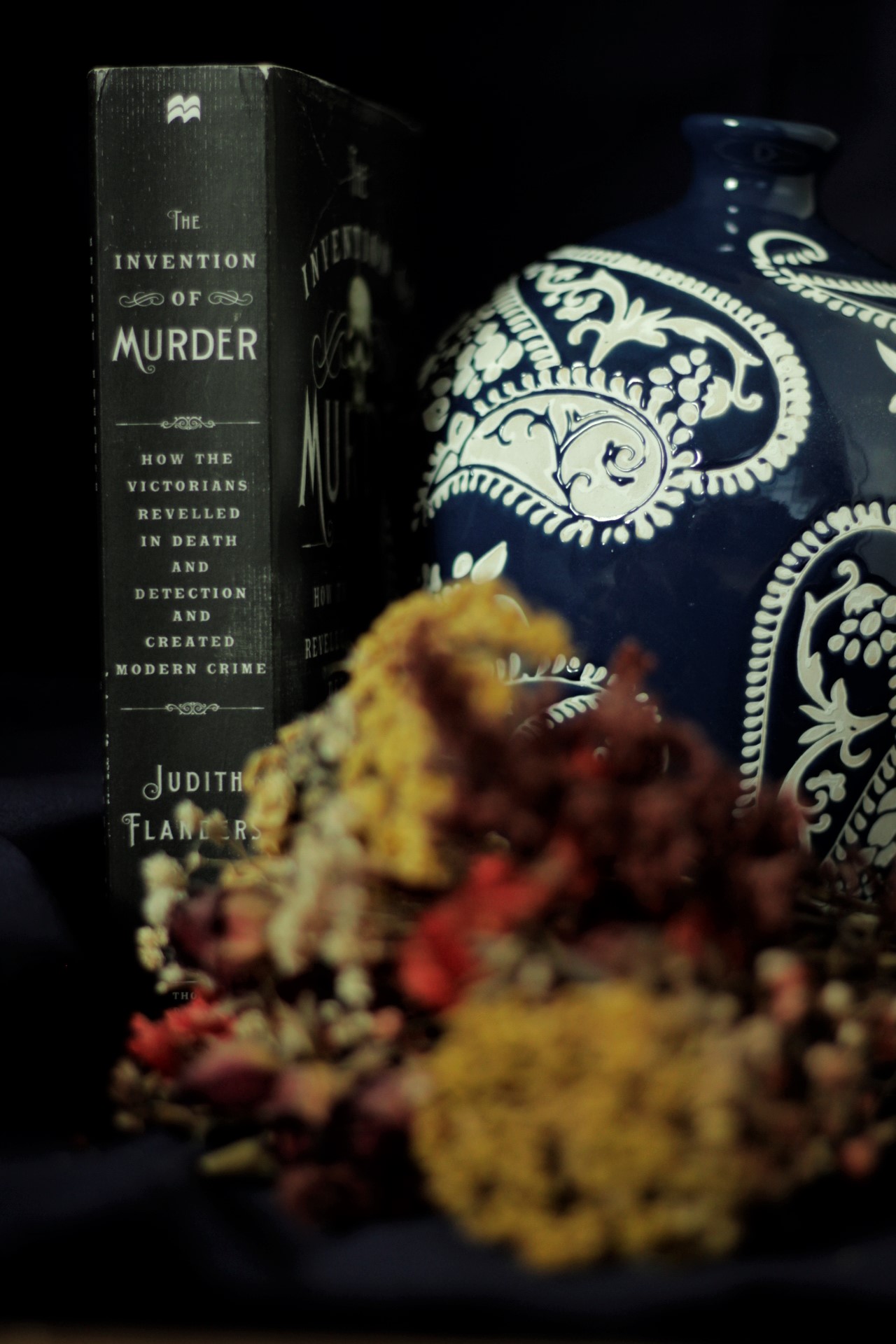
The Invention of Murder by Judith Flanders

Anyone who knows me will be able to attest to my somewhat morbid fascination with true crime stories. I used to fall asleep to Forensic Files before Netflix did something weird with their auto play function. So, when I first came across this book, The Invention of Murder, I was pretty stoked. I’ve been interested in how modern detecting came to be, and so I hoped this book would go into that as well as go through how murder became more mainstream.

I wish I could explain how disappointing this book was to me. There’s murder, yes. But it’s sprinkled between a discussion about newspaper articles, broadsides, penny dreadfuls, melodramas/theatrical performances, and every now and then novels. I understand what Ms. Flanders was attempting to do. By showing such a vast range of media produced for the public, it showed how the Victorians became enraptured with death and crime. But all it really did was bore me.

What time was spent on discussing the actual cases was well written, and I enjoyed those parts entirely, which is why I’m even putting this book up here for review at all. It’s clear the research that went into this book was insurmountable, and I don’t envy the author such a task. I think it could have been presented differently. Especially in today’s world where everyone and their Netflix budget is producing a crime documentary. I think the book is not as timeless as it could have been because it was published in 2011, a bit before the explosion of in-depth documentary series about modern day crime. There’s a show (Murder Maps) that mentions several of the cases brought up in The Invention of Murder, something I only drew connections to because I’d just read about the case.

It is certainly an interesting look at how mass produced media and “up to the moment” reporting on trials brought murder into the forefront of crime. With the advent of detective units within police departments (something that was created later than I thought), the public could see firsthand how the investigations were going. The newspapers also presented problems if the cases weren’t progressing to the satisfaction of the editors. In that respect, I appreciate the book for thoroughly showing evidence to support the notion the Victorians were the ones who elevated crime and detection.

I think in terms of enjoyment, I hyped it up too much for myself. I started reading it in August 2020, and I finished it this last week, with reading other books between. Usually when I take so long to read a book, it’s because I want to savor it, to follow it at a leisurely pace. The same could not be said for The Invention of Murder. I think it was about 100 pages too long, and the amount of references could have been lessened and the impact would not have suffered. The back of the book blurb hints at what’s inside, but gives it more of a narrative, something that disappears in the pages of examples of articles, stories, and so on.

I feel like this sounds unduly harsh, and if it does, that’s not my intention. I think it’s important to be honest in reviews especially when a lot of the “influencer” world is based solely on promotion. (I’m not saying I’m an influencer, hah, not by any stretch of any imagination) I know I didn’t like it, but it may not be the same for other readers. In fact, by the quotes in the “praise” sections, several people did enjoy it.

All in all, I appreciate the work Judith Flanders put into this, and I appreciate the approach she took to present a timeline of how sensationalized murder came to be.

I give this book a 4/10

*******I read the 2011 Thomas Dunne Books paperback edition*******

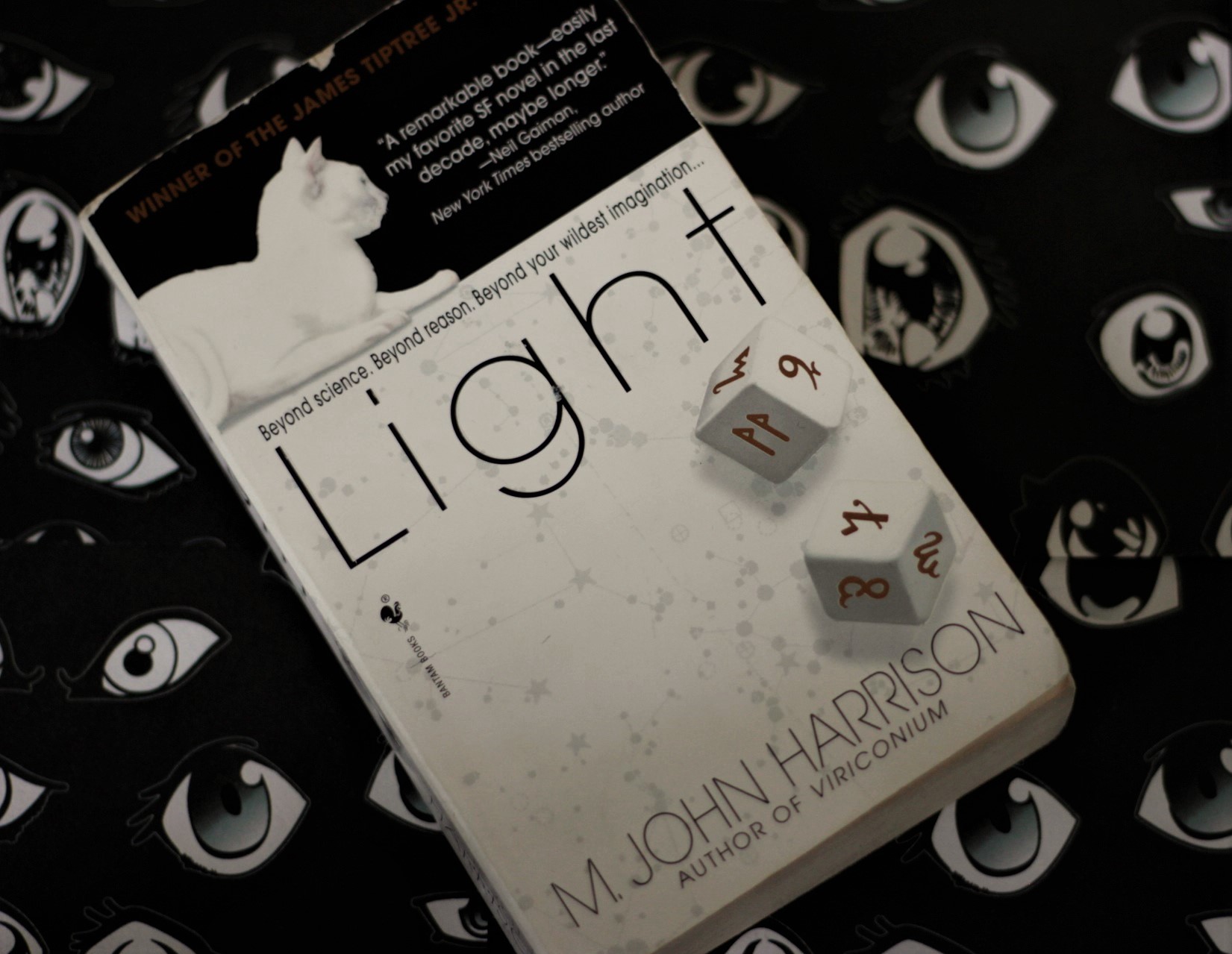
Light by M. John Harrison

All right, first book review of the year! In all fairness, I finished this a while ago, I just haven’t taken the time to photograph it. This book is one I read on the recommendation of a former friend, and I have to say I’m not overly thrilled by it. I was excited to read it because Neil Gaiman’s got a positive review on the front cover. I have to say the ending was my favorite part. Not because it meant the book was over, but it was some of the best writing I’ve ever read. Spoilers ahead, but this book’s been out since 2002.

To be honest, I don’t know if I fully understood this book until the end. Maybe that’s how it was supposed to go, but it was very aware of itself for most of it, and I found that off-putting. It followed the trend I see in a lot of science fiction where sex is a major aspect of the book, and that is also something I find puts me off a book. I’m in no way a woman who disapproves of sex in books. I’ve written a few spicy scenes myself. But in my opinion, sex in sci-fi usually distracts from the story more than it helps. Space and science are already such vast subjects to try and condense into a workable fiction that adding in copious amounts of often violent, unnecessary scenes of lust tend to take away from the richness of the world presented.

One could argue that this kind of environment is suited for the desolate character of Ed Chianese, He’s a drifter, addicted to alternate reality tanks where he can avoid his own life. He doesn’t even have a life. He goes from place to place, witnessing murders and participating in some. He eventually joins a circus type crew and becomes a sort of fortune teller, or someone who sees the future. While his time is spent finding places to exist and having sex with people he shouldn’t, his story for me was far more compelling than that of the “main character,” Michael Kearney. Kearney is a serial killer who found a way to travel through time/space in order to do his killing. While this sounds like it should be interesting, I found myself incredibly bored with his sections of the story. He jumped from place to place, meeting up with his scientist friend, Sprake, or reuniting with his estranged wife for some uncomfortable sex in an even more uncomfortable setting. He’s forever chased by a creature called the Shrander that always seems to find him no matter where he runs. The story wraps around Kearney and Chianese, but there is one more character, Seria Mau, who comes into play. She is someone who ran away and got transformed into a ship. That is, her conscious mind did. She is forever linked to her spaceship, and throughout the course of the story, she starts to remember more and more about her life before she became who she is by the end of the story. Through each of these three main characters, the story opens up and constricts around you in such a way you don’t know it’s happening until you get devoured by it.

The way it all connects at the end is probably some of the best writing I’ve ever read, and that honestly saved this book for me. There is something intense when you realize what’s happening, and it propels you onward even though you don’t really want to stop reading because you want to stay in the decadence of the world Harrison created. There’s still no clear answer as to what the universe is about, but the way it’s all tied together makes it easy to forget you don’t get an answer.

I think if someone asked me to recommend a book, I probably would choose other sci-fi before I went with this one. It’s not bad, but it’s not my cup of coffee.

I give this book a 6.5/10.

********I read the 2007 Bantam Mass Market Paperback edition********