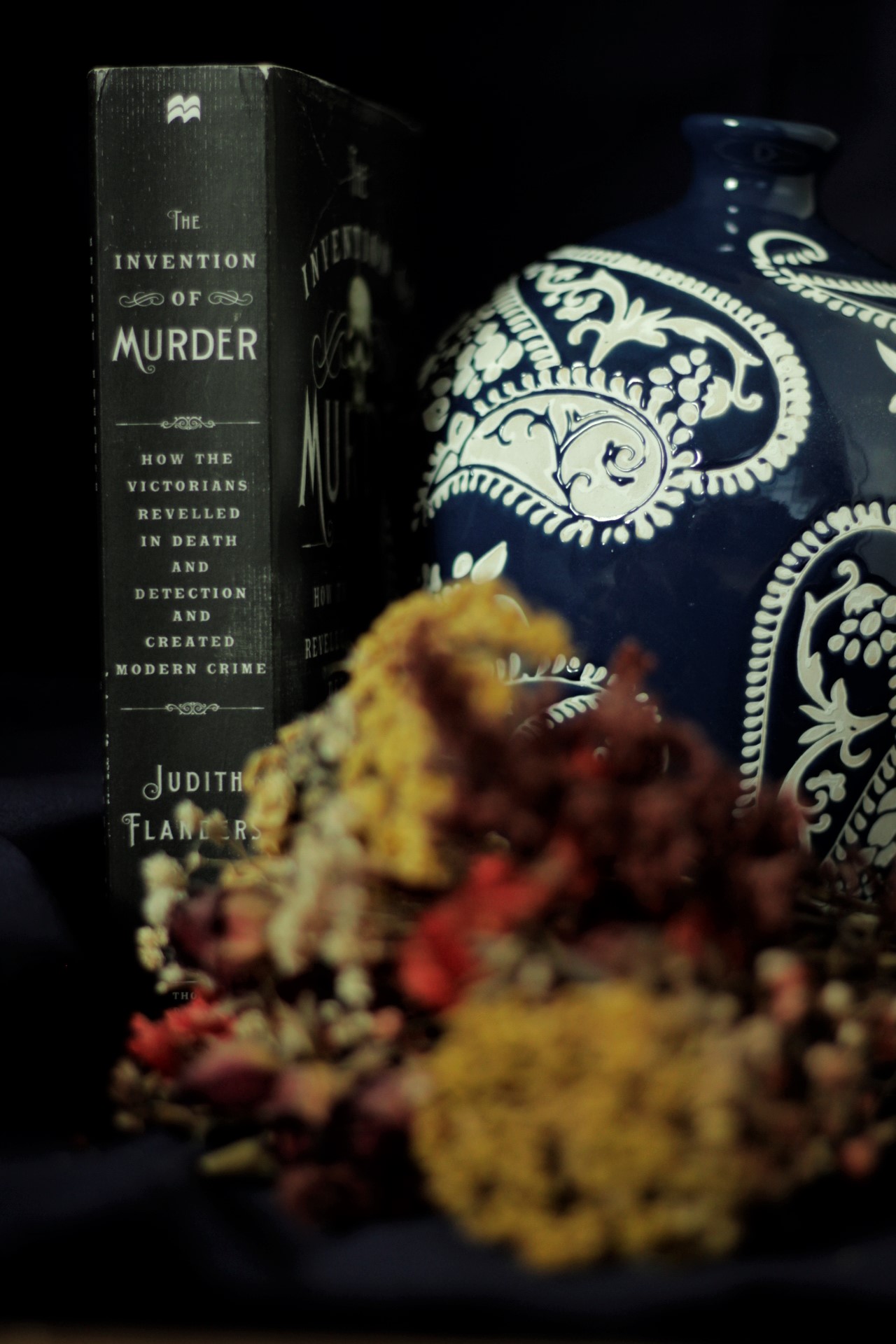
Anyone who knows me will be able to attest to my somewhat morbid fascination with true crime stories. I used to fall asleep to Forensic Files before Netflix did something weird with their auto play function. So, when I first came across this book, The Invention of Murder, I was pretty stoked. I’ve been interested in how modern detecting came to be, and so I hoped this book would go into that as well as go through how murder became more mainstream.
I wish I could explain how disappointing this book was to me. There’s murder, yes. But it’s sprinkled between a discussion about newspaper articles, broadsides, penny dreadfuls, melodramas/theatrical performances, and every now and then novels. I understand what Ms. Flanders was attempting to do. By showing such a vast range of media produced for the public, it showed how the Victorians became enraptured with death and crime. But all it really did was bore me.
What time was spent on discussing the actual cases was well written, and I enjoyed those parts entirely, which is why I’m even putting this book up here for review at all. It’s clear the research that went into this book was insurmountable, and I don’t envy the author such a task. I think it could have been presented differently. Especially in today’s world where everyone and their Netflix budget is producing a crime documentary. I think the book is not as timeless as it could have been because it was published in 2011, a bit before the explosion of in-depth documentary series about modern day crime. There’s a show (Murder Maps) that mentions several of the cases brought up in The Invention of Murder, something I only drew connections to because I’d just read about the case.
It is certainly an interesting look at how mass produced media and “up to the moment” reporting on trials brought murder into the forefront of crime. With the advent of detective units within police departments (something that was created later than I thought), the public could see firsthand how the investigations were going. The newspapers also presented problems if the cases weren’t progressing to the satisfaction of the editors. In that respect, I appreciate the book for thoroughly showing evidence to support the notion the Victorians were the ones who elevated crime and detection.
I think in terms of enjoyment, I hyped it up too much for myself. I started reading it in August 2020, and I finished it this last week, with reading other books between. Usually when I take so long to read a book, it’s because I want to savor it, to follow it at a leisurely pace. The same could not be said for The Invention of Murder. I think it was about 100 pages too long, and the amount of references could have been lessened and the impact would not have suffered. The back of the book blurb hints at what’s inside, but gives it more of a narrative, something that disappears in the pages of examples of articles, stories, and so on.
I feel like this sounds unduly harsh, and if it does, that’s not my intention. I think it’s important to be honest in reviews especially when a lot of the “influencer” world is based solely on promotion. (I’m not saying I’m an influencer, hah, not by any stretch of any imagination) I know I didn’t like it, but it may not be the same for other readers. In fact, by the quotes in the “praise” sections, several people did enjoy it.
All in all, I appreciate the work Judith Flanders put into this, and I appreciate the approach she took to present a timeline of how sensationalized murder came to be.
I give this book a 4/10
*******I read the 2011 Thomas Dunne Books paperback edition*******

 salisbury.fake